



































Tool Coatings That Improve Endmills Performance
Discover how tool coatings improve endmills performance, tool life, heat resistance, and machining efficiency in modern CNC applications.

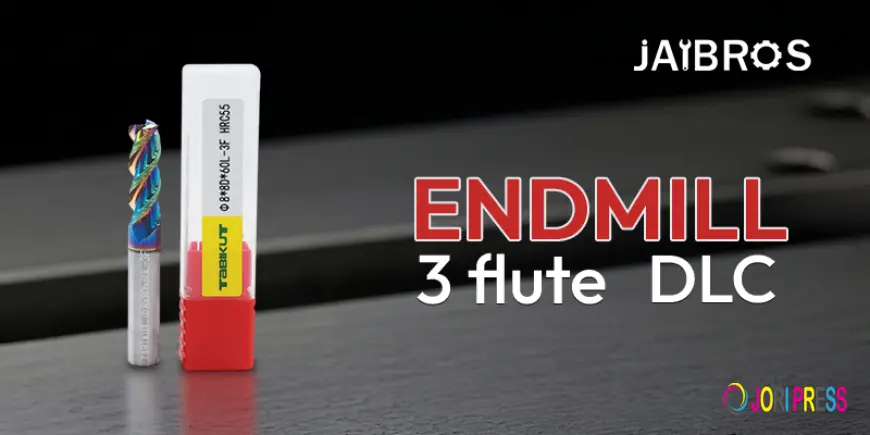
Tool Coatings That Improve Endmills Performance and Tool Life
In modern machining and precision manufacturing, cutting tools play a major role in achieving accuracy, speed, and surface finish. Among the most commonly used tools in CNC machining are endmills, which are designed for cutting, profiling, slotting, and contouring different materials. However, the performance of these tools depends not only on their geometry but also on the coatings applied to them.
Tool coatings are thin protective layers added to cutting tools to improve wear resistance, reduce friction, and increase heat tolerance. With the right coating, machining operations become faster, smoother, and more cost-effective. Industries that work with steel, aluminium, titanium, and hardened materials rely heavily on coated tools to improve productivity and reduce downtime.
Why Tool Coatings Matter in CNC Machining
During machining, cutting tools face extreme pressure, high temperatures, and continuous friction. Without protective coatings, tools can wear out quickly, leading to poor surface finish and increased production costs.
Coatings help in multiple ways:
-
Reduce friction between tool and workpiece
-
Increase heat resistance
-
Prevent built-up edge formation
-
Improve chip evacuation
-
Extend tool life
-
Maintain dimensional accuracy
Because of these advantages, coated tools are preferred in industries such as aerospace, automotive, mold manufacturing, and medical component production.
Common Types of Tool Coatings
Different coatings are designed for specific machining conditions and materials. Understanding their properties helps manufacturers choose the right tool for their applications.
Titanium Nitride (TiN)
Titanium Nitride is one of the oldest and most commonly used coatings. It has a gold-colored finish and provides basic wear resistance and reduced friction.
Benefits of TiN Coating
-
Improves hardness
-
Reduces cutting heat
-
Suitable for general-purpose machining
-
Affordable option for standard operations
TiN-coated tools are often used for softer metals and moderate machining conditions.
Titanium Aluminum Nitride (TiAlN)
TiAlN is widely used for high-speed machining and hard materials. It performs exceptionally well under elevated temperatures because it forms an aluminum oxide layer that protects the tool surface.
Advantages
-
High heat resistance
-
Better oxidation protection
-
Suitable for dry machining
-
Excellent for hardened steel applications
This coating is commonly applied on carbide endmills used in aggressive cutting operations.
Aluminum Titanium Nitride (AlTiN)
AlTiN coatings are ideal for applications involving high temperatures and continuous cutting. They provide excellent hardness and improve machining efficiency in difficult materials.
Key Features
-
Longer tool life
-
Better wear resistance
-
High thermal stability
-
Suitable for stainless steel and titanium
Manufacturers often use AlTiN-coated tools in aerospace and die-mold industries.
Diamond Coating
Diamond-coated tools are specially designed for non-ferrous materials such as graphite, composites, and aluminum alloys.
Benefits
-
Extremely high hardness
-
Excellent surface finish
-
Reduced tool wear
-
Ideal for abrasive materials
These coatings are widely used in precision machining environments.
Titanium Carbonitride (TiCN)
TiCN coatings offer higher hardness than TiN coatings and are suitable for materials that generate abrasive wear.
Applications
-
Cast iron machining
-
Stainless steel cutting
-
Medium-speed milling operations
This coating helps improve cutting performance while maintaining good toughness.
How Coatings Improve Cutting Performance
The effectiveness of tool coatings can be seen in daily machining operations. From reducing downtime to increasing productivity, coatings contribute directly to manufacturing efficiency.
Better Heat Management
Heat is one of the biggest enemies of cutting tools. Excessive temperatures can damage cutting edges and reduce dimensional accuracy. Coatings act as thermal barriers that minimize heat transfer to the tool body.
This allows tools to operate at higher speeds without losing performance.
Reduced Friction
Low-friction coatings reduce resistance during cutting, helping chips move away smoothly from the cutting zone. As a result:
-
Surface finish improves
-
Vibration decreases
-
Machine load reduces
This is particularly useful in high-speed CNC applications.
Longer Tool Life
Coated tools resist wear more effectively than uncoated tools. This means fewer tool replacements and reduced machine downtime, which directly lowers production costs.
Manufacturers using solid carbide endmills with advanced coatings often experience significantly improved durability.
Improved Machining Accuracy
As tools wear out, dimensional accuracy can suffer. Coatings maintain cutting-edge sharpness for longer periods, helping manufacturers produce consistent and precise components.
Choosing the Right Coating for Different Materials
Selecting the correct coating depends on the material being machined and the machining conditions.
For Aluminum
-
Diamond coating
-
ZrN coating
These coatings prevent material sticking and improve chip flow.
For Hardened Steel
-
TiAlN
-
AlTiN
They offer superior heat resistance and wear protection.
For Stainless Steel
-
TiCN
-
AlTiN
These coatings reduce friction and improve cutting stability.
For Composite Materials
-
Diamond-coated tools
They provide excellent abrasion resistance.
Understanding the application requirements is important before selecting the coating type.
Importance of Coatings in Precision Machining
Precision industries require tight tolerances and smooth surface finishes. In such applications, coatings become even more important because they help maintain consistency throughout production.
For example, micro endmills used in miniature component manufacturing need exceptional edge retention and low friction to prevent breakage during delicate operations.
Similarly, high-performance coatings allow manufacturers to increase spindle speeds while maintaining accuracy and reducing cycle times.
Understanding the Types of Cutting Tools
Different machining operations require different cutting tool geometries and structures. Among the commonly used types of end mills are the following:
-
Square end mills
-
Ball nose end mills
-
Corner radius end mills
-
Roughing end mills
-
Tapered end mills
Each type performs differently depending on the machining application. When combined with the correct coating, these tools achieve better efficiency and reliability.
Factors to Consider Before Selecting Coated Tools
Before choosing coated cutting tools, manufacturers should evaluate several factors:
Material Type
The workpiece material determines which coating will perform best.
Cutting Speed
High-speed applications require heat-resistant coatings.
Coolant Usage
Some coatings perform better in dry machining, while others require coolant.
Tool Geometry
Tool shape and flute design affect coating performance.
Production Volume
High-volume manufacturing benefits greatly from durable coated tools.
Careful selection helps maximise tool performance and operational efficiency.
Future of Tool Coating Technology
Tool coating technology continues to evolve rapidly. Advanced nanocoatings and multilayer coatings are now being developed to improve wear resistance and thermal stability even further.
Modern coatings are designed to:
-
Increase machining speeds
-
Improve environmental sustainability
-
Support dry machining processes
-
Reduce energy consumption
As CNC machining becomes more advanced, coating technology will continue to play a critical role in improving productivity and precision manufacturing.
Conclusion
Tool coatings have become an essential part of modern machining because they directly improve cutting performance, tool life, and machining efficiency. From reducing friction to increasing heat resistance, coated tools help manufacturers achieve better productivity and consistent results.
Whether used in heavy-duty industrial machining or precision micro-cutting applications, advanced coatings provide the durability and reliability required in today’s competitive manufacturing industry. Choosing the right coating based on material type and machining conditions can significantly improve operational performance and reduce overall production costs.
About Jaibros
Jaibros is a trusted name in the cutting tool industry, offering high-quality CNC tooling solutions for modern manufacturing needs. The company provides a wide range of precision tools designed for durability, accuracy, and high-performance machining applications across multiple industries.
FAQs
1. Why are tool coatings important for cutting tools?
Tool coatings improve wear resistance, reduce friction, increase heat tolerance, and extend tool life during machining operations.
2. Which coating is best for hardened steel machining?
TiAlN and AlTiN coatings are commonly preferred for hardened steel because of their excellent heat resistance and durability.
3. Are coated tools better than uncoated tools?
Yes, coated tools generally last longer, perform better at high speeds, and provide improved surface finish compared to uncoated tools.
4. What materials are diamond-coated tools used for?
Diamond-coated tools are mainly used for machining aluminum, graphite, composites, and other abrasive non-ferrous materials.
5. How do coatings improve machining efficiency?
Coatings reduce friction and heat generation, allowing higher cutting speeds, smoother chip flow, and reduced tool wear.
What's Your Reaction?
 Like
0
Like
0
 Dislike
0
Dislike
0
 Love
0
Love
0
 Funny
0
Funny
0
 Angry
0
Angry
0
 Sad
0
Sad
0
 Wow
0
Wow
0