





























Why Clipping Campaigns Help Brands Stay Visible Between Big Content Releases
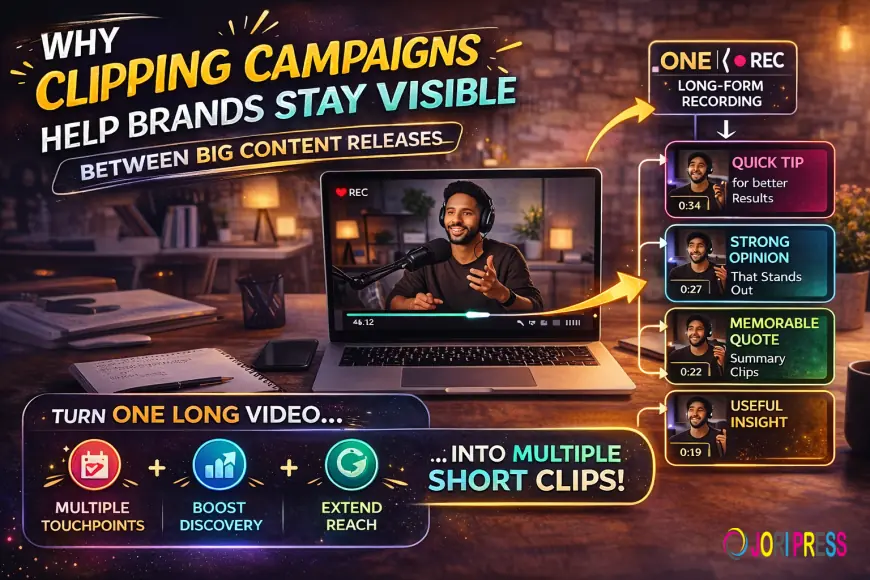
Clipping campaigns help brands turn one long-form recording into multiple short-form assets, keeping them visible between major content releases without constant new production.

A lot of brands put serious effort into creating big content assets.
A webinar gets planned.
A founder interview gets recorded.
A podcast episode gets edited.
A training session gets published.
Then the team moves on and waits for the next big release.
That gap is where visibility usually drops.
This is one reason clipping campaigns have become so useful.
A clipping campaign helps a brand take one long-form recording and turn it into multiple short-form assets that can be published over time. Instead of relying on one major content release to carry attention for as long as possible, the brand creates smaller publishing moments that keep it visible between larger launches.
That is a much more durable system.
Why big content releases are not enough on their own
Long-form content matters.
It builds depth, credibility, and substance. It is often where the best ideas live. But long-form content rarely creates enough repeated exposure on its own. Most people do not discover a brand by starting with a full 45-minute webinar or a complete interview. They usually discover it through something smaller first.
A short clip.
A useful insight.
A memorable quote.
A quick opinion.
A practical takeaway.
Without those smaller entry points, a big release often gets one short burst of attention and then starts fading.
That does not mean the content failed.
It usually means the surrounding distribution was too thin.
What clipping campaigns actually do
Clipping campaigns create structure around reuse.
Instead of treating one long-form asset as one finished piece, the team treats it as a source for several short-form opportunities. That source can then be broken into smaller pieces that support visibility over a longer period of time.
A clipping campaign can produce:
- quick educational clips
- short answer-style videos
- teaser moments
- opinion-led snippets
- memorable quote posts
- summary clips
- social-ready edits for different platforms
This makes one recording more useful.
Instead of one piece of content having one short life cycle, it can keep showing up in smaller forms that help the brand remain active and recognizable.
Why staying visible between releases matters
A lot of brands lose momentum in the gaps.
They create something strong, publish it, and then disappear while working on the next thing. That creates uneven visibility. The audience sees a burst of activity, then silence, then another burst later.
That pattern makes it harder for content to compound.
People tend to remember brands after repeated exposure. A useful clip today, another insight a few days later, then a short takeaway next week. That steady rhythm helps keep the brand familiar and relevant.
Clipping campaigns make that easier because they give the team more publishing material between major releases.
That means the audience does not only see the brand when something big launches.
They keep seeing the brand in smaller, useful ways.
Why this is better than constantly creating from scratch
Some teams respond to visibility gaps by trying to create more.
More shoots.
More meetings.
More recording sessions.
More rush editing.
That often leads to pressure, not better systems.
The smarter move is often to get more value from the work already completed.
That is what clipping campaigns make possible.
One webinar can support several posts.
One founder interview can create multiple short clips.
One podcast episode can keep producing content even after the full version is already live.
That is more efficient than constantly starting over.
It also helps the team stay active without needing to produce brand-new source material every few days.
Why this matters for smaller teams especially
Large brands can sometimes survive inconsistent content workflows.
Smaller teams usually cannot.
If the team is lean, every long-form recording needs to stretch further. There is less room for waste and less room for visibility gaps. That is why clipping campaigns are especially useful for:
- B2B brands
- agencies
- founders
- consultants
- podcasters
- educators
- service businesses
These groups often already create good source material. The problem is not always making more. The real opportunity is building a better distribution layer around what already exists.
When one source asset creates several smaller assets, the brand gets more leverage from the same effort.
That is exactly what smaller teams need.
Why random posting is not the same thing
Some teams already cut short clips, but they do it randomly.
A clip goes live because someone had time to edit it. Another appears later with no connection to the first. The output feels scattered, and the audience gets only occasional contact with the brand.
That is not the same as a campaign.
A clipping campaign is purposeful. It treats the source recording like a content bank and creates a sequence from it. That sequence is what helps the brand stay visible between larger content moments instead of disappearing in the gaps.
That is also why more teams are investing in structured clipping campaigns rather than relying on one-off short-form posts that create activity but not much momentum.
Why repeated short-form exposure strengthens the bigger release
Short-form content does not replace long-form content.
It supports it.
When smaller clips keep circulating after a major release, they continue introducing people to the bigger source. Some viewers may only watch the short version. Others may become curious enough to seek out the full episode, webinar, or interview later.
That means the big release keeps benefiting from continued exposure rather than being forgotten after the initial push.
This makes the entire content ecosystem stronger.
The short-form assets keep the long-form asset alive.
The long-form asset gives depth to the short-form assets.
Together, they build a better visibility cycle.
Final thoughts
Clipping campaigns help brands stay visible between big content releases because they turn one long-form recording into multiple short-form opportunities.
They reduce the dead space between major launches. They create more touchpoints with the audience. They help teams stay active without constant new production. And they make the original recording work harder for longer.
That is what makes them effective.
Not just more clips.
A better way to stay present between the big content moments that matter.
What's Your Reaction?
 Like
0
Like
0
 Dislike
0
Dislike
0
 Love
0
Love
0
 Funny
0
Funny
0
 Angry
0
Angry
0
 Sad
0
Sad
0
 Wow
0
Wow
0