









































Keyless vs Keyed Drill Chuck: Differences, Benefits & Uses
Learn the difference between keyless and keyed drill chucks, including grip strength, tool changing, precision, and machining applications to choose the right option.

Keyless vs Keyed Drill Chuck: Pros, Cons and Uses
Choosing the right Drill Chuck can improve drilling efficiency, tool security, and ease of operation. Keyed and keyless designs both hold drill bits securely, but they differ in tightening methods, gripping force, and convenience. Understanding these differences helps workshop professionals and CNC operators select a suitable option for their machining requirements.
What Is a Keyed Drill Chuck?
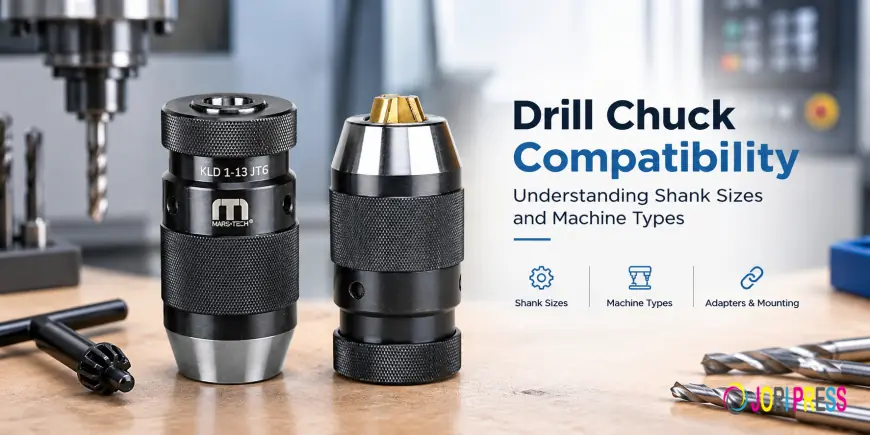
A keyed design uses a separate tool called a drill chuck key to tighten or loosen the jaws around the drill bit. The key engages with the chuck's geared mechanism, allowing the operator to apply additional tightening force.
Advantages of Keyed Designs
-
Strong gripping force: Mechanical tightening helps secure bits during demanding drilling applications.
-
Suitable for heavier work: Depending on its specifications, a keyed model can handle larger drill bits and higher cutting loads.
-
Controlled tightening: The operator can apply force through the key to achieve a firm grip.
The main drawback is that bit changes take longer, and the key can be misplaced. Incorrect tightening or using an incompatible key can also damage the mechanism.
What Is a Keyless Drill Chuck?
A keyless drill chuck allows users to tighten and release drill bits by rotating the outer sleeve by hand. It eliminates the need for a separate key, making tool changes faster and more convenient.
Advantages of Keyless Designs
-
Quick bit changes: Useful when switching between drill sizes frequently.
-
Convenient operation: No separate tightening tool is required.
-
Efficient workflow: Reduces interruptions during routine drilling tasks.
However, gripping performance varies by model. Lower-quality designs may slip under demanding loads, while precision industrial models can provide excellent holding performance within their rated limits.
Keyed vs Keyless: Which Should You Choose?
The better option depends on the material, drill size, machine, and cutting conditions.
A keyed model may be preferable for demanding drilling operations where strong clamping is important. A keyless design is often suitable for routine drilling and applications requiring frequent tool changes.
For CNC machining, selection requires additional care. Check the machine interface, maximum speed, permissible runout, tool shank range, and manufacturer's operating instructions. A Drill Chuck should not automatically be considered suitable for every milling operation simply because it fits the spindle.
What About Adapters and SDS Plus Systems?
A drill chuck adapter connects compatible components with different mounting interfaces. Before using one, verify that the adapter matches the machine, chuck, and intended operation.
An SDS Plus drill chuck or compatible adapter may be used for specific applications when permitted by the equipment manufacturer. Standard drill chucks should not be used with hammer action unless explicitly designed for it.
These mounting details matter because an incompatible connection can cause excessive vibration, poor alignment, or tool loosening.
Which CNC Tools Are Suitable for Aluminum Machining?
Aluminum is relatively easy to cut, but its tendency to produce long chips and build up on cutting edges makes tool selection important.
-
Carbide end mills: Sharp cutting edges and suitable flute geometry help remove material efficiently during milling.
-
Aluminum-specific drills: Appropriate point geometry and chip evacuation help produce cleaner holes and reduce chip packing.
-
Chamfering tools: These remove burrs and create consistent edges after drilling or milling.
Use recommended cutting speeds, feed rates, and suitable lubrication based on the tool manufacturer's guidance.
In precision CNC work, dedicated collet chucks or other purpose-built tool holders may be preferable to a conventional three-jaw chuck, particularly for milling and applications with strict runout requirements.
Jaibros provides industrial and CNC tooling options that users can explore when selecting tools for different machining needs.
Conclusion
Keyed and keyless designs each offer practical advantages. Keyed models provide mechanical tightening, while keyless models prioritize convenient tool changes. Compare gripping capacity, machine compatibility, accuracy, and operating conditions before choosing. The right Drill Chuck is the one that meets the application's requirements without compromising tool security or machining quality.
What's Your Reaction?
 Like
0
 Dislike
0
 Love
0
 Funny
0
 Angry
0
 Sad
0
 Wow
0