




























Central Laboratories and Biomarker Science: Enabling the Future of Precision Clinical Development
Biomarker testing and central laboratories are at the heart of precision medicine. However, their true value is realized when combined with strong capabilities in Medical Writing, Scientific Affairs, Bio-Statistics, Regulatory Affairs, and Project Management.
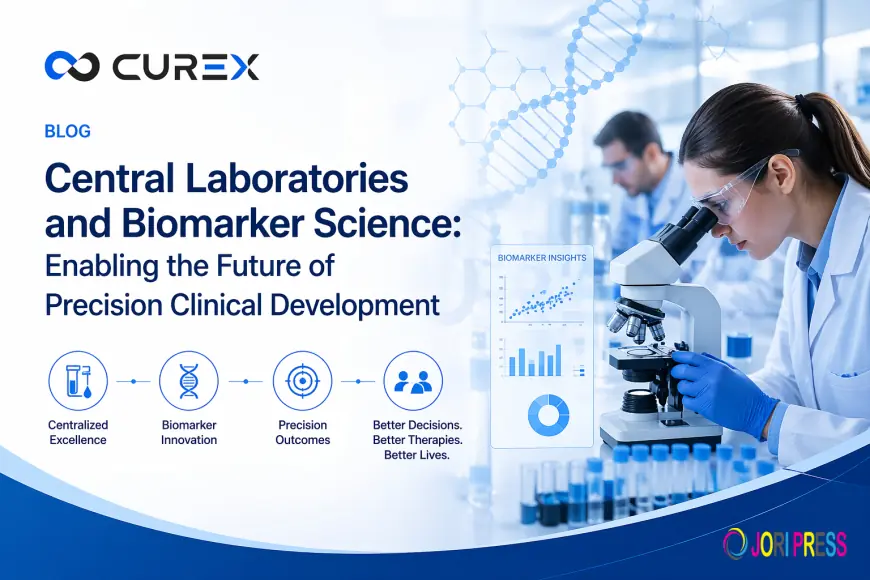
Precision medicine continues to redefine how therapies are discovered, tested, and delivered. As clinical trials increasingly focus on targeted populations, biomarker testing and centralized laboratory infrastructure have become essential pillars of modern Clinical Development. The success of these trials depends not only on scientific innovation but also on strong Medical Writing, Scientific Affairs, and cross-functional collaboration.
Accurate biomarker insights allow sponsors to identify the right patients and measure treatment impact with confidence. This level of precision requires seamless integration of Data Management, Bio-Statistics, and Central Lab Support to ensure that every data point contributes to meaningful clinical outcomes.
The Expanding Role of Biomarkers in Drug Development
Biomarkers are now central to therapeutic innovation, guiding decisions across the entire drug lifecycle—from Pre-Clinical Support to late-stage trials. Their applications include patient selection, dose optimization, and response monitoring.
With the growing reliance on biomarker-driven strategies, Scientific Affairs teams play a critical role in aligning clinical objectives with scientific evidence. At the same time, Regulatory Affairs ensures that biomarker assays and companion diagnostics meet evolving global standards.
Why Central Labs Are the Backbone of Modern Trials
Variability in biomarker testing across multiple sites can compromise trial integrity. Differences in lab procedures, instruments, and interpretation methods can lead to inconsistent results and unreliable endpoints.
Central laboratories address these issues by standardizing processes and ensuring data consistency across all trial locations. Their role extends beyond testing to include Quality & Compliance, ensuring adherence to global regulatory frameworks and maintaining audit readiness.
In addition, effective Project Management ensures that timelines, logistics, and cross-functional coordination remain aligned, especially in complex global trials.
Integrated Capabilities Supporting Biomarker Testing
Central labs today operate as part of a broader ecosystem, supporting multiple functions critical to trial success:
- Bioanalytical Support enables precise measurement of biomarkers, drug concentrations, and metabolites using advanced technologies.
- Data Management systems ensure secure, real-time access to clinical and laboratory data, facilitating faster decision-making.
- Bio-Statistics teams analyze complex datasets to derive actionable insights and validate study endpoints.
- Site Management ensures proper training, sample handling, and adherence to protocols across all clinical sites.
- Safety Pharmacovigilance monitors adverse events and correlates them with biomarker data to ensure patient safety throughout the trial.
Together, these capabilities create a unified framework that enhances efficiency, accuracy, and regulatory compliance.
Overcoming Challenges in Biomarker-Driven Trials
Despite technological advancements, biomarker testing comes with operational and scientific challenges. Central labs mitigate these risks through structured processes and specialized expertise:
- Ensuring proper sample collection and handling through coordinated Site Management
- Maintaining assay reliability with strong Quality & Compliance frameworks
- Accelerating timelines through efficient Project Management
- Supporting regulatory submissions with robust documentation from Medical Writing and Regulatory Affairs
- Enhancing data interpretation through integrated Bio-Statistics and Scientific Affairs
This holistic approach reduces variability and strengthens the reliability of clinical trial outcomes.
The Future: Fully Integrated Clinical Ecosystems
By 2026, successful clinical trials are no longer driven by isolated functions but by fully integrated ecosystems. Central laboratories serve as the hub, connecting Clinical Development, Bioanalytical Support, and Data Management with regulatory and operational teams.
Organizations that combine scientific expertise with operational excellence—spanning Pre-Clinical Support to Safety Pharmacovigilance—are best positioned to accelerate drug development and deliver precision therapies to patients faster.
Conclusion
Biomarker testing and central laboratories are at the heart of precision medicine. However, their true value is realized when combined with strong capabilities in Medical Writing, Scientific Affairs, Bio-Statistics, Regulatory Affairs, and Project Management.
As clinical trials grow more complex, an integrated, multidisciplinary approach is essential. This is how the industry will continue to advance precision medicine—delivering safer, more effective therapies tailored to individual patients.
What's Your Reaction?
 Like
0
Like
0
 Dislike
0
Dislike
0
 Love
0
Love
0
 Funny
0
Funny
0
 Angry
0
Angry
0
 Sad
0
Sad
0
 Wow
0
Wow
0