


































Why Papa’s Pizzeria Still Lives Rent-Free in My Brain
There’s something oddly persistent about games like Papa’s Pizzeria. Not in a loud, flashy way.

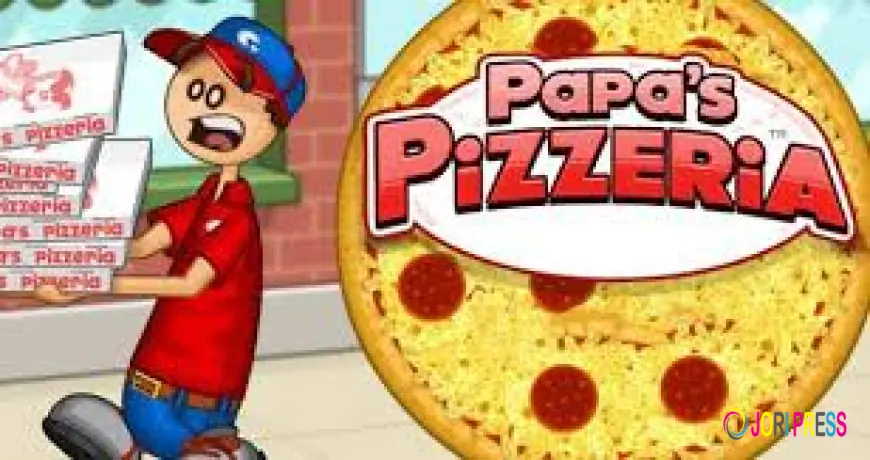
There’s something oddly persistent about games like papa's pizzeria. Not in a loud, flashy way. They don’t dominate your thoughts like a massive open-world RPG or a competitive shooter. Instead, they sit quietly in the background of your mind, resurfacing at random moments—like when you’re waiting in line or staring at an oven timer in real life.
And somehow, years later, you still remember the exact rhythm of taking an order, adding toppings, sliding a pizza into the oven, and hoping you didn’t mess up the timing.
The Quiet Hook of Repetition
At a glance, the gameplay is almost aggressively simple. A customer walks in. You take their order. You build the pizza. You bake it. You slice it. You serve it.
That’s it.
But the simplicity is deceptive. Each step has just enough room for error that your brain stays engaged. You’re not just clicking through a process—you’re managing small, accumulating responsibilities. One pizza in the oven is easy. Two starts to feel like a balancing act. Three or four? Now you’re juggling.
The repetition becomes a kind of rhythm. After a while, you stop consciously thinking about each step. Your hands (or mouse) move almost automatically. It’s not quite muscle memory, but it feels close.
This is where the game quietly hooks you. Not through complexity, but through consistency. You always know what to do, but doing it well becomes the challenge.
Stress, But the Manageable Kind
There’s a specific kind of stress that Papa’s Pizzeria creates. It’s not overwhelming. It doesn’t feel unfair. But it builds.
You take an order while another pizza is baking. A third customer is waiting. You glance at the oven—maybe that pizza has been in there a little too long. You rush to pull it out, slice it quickly, and hope the customer won’t mind the slightly uneven cuts.
That small spike of tension is the entire experience.
It’s a controlled environment where mistakes matter, but not too much. You lose points, not progress. You disappoint a customer, not yourself. It creates a safe space to feel pressure without real consequences.
And weirdly, that’s satisfying.
The Illusion of Mastery
One of the most interesting things about games like this is how they create a sense of improvement without dramatically changing the mechanics.
You’re doing the same tasks on day 1 as you are on day 20. The difference is in how you handle them.
Early on, everything feels slightly chaotic. You hesitate. You double-check toppings. You forget about the oven.
Later, you start anticipating. You know which orders will take longer. You mentally queue actions before you perform them. You develop tiny efficiencies—placing toppings faster, slicing more confidently, checking the oven at just the right moment.
The game doesn’t tell you you’ve improved. It doesn’t need to. You feel it.
Nostalgia Hits Differently Here
For a lot of people, Papa’s Pizzeria isn’t just a game. It’s a memory tied to a very specific era of the internet.
Browser games. Flash portals. Sneaking in a quick session during a break. That slightly laggy feeling of running a game in a tab alongside everything else.
There’s a texture to that experience that modern games don’t quite replicate. Not better or worse—just different.
You didn’t “commit” to playing. You just… started. Maybe you had 10 minutes. Maybe an hour passed without you noticing.
Games like this fit perfectly into that space. They didn’t demand attention. They absorbed it.
And now, revisiting them feels like opening a time capsule. The mechanics are still there, unchanged. But your perspective isn’t.
Tiny Systems, Big Impact
What makes Papa’s Pizzeria interesting from a design standpoint is how little it actually uses to create engagement.
There are no sprawling skill trees. No complex narrative arcs. No high-end graphics.
Instead, it relies on a handful of tightly connected systems:
- Order accuracy
- Topping placement
- Baking timing
- Slicing precision
- Customer satisfaction
Each one feeds into the next. Mess up the toppings, and the customer notices. Leave the pizza in too long, and your score drops. Slice unevenly, and you feel it—even if the penalty is small.
None of these systems are complicated on their own. But together, they create a loop that’s surprisingly hard to step away from.
You’re constantly making micro-decisions. What needs attention right now? What can wait? What’s the risk of ignoring this for a few more seconds?
It’s not just gameplay—it’s low-stakes decision training.
The Satisfaction of “Good Enough”
One thing that stands out after playing for a while is that perfection isn’t required.
You can get a perfect score, sure. But most of the time, you’re aiming for “good enough.” A slightly overbaked pizza still passes. A topping that’s a bit off-center isn’t a disaster.
This creates a more relaxed kind of engagement. You’re not chasing flawless execution every time. You’re managing trade-offs.
Do you rush this pizza to serve a waiting customer, or take extra time to get it just right?
Do you prioritize speed or accuracy?
These are small decisions, but they add texture to the experience. You’re not just following steps—you’re making judgment calls.
Why It Sticks
So why does a game this simple stick around in people’s minds?
Part of it is the rhythm. Part of it is the nostalgia. But a big part is how it respects your attention.
It doesn’t overwhelm you with systems. It doesn’t demand hours of commitment. It gives you a clear loop, lets you engage with it, and quietly rewards improvement.
There’s also something deeply human about the structure. Serving people. Managing tasks. Trying to do a good job under mild pressure.
It mirrors real life just enough to feel familiar, but not enough to feel stressful.
What's Your Reaction?
 Like
0
Like
0
 Dislike
0
Dislike
0
 Love
0
Love
0
 Funny
0
Funny
0
 Angry
0
Angry
0
 Sad
0
Sad
0
 Wow
0
Wow
0