






























The Problem With Most Henna Suppliers in India That Nobody Warns You About
Not every henna supplier in India operates with the standards international buyers expect. Here is what to watch for before you place your next wholesale order.

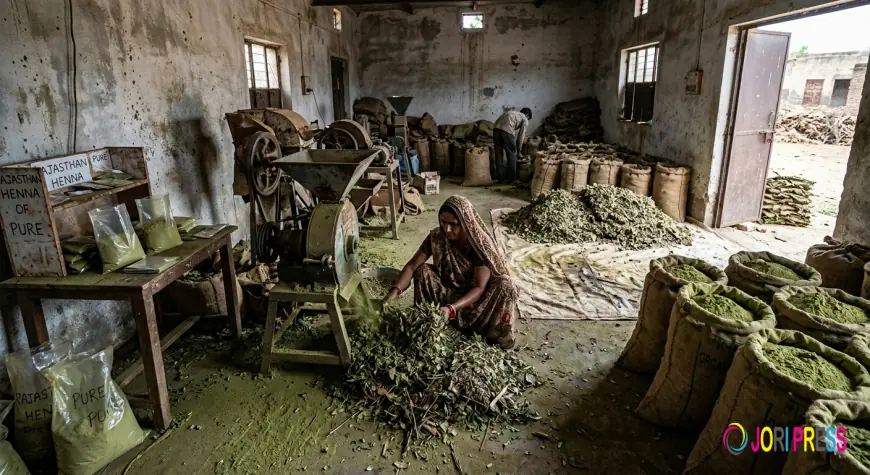
India produces the majority of the world's natural henna. The country's climate, soil, and centuries of cultivation expertise make it the dominant source for genuine henna powder globally — particularly from Rajasthan, where sojat henna sets the quality benchmark.
But being the world's largest producer also means India has the world's widest quality range. And a lot of what gets exported sits at the lower end of that range.
The Trader Problem
The majority of companies presenting themselves as a henna supplier in India are not manufacturers. They are traders — middlemen who buy processed powder from multiple sources, store it in their own warehouses, and sell it under their own brand or packaging.
This is not inherently dishonest. But it creates a fundamental accountability gap. When you buy from a trader rather than a henna manufacturer in India with its own processing facility, you lose visibility into where the material actually came from, how it was processed, and whether any quality controls were applied.
Traders are also less likely to conduct independent batch testing because testing adds cost to each shipment. They rely on supplier-provided documentation — which, in a market with low verification standards, is often meaningless.
What Happens During Long Storage and Transit
Henna powder degrades. Lawsone content — the active dyeing compound — drops over time, especially in warm, humid conditions. Proper storage at controlled temperature and humidity is essential for maintaining quality from production to the end buyer.
Many wholesale henna powder suppliers do not maintain adequate storage conditions. Product sits in unventilated warehouses through summer heat. Shipment containers crossing the Indian Ocean in summer reach internal temperatures that accelerate degradation. By the time the product reaches a brand's facility in Europe, North America, or the Gulf, the dye content is a fraction of what it was when it left the processing unit.
The Documentation That Actually Matters
When evaluating a henna supplier in India, the documents that actually matter are not the ones they send you automatically. They are the ones you have to ask for specifically.
Request the certificate of analysis from an accredited third-party lab — not the supplier's internal lab. Ask for the lawsone content result from the specific batch you are buying — not from a previous shipment used as a proxy. Ask for the harvest date and storage history. Ask for the processing facility's ISO and GMP certificates, not just the company registration.
If a henna manufacturer in India cannot provide these documents for a specific batch within a reasonable timeframe, that is a clear signal about how their operation actually runs.
Building a Supply Chain You Can Actually Trust
The henna powder manufacturers in India operating at the highest standard share a common profile: they own or have direct contracts with farms, they process in-house under certified conditions, they test every batch, and they maintain full documentation chains.
They are also typically more expensive than traders. That premium is exactly what you should expect to pay for accountability. The brands that have learned this lesson — usually after one costly experience with a low-cost supplier — rarely go back to chasing the cheapest quote.
What's Your Reaction?
 Like
0
Like
0
 Dislike
0
Dislike
0
 Love
0
Love
0
 Funny
0
Funny
0
 Angry
0
Angry
0
 Sad
0
Sad
0
 Wow
0
Wow
0