




































Understanding CBN Cutting Tools for CNC Machining
Learn how CBN cutting tools improve CNC machining results with better wear resistance, precision, surface finish, and high-speed cutting performance.
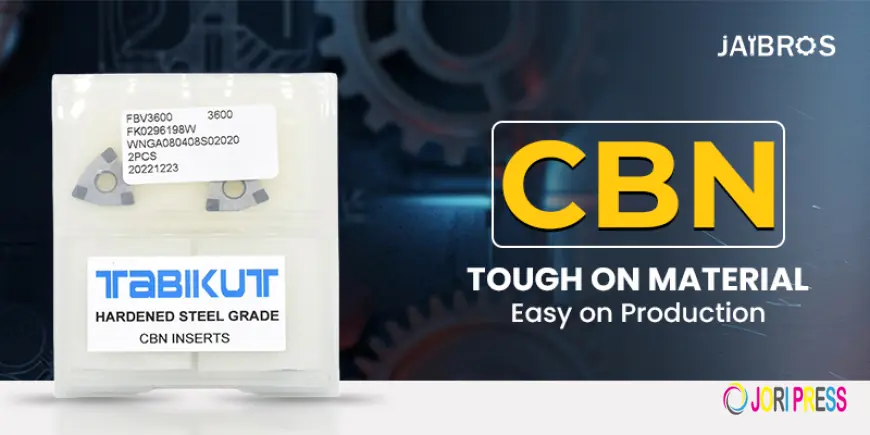
Learn how CBN cutting tools improve CNC machining results with better wear resistance, precision, surface finish, and high-speed cutting performance.
Understanding CBN Cutting Tools for Better CNC Machining Results
Precision machining has become increasingly necessary for industries today. Those producing car parts, aircraft components, molds, dies, and machinery need tools that will guarantee efficiency and stability in their cutting process. While strong and efficient machinery has long been known as one of the key elements for successful machining, the choice of cutting fluids has also gained importance.
To increase productivity and ensure higher quality machining, most industries tend to use cbn cutting tools in their production processes. This has much to do with their capacity for machining hard materials.
The Role of CBN in Modern CNC Machining
Cubic Boron Nitride, commonly known as CBN, is recognized as one of the hardest synthetic substances used in manufacturing operations. It is widely applied in machining hardened metals where ordinary cutting options may wear quickly or lose accuracy during production.
The strength of cbn cutting tool material lies in its resistance to heat, abrasion, and cutting pressure. Even in challenging machining conditions, it can maintain edge stability and support more controlled cutting operations.
Some important performance characteristics include:
-
High hardness retention
-
Excellent wear resistance
-
Strong thermal stability
-
Reliable dimensional accuracy
-
Reduced tool replacement frequency
These properties help manufacturers maintain smoother machining performance during long production cycles.
How CBN Technology Supports Better Machining Results
Improving machining quality requires more than selecting the right machine. Factors such as workpiece hardness, cutting parameters, machine stability, and tooling design all influence production outcomes.
A properly selected cnc tool can contribute to better process control and operational efficiency.
CBN technology supports machining improvement in several practical ways.
Longer Operational Life
One of the biggest challenges in machining hard metals is excessive tool wear. Frequent tool changes increase downtime, labor effort, and production cost.
By using cbn cutting tools, manufacturers can often achieve:
-
Improved edge durability
-
Reduced wear during continuous machining
-
Better production consistency
-
Lower interruption rates
Longer operational life can positively affect both productivity and cost efficiency.
Better Surface Quality
Surface finish is a major concern in industries that depend on tight tolerances and precision components. Poor finishing quality may require additional grinding, polishing, or corrective machining.
CBN-based machining can help support:
-
Cleaner machined surfaces
-
Improved dimensional control
-
Better repeatability between production batches
-
Reduced finishing requirements in some operations
This allows manufacturers to achieve more reliable production standards.
Stable Performance Under Heat
Hard turning and high-speed machining generate considerable heat. Some cutting solutions struggle to maintain performance under extreme thermal conditions.
CBN technology is designed to withstand elevated temperatures without losing cutting capability.
Benefits may include:
-
Consistent machining stability
-
Reduced heat-related wear
-
Better cutting reliability
-
Stronger performance during extended operations
These advantages explain why many industrial manufacturers rely on cbn cutting tools for difficult machining environments.
Common Industrial Applications
CBN technology has become important across several manufacturing sectors because of its ability to handle demanding materials and precision requirements.
Automotive Manufacturing
The automotive sector regularly machines hardened steel components that require accuracy and repeatable performance.
Common applications include:
-
Gear production
-
Brake system components
-
Bearing surfaces
-
Transmission parts
Reliable machining helps maintain component quality and production efficiency.
Aerospace Production
Aerospace engineering involves complex materials and strict dimensional standards. Machining errors can affect product performance and reliability.
Typical aerospace applications involve:
-
Hardened alloy components
-
Precision structural elements
-
Heat-resistant metal parts
-
Critical engineering components
Advanced tooling performance supports the accuracy needed in aerospace manufacturing.
Mold, Die, and Industrial Engineering
Industrial production environments often involve heavy-duty machining operations.
Typical uses include:
-
Mold cavity machining
-
Die finishing work
-
Roller manufacturing
-
Precision industrial parts
In such operations, stable cutting behavior is highly valuable for maintaining output quality.
Choosing the Right Insert Design for the Application
Tool geometry and insert configuration strongly influence machining outcomes. Different operations require different approaches depending on hardness level, speed requirements, and production targets.
Among specialized options, solid cbn inserts are frequently selected for hard turning applications where precision and edge strength are essential.
Before selecting inserts, manufacturers usually evaluate:
-
Material hardness level
-
Desired surface finish
-
Feed and speed conditions
-
Production volume requirements
-
Machining complexity
Proper selection helps improve performance while minimizing unnecessary wear.
Important Factors Before Selecting CBN Solutions
Every machining environment has unique operational needs. Choosing the most suitable tooling setup requires careful evaluation.
Key factors include:
Workpiece Material
The behavior of the material directly affects machining performance.
Manufacturers should review:
-
Material composition
-
Hardness level
-
Heat generation tendency
-
Cutting difficulty
Understanding these factors helps support better tooling decisions.
Machining Conditions
Operational settings influence efficiency, quality, and tool life.
Important considerations include:
-
Cutting speed
-
Feed rate
-
Depth of cut
-
Machine rigidity
Incorrect settings can reduce performance and affect production consistency.
Production Goals
Different facilities operate with different priorities.
Common objectives may include:
-
Faster cycle times
-
Longer tool service life
-
Better dimensional accuracy
-
Lower operational cost
Matching tooling strategy with production goals improves machining outcomes.
Best Practices for Achieving Better CNC Results
Even high-performance machining solutions deliver the best results when applied correctly.
Manufacturers can improve productivity by following practical methods such as:
-
Monitoring tool wear regularly
-
Using recommended cutting parameters
-
Maintaining stable machine conditions
-
Selecting appropriate insert geometry
-
Reviewing machining data continuously
Conclusion
In order to attain better results from CNC machining, a harmonized use of the above three elements is required. In consideration of the hardness, wear resistance, and ability to machine tough materials, cbn cutting tools have come into great importance in machining. Application requirements identification, selection of inserts, and optimization of machining processes are some of the things that can greatly assist in achieving efficient machining. For CNC tooling information and machining needs, one could consider jaibros a reliable option.
FAQs
1. What are CBN tools mainly used for?
They are mainly used for machining hardened steels, cast iron, and difficult-to-machine industrial materials.
2. Why are CBN solutions preferred in hard machining?
They offer strong wear resistance, thermal stability, and reliable cutting performance.
3. Which industries commonly use CBN machining technology?
Automotive, aerospace, mold & die, and industrial manufacturing sectors commonly use it.
4. Do CBN solutions improve surface finish?
Yes, they can support smoother finishes and better dimensional consistency in many machining operations.
5. How can manufacturers improve machining efficiency?
Using proper tooling selection, correct cutting parameters, and stable machine setup can improve overall efficiency.
What's Your Reaction?
 Like
0
Like
0
 Dislike
0
Dislike
0
 Love
0
Love
0
 Funny
0
Funny
0
 Angry
0
Angry
0
 Sad
0
Sad
0
 Wow
0
Wow
0