








































Reduce Tool Wear with Advanced Machining Inserts
Learn how advanced machining inserts reduce tool wear, improve cutting performance, control heat, and increase productivity in CNC machining.

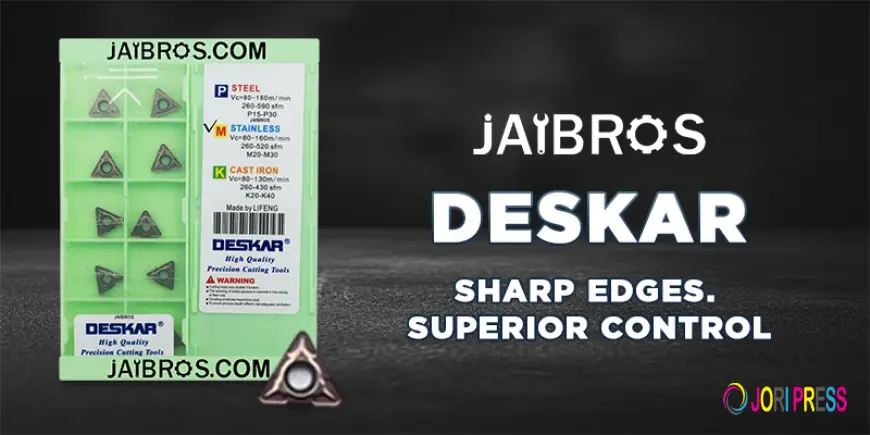
Learn how advanced machining inserts reduce tool wear, improve cutting performance, control heat, and increase productivity in CNC machining.
How Deskar Inserts Help Reduce Tool Wear in Machining
The aim of contemporary machining industries is to achieve increased productivity at reduced maintenance costs. Unnecessary heat and friction caused in the process of cutting may damage the cutting edge quickly and decrease accuracy in the process. Today's machines use more efficient insert technologies in order to maintain stable operation and achieve greater efficiency in industrial processes.
The use of Deskar inserts has become common practice in the modern manufacturing environment. This is attributed to the fact that Deskar Inserts assist in achieving greater cutting stability and decreasing the rate of wear in continuous processes of machining.
Why Tool Wear Happens During Machining
The phenomenon of tool wear is brought about by the constant engagement of cutting tools with metal materials under conditions of high pressure and temperature. Friction arises as a result of the contact that is made between the cutting edge and the material being worked on.
Some common causes of tool wear include:
-
Excessive cutting heat
-
Incorrect feed rate and speed
-
Poor chip evacuation
-
Hard workpiece materials
-
Low-quality insert coating
-
Improper coolant usage
When wear increases, manufacturers experience poor surface finish, dimensional errors, and unexpected machine downtime. Reducing wear is essential for maintaining stable production and minimizing operational expenses.
Importance of Insert Quality in Machining
Insert quality directly affects machining consistency and cutting efficiency. A well-designed insert can withstand higher temperatures and cutting pressure without losing edge sharpness quickly. This allows operators to maintain stable production cycles for longer periods.
High-performance inserts usually provide:
-
Better heat resistance
-
Strong edge stability
-
Improved chip control
-
Lower vibration during cutting
-
Reduced machine stress
-
Longer operational life
In modern manufacturing environments, industries prefer inserts that support high-speed machining while maintaining precision. This helps improve productivity without increasing replacement frequency.
How Insert Coating Helps Extend Tool Life
Advanced coating technology plays a major role in reducing cutting damage. Coatings create a protective barrier between the cutting edge and the workpiece material. This minimizes direct friction and controls excessive heat buildup.
Benefits of coated inserts include:
-
Lower wear rate
-
Reduced oxidation
-
Better thermal protection
-
Improved cutting smoothness
-
Enhanced resistance against abrasion
Many machining industries use specialized coatings when working with stainless steel, alloy steel, cast iron, and hardened metals. Proper coating selection helps improve cutting stability even during long machining cycles.
Role of Edge Geometry in Wear Reduction
Insert geometry is another important factor that influences tool life. The shape and angle of the cutting edge determine how efficiently chips are removed during machining operations.
A properly designed cutting edge can:
-
Reduce cutting pressure
-
Improve chip breaking
-
Lower vibration levels
-
Prevent edge chipping
-
Maintain smooth cutting action
Sharp and stable geometries are particularly useful in precision machining applications where surface finish quality is critical. Selecting the correct edge style according to material type also helps reduce unnecessary stress on the cutting area.
Performance Benefits in High-Speed Operations
Modern industries often operate machines at high cutting speeds to improve production output. However, high-speed machining increases heat generation and cutting pressure. Standard inserts may fail quickly under these demanding conditions.
This is where deskar inserts are commonly preferred in industrial applications because they are designed for durability and consistent machining performance. Their advanced design helps maintain cutting stability while reducing rapid edge wear during continuous operations.
Some major advantages during high-speed machining include:
-
Stable cutting at higher RPM
-
Better resistance against thermal cracks
-
Reduced tool replacement frequency
-
Consistent dimensional accuracy
-
Improved productivity in mass production
These benefits help manufacturers lower maintenance interruptions and improve overall operational efficiency.
Heat Control and Friction Reduction
Heat is one of the primary reasons behind premature cutting failure. Proper insert material and coating technology help manage heat more effectively.
Efficient heat control offers several advantages:
-
Better tool durability
-
Lower cutting resistance
-
Reduced deformation risk
-
Improved workpiece finish
-
Stable machining quality
Using suitable coolant systems together with premium inserts further enhances machining performance. Controlled heat generation also reduces stress on machine spindles and holders.
Material Strength and Durability
Insert durability depends heavily on carbide quality and manufacturing precision. Strong carbide composition provides better resistance against impact and abrasive wear. Industries working with hard metals require inserts capable of maintaining edge sharpness even under heavy loads.
Many production units prefer deskar carbide inserts because they provide strong wear resistance and reliable cutting consistency for industrial machining tasks. Durable carbide structures help improve overall machining efficiency while lowering insert consumption over time.
Important durability features include:
-
Strong carbide substrate
-
High compressive strength
-
Better crack resistance
-
Longer cutting edge retention
-
Improved heavy-duty performance
Reliable material quality allows manufacturers to maintain uninterrupted machining operations for extended periods.
Cost Savings Through Reduced Tool Replacement
Frequent tool replacement increases manufacturing costs and production downtime. Every insert change interrupts machining operations and reduces overall efficiency. Reducing wear helps companies save both time and operational expenses.
Some direct cost-saving benefits include:
-
Lower insert consumption
-
Reduced machine stoppage
-
Fewer maintenance interruptions
-
Better production planning
-
Improved operator productivity
Many workshops compare deskar inserts price with long-term performance because higher durability often provides better value over time. Stable cutting performance helps industries reduce unnecessary production losses caused by tool failure.
Importance of Proper Machining Practices
Even high-quality inserts require correct machining practices for maximum performance. Operators must use appropriate cutting parameters according to material hardness and machining requirements.
Best practices for reducing wear include:
-
Selecting proper cutting speed
-
Using recommended feed rates
-
Maintaining coolant flow
-
Checking insert alignment
-
Avoiding excessive vibration
-
Monitoring chip evacuation
Proper machine setup ensures inserts perform efficiently without unnecessary stress. Regular inspection also helps identify wear patterns before serious damage occurs.
Choosing the Right Insert for Industrial Applications
Different machining operations require different insert types. Turning, milling, boring, and facing applications all demand specific geometries and coatings for the best results.
Manufacturers should consider:
-
Workpiece material
-
Cutting speed requirements
-
Surface finish expectations
-
Machine capability
-
Depth of cut
-
Production volume
Selecting the correct insert improves cutting consistency and reduces operational risks. A reliable cnc tool setup combined with quality inserts can significantly improve machining accuracy and production efficiency.
Future of Wear-Resistant Machining Solutions
Modern machining technology continues evolving with improved carbide materials, nano-coatings, and advanced insert geometries. Manufacturers are constantly searching for solutions that deliver higher productivity with lower maintenance requirements.
Automation and smart manufacturing systems also demand inserts capable of maintaining stable cutting performance during long unattended machining cycles. A durable cnc tool system supports precision manufacturing while helping industries meet strict production targets.
As industrial machining becomes more advanced, insert technology will continue playing a major role in reducing operational costs and improving manufacturing reliability.
Conclusion
In order to achieve efficient machining, reduce costs, and achieve efficiency, it is imperative that wear of the tool is reduced. The high efficiency insert helps in achieving stability and precision in machining by offering longevity of the tool despite difficult situations. Insertion, coating, and machining help increase efficiency during the production process. For companies that require high-quality machining products, the best place to source them from is from a reliable supplier such as jaibros.
FAQs
1. What causes tool wear during machining?
Tool wear mainly occurs because of heat, friction, cutting pressure, and continuous contact between the insert and workpiece material.
2. How does a deskar insert improve machining performance?
A deskar insert helps improve cutting stability, reduce edge damage, and maintain better machining consistency during industrial operations.
3. Why are coated inserts important?
Coated inserts reduce friction, control heat buildup, and improve wear resistance for longer tool life.
4. Can insert quality affect production costs?
Yes, durable inserts reduce replacement frequency, machine downtime, and maintenance expenses, which helps lower overall production costs.
5. How can manufacturers reduce premature tool failure?
Using proper cutting speed, coolant flow, insert geometry, and machine setup can greatly reduce premature wear and improve machining efficiency.
What's Your Reaction?
 Like
0
Like
0
 Dislike
0
Dislike
0
 Love
0
Love
0
 Funny
0
Funny
0
 Angry
0
Angry
0
 Sad
0
Sad
0
 Wow
0
Wow
0