







































The Fabric of the Great War: A Look at the British Uniforms of World War 1
Discover the history, design, and materials behind the iconic British uniforms of World War 1. Learn how the 1902 Service Dress and Brodie helmet protected troops, and find authentic Great War reproductions by Replicamilitary.
When Great Britain entered the conflict in August 1914, its army marched onto the battlefields of Europe wearing a uniform that revolutionized military design. The vibrant scarlet and blue tunics of the 19th century were entirely cast aside for a garment designed strictly for utility, protection, and camouflage. Today, the british uniforms of world war 1 stand as a poignant symbol of the "Tommy" enduring the harsh, muddy realities of trench warfare.
For modern historians, film productions, and living history reenactors, capturing the exact texture, drape, and utility of these garments is crucial to honoring the legacy of those who served.
Anatomy of the Standard Issue Uniform
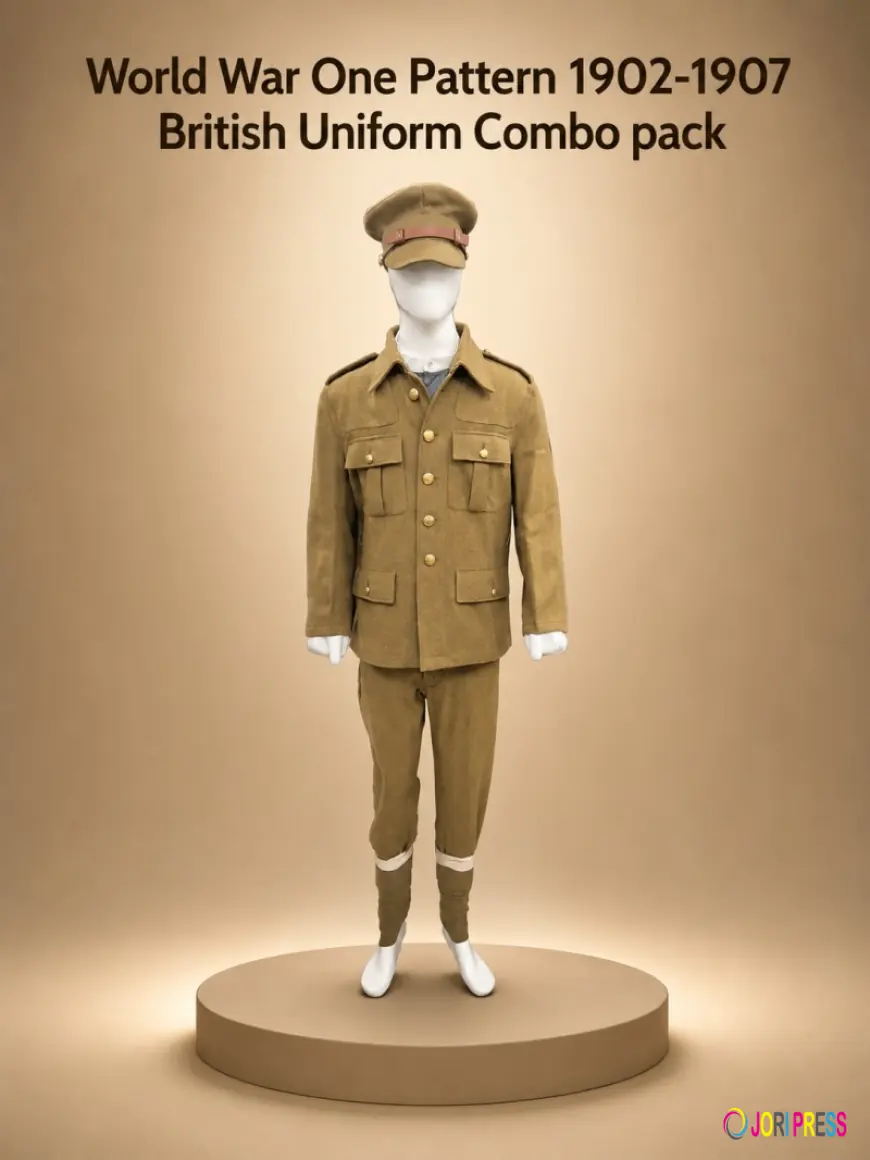
The standard uniform for British enlisted men (other ranks) throughout the war was the 1902 Pattern Service Dress. Unlike the complex uniforms of continental Europe, the British kit prioritized practicality above all else.
The Khaki Serge Tunic
The centerpiece of the british uniforms of world war 1 was the heavy wool tunic, dyed in a dull, olive-brown shade known as khaki. This heavy-weight wool serge provided vital insulation against the damp, freezing climate of the Western Front. It featured four large external pockets secured by brass General Service buttons—designed to carry daily rations, personal ammunition, and the soldier's paybook. To prevent the heavy leather or webbing equipment from tearing the uniform, reinforced patches of wool were stitched directly over the shoulders.
Trousers and Puttees
Matching khaki serge trousers were worn high on the waist, supported by braces (suspenders). From the ankle to just below the knee, soldiers tightly wrapped wool puttees. These long bands of fabric provided essential ankle support during exhausting marches and acted as a seal, preventing thick mud and debris from slipping down into the soldier's boots.
Headgear and the Steel Helmet
In 1914, soldiers wore a soft, peaked cap. However, as modern artillery and shrapnel caused devastating head injuries, the iconic steel Brodie helmet was introduced in late 1915. Its distinctive wide brim offered vital overhead protection from falling shrapnel, forever changing the silhouette of the British soldier.
Gear Integration and Webbing
A soldier's uniform was incomplete without the 1908 Pattern Webbing Equipment. Britain pioneered the use of woven cotton webbing rather than traditional leather. This innovative harness system buckled directly over the tunic, distributing the weight of 150 rounds of ammunition, a water bottle, an entrenching tool, a bayonet, and a haversack evenly across the soldier's torso.
Historical Accuracy with Replicamilitary
For those looking to recreate this historic attire, finding the correct weave and precise shade of khaki wool is incredibly challenging. Replicamilitary bridges this gap by manufacturing museum-quality reproductions of british uniforms of world war 1.
Meticulously crafting everything from the coarse 1902 Service Dress tunics to historically accurate puttees, caps, and field gear, Replicamilitary ensures that every button, stitch, and fabric weight aligns with original specifications. Their dedication to historical accuracy provides reenactors and collectors worldwide with rugged, authentic kit built to withstand the rigors of living history.
What's Your Reaction?
 Like
0
Like
0
 Dislike
0
Dislike
0
 Love
0
Love
0
 Funny
0
Funny
0
 Angry
0
Angry
0
 Sad
0
Sad
0
 Wow
0
Wow
0