





































Why UV Disinfection Is Becoming a Healthcare Standard
Discover why UV disinfection is becoming a healthcare standard for infection prevention, patient safety, environmental hygiene, and reducing healthcare-associated infections.
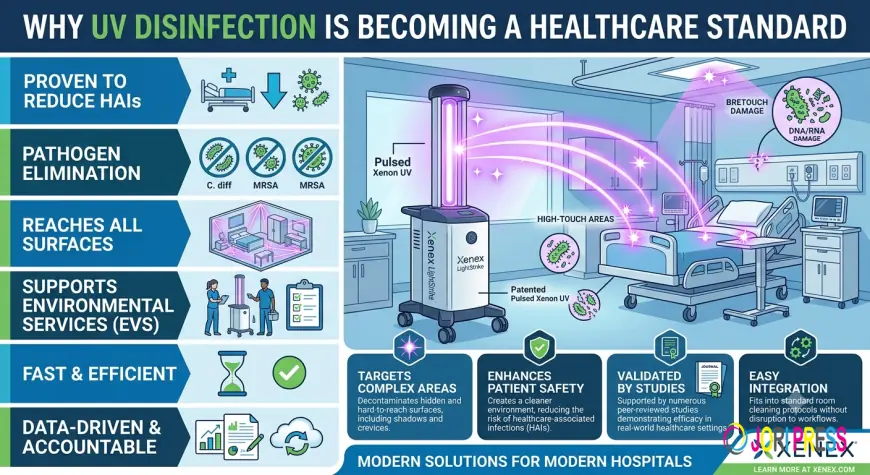
Healthcare facilities are under increasing pressure to improve patient safety, reduce healthcare-associated infections (HAIs), and maintain the highest standards of environmental hygiene. While traditional cleaning and disinfection methods remain critical, hospitals are increasingly adopting advanced technologies to strengthen infection prevention efforts. Among these innovations, UV disinfection has emerged as one of the most effective and widely accepted solutions. Through advanced systems provided by healthcare UV disinfection solutions, hospitals are transforming their approach to environmental cleaning and creating safer patient care environments.
As healthcare organizations continue to focus on reducing pathogen transmission and improving patient outcomes, UV disinfection is rapidly becoming a new industry standard.
Understanding UV Disinfection
UV disinfection uses ultraviolet light to destroy harmful microorganisms by damaging their DNA or RNA. Once exposed to UV light, bacteria, viruses, and other pathogens lose their ability to reproduce and spread infection.
Unlike traditional chemical disinfectants that rely on direct surface contact, UV technology provides an additional layer of protection by targeting microorganisms that may remain after manual cleaning.
Healthcare facilities increasingly use UV disinfection systems in patient rooms, operating rooms, intensive care units, and other high-risk areas to improve environmental hygiene and infection control.
The Growing Challenge of Healthcare-Associated Infections
Healthcare-associated infections remain a major concern for hospitals worldwide. Patients receiving medical care often have weakened immune systems, making them more vulnerable to infection.
Common pathogens associated with HAIs include:
-
Methicillin-resistant Staphylococcus aureus (MRSA)
-
Clostridioides difficile (C. difficile)
-
Vancomycin-resistant Enterococci (VRE)
-
Acinetobacter species
-
Influenza viruses
-
Norovirus
These microorganisms can survive on environmental surfaces for extended periods and contribute to cross-contamination if not properly eliminated.
Reducing environmental contamination has become a key priority for healthcare organizations seeking to improve patient safety and infection prevention outcomes.
Why Traditional Cleaning Alone Is Not Enough
Environmental services teams play a critical role in maintaining hospital cleanliness. However, even the most thorough cleaning protocols face challenges.
Human Error
Busy healthcare environments can make it difficult to ensure every surface receives consistent attention during cleaning procedures.
High-Touch Surfaces
Items such as bed rails, door handles, call buttons, and medical equipment are touched frequently and can become reservoirs for harmful pathogens.
Hard-to-Reach Areas
Certain areas within patient rooms and healthcare facilities may be difficult to disinfect thoroughly using manual methods alone.
Persistent Microorganisms
Some pathogens can survive routine cleaning and remain on surfaces, increasing the risk of infection transmission.
Because of these challenges, hospitals are increasingly adopting UV disinfection as a supplemental technology that enhances existing cleaning programs.
UV Disinfection Supports Comprehensive Infection Prevention
Modern infection prevention programs rely on multiple layers of protection. UV disinfection is not designed to replace manual cleaning but to strengthen it.
After environmental services staff complete standard cleaning procedures, UV systems can be deployed to further reduce microbial contamination.
This multi-layered approach helps healthcare facilities:
-
Improve environmental hygiene
-
Reduce pathogen transmission
-
Enhance patient safety
-
Support infection prevention initiatives
-
Strengthen healthcare quality programs
The ability to complement existing cleaning protocols is one reason UV disinfection has gained widespread acceptance across the healthcare industry.
Consistent and Reliable Results
One of the biggest advantages of UV disinfection technology is consistency.
Manual cleaning effectiveness can vary depending on:
-
Staff workload
-
Training levels
-
Time constraints
-
Environmental conditions
Automated UV systems operate according to standardized procedures, helping ensure more consistent disinfection results throughout healthcare facilities.
This reliability allows hospitals to maintain higher environmental hygiene standards and reduce variability in infection prevention efforts.
Faster Room Turnover Without Sacrificing Safety
Healthcare facilities must often prepare patient rooms quickly while maintaining strict cleanliness requirements.
UV disinfection systems help support efficient room turnover by providing rapid disinfection cycles that can be integrated into existing workflows.
Benefits include:
-
Reduced downtime between patients
-
Improved operational efficiency
-
Enhanced environmental cleaning processes
-
Continued focus on patient safety
Hospitals can maintain high disinfection standards while improving patient flow and resource utilization.
Supporting Patient and Staff Confidence
Patient perception plays an important role in healthcare quality. Patients and their families want assurance that hospitals are taking every possible step to create safe care environments.
Healthcare workers also benefit from knowing advanced infection prevention measures are in place.
UV disinfection helps demonstrate a healthcare facility's commitment to:
-
Patient safety
-
Infection prevention
-
Environmental hygiene
-
Quality improvement
-
Healthcare innovation
This commitment can improve trust among patients, staff, and the broader community.
Why Healthcare Leaders Are Investing in UV Technology
Healthcare administrators continually seek evidence-based solutions that improve outcomes while supporting operational goals.
UV disinfection technology offers several advantages:
Enhanced Environmental Hygiene
UV systems help reduce microbial contamination throughout patient care environments.
Improved Infection Prevention
Additional disinfection measures support lower pathogen transmission risks.
Standardized Processes
Automation reduces inconsistencies associated with manual disinfection procedures.
Long-Term Value
Hospitals that invest in advanced infection prevention technologies often strengthen patient safety programs and healthcare quality initiatives.
As a result, many healthcare organizations now view UV disinfection as a strategic investment rather than an optional enhancement.
Expanding Applications Across Healthcare Settings
UV disinfection technology is no longer limited to patient rooms.
Healthcare facilities increasingly deploy UV systems in:
Intensive Care Units (ICUs)
Critically ill patients require the highest levels of infection prevention.
Operating Rooms
Reducing environmental contamination helps support safer surgical outcomes.
Emergency Departments
High patient turnover increases the need for efficient disinfection solutions.
Isolation Rooms
Enhanced disinfection measures help prevent the spread of infectious diseases.
Long-Term Care Facilities
Vulnerable populations benefit from stronger environmental hygiene programs.
This versatility is another reason UV disinfection is becoming a healthcare standard.
The Future of Healthcare Disinfection
The healthcare industry continues to embrace technologies that improve infection prevention and patient safety.
Future innovations may include:
-
Smarter UV disinfection systems
-
Automated environmental monitoring
-
Artificial intelligence-driven cleaning analytics
-
Data-based infection prevention programs
-
Enhanced whole-room disinfection solutions
As these advancements become more widespread, UV technology will continue to play a central role in healthcare disinfection strategies.
Conclusion
UV disinfection has evolved from an emerging technology into a trusted healthcare solution. As hospitals face increasing challenges related to healthcare-associated infections, environmental contamination, and patient safety, UV disinfection provides an effective way to strengthen infection prevention efforts.
By complementing traditional cleaning methods, improving environmental hygiene, and delivering consistent microbial reduction, UV disinfection is helping healthcare facilities create safer environments for patients and staff. Its effectiveness, efficiency, and adaptability explain why UV disinfection is rapidly becoming the new standard in modern healthcare.
For information visit our website: xenex.com
What's Your Reaction?
 Like
0
Like
0
 Dislike
0
Dislike
0
 Love
0
Love
0
 Funny
0
Funny
0
 Angry
0
Angry
0
 Sad
0
Sad
0
 Wow
0
Wow
0