




































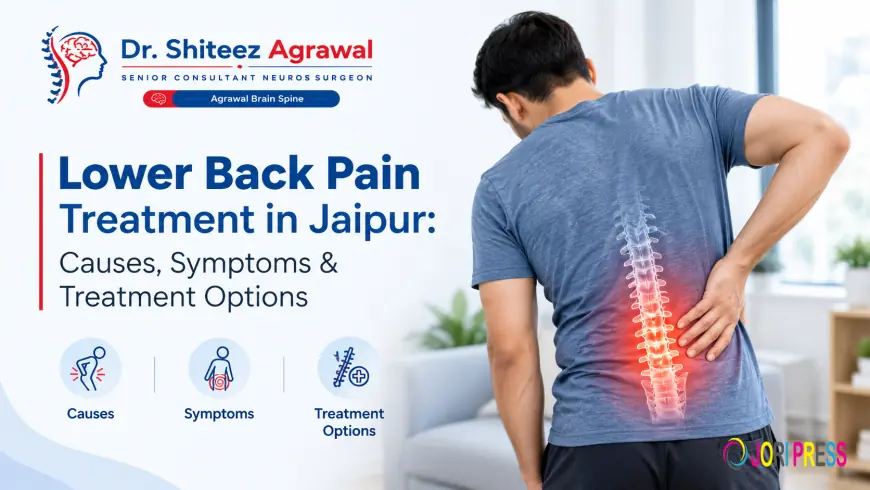
Lower Back Pain Treatment in Jaipur: Causes, Symptoms & Treatment Options
Learn about common causes, symptoms, diagnosis, and treatment options for lower back pain. This guide explains Lower Back Pain Treatment in Jaipur, from conservative care and physiotherapy to minimally invasive procedures and spine surgery.
Lower back pain is one of the most common health problems affecting adults. It can develop after prolonged sitting, physical strain, an injury, poor posture, or an underlying spine condition. While mild back pain may improve with rest and simple measures, persistent or severe pain may require medical evaluation.
For people experiencing ongoing symptoms, understanding the causes, warning signs, diagnosis, and available Lower Back Pain Treatment in Jaipur can help in taking timely action and avoiding unnecessary complications.
What Is Lower Back Pain?
Lower back pain refers to discomfort in the area between the lower ribs and the buttocks. It may feel like a dull ache, stiffness, burning sensation, or sharp pain. In some cases, the pain remains limited to the lower back, while certain spine conditions can cause pain to travel into the buttocks, hips, or legs.
The severity and duration can vary from person to person. Some episodes settle within a few days, whereas chronic pain can continue for several weeks or longer.
Common Causes of Lower Back Pain
Lower back pain can have several causes. Some are related to muscles and daily activities, while others involve the discs, nerves, or spinal structures.
1. Muscle or Ligament Strain
Lifting heavy objects, sudden movements, repetitive activities, or strenuous exercise can strain the muscles and supporting tissues of the lower back.
2. Poor Posture
Sitting for long periods, working at an improperly adjusted desk, or frequently bending forward can place additional stress on the lower spine.
3. Slipped or Herniated Disc
The discs between the vertebrae act as cushions. When a disc bulges or herniates, it can irritate nearby nerves and cause lower back pain, numbness, or pain extending into the leg.
4. Sciatica
Sciatica occurs when the sciatic nerve is irritated or compressed. It may cause pain that travels from the lower back through the buttock and down the leg.
5. Spinal Stenosis
Narrowing of the spinal canal can put pressure on nerves. It may cause back or leg pain, numbness, or weakness, particularly while standing or walking.
6. Age-Related Changes
Degenerative changes in the discs and joints of the spine become more common with age and may contribute to stiffness and chronic lower back discomfort.
7. Injuries and Fractures
Falls, road accidents, sports injuries, or other trauma can damage the structures of the spine and require medical assessment.
Symptoms Associated With Lower Back Pain
The symptoms depend on the underlying cause. Common symptoms include:
- Aching or stiffness in the lower back
- Sharp or shooting pain
- Difficulty bending or moving
- Pain after prolonged sitting or standing
- Pain spreading to the buttocks or legs
- Tingling or numbness in the legs
- Muscle weakness
- Reduced mobility
Not every case of back pain requires surgery. The appropriate treatment depends on the cause, severity, duration, and presence of neurological symptoms.
When Should You See a Doctor?
Occasional mild back pain may improve with rest and activity modification. However, medical evaluation is important when pain persists, repeatedly returns, or interferes with daily activities.
You should seek prompt medical attention if lower back pain is accompanied by:
- Significant weakness or numbness in the legs
- Loss of bladder or bowel control
- Numbness around the inner thighs or genital region
- Severe pain following an accident or fall
- Fever or unexplained weight loss along with back pain
- Increasing difficulty walking
These symptoms can sometimes indicate a more serious spinal or neurological problem and should not be ignored.
How Is Lower Back Pain Diagnosed?
A doctor generally begins with a detailed discussion about the symptoms, their duration, previous injuries, and factors that increase or reduce the pain. A physical and neurological examination may then be performed to assess movement, muscle strength, sensation, and reflexes.
Depending on the suspected cause, investigations such as an X-ray, MRI, or CT scan may be recommended. Imaging is not necessary for every person with back pain; it is generally considered when symptoms, examination findings, or the clinical situation suggest that further evaluation is needed.
Lower Back Pain Treatment Options
The goal of treatment is to address the underlying cause while reducing pain and improving mobility.
Conservative Treatment
For many patients, treatment may initially include activity modification, prescribed medication, physical therapy, and exercises designed to improve flexibility and strengthen the muscles supporting the spine.
Maintaining appropriate daily movement is often preferable to prolonged bed rest unless a doctor advises otherwise.
Physical Therapy
A physiotherapy program may include stretching, strengthening exercises, posture correction, and movement training. The exercises should be selected according to the individual's condition rather than following a generic routine.
Minimally Invasive Procedures
When pain persists despite conservative treatment, certain patients may benefit from targeted procedures depending on the underlying spinal problem. These may be considered after appropriate clinical assessment and imaging.
Spine Surgery
Surgery is not required for most cases of lower back pain. However, it may be considered when there is significant nerve compression, certain structural spinal problems, progressive neurological weakness, or persistent symptoms that do not respond adequately to appropriate non-surgical treatment.
The type of surgery depends on the diagnosis and may include procedures such as decompression or other appropriate spinal techniques.
How Can Lower Back Pain Be Prevented?
Some everyday habits can help reduce strain on the lower back:
- Maintain good sitting and standing posture.
- Avoid lifting heavy objects incorrectly.
- Use proper technique when exercising.
- Take regular movement breaks during long periods of sitting.
- Maintain a healthy body weight.
- Strengthen the core and back muscles with appropriate exercises.
- Avoid sudden increases in physical activity.
Lower Back Pain Treatment in Jaipur
If lower back pain is persistent, recurrent, or associated with leg pain, numbness, or weakness, professional evaluation can help identify the underlying cause. At Agrawal Brain & Spine Care, Dr. Shiteez Agrawal provides evaluation and treatment for various brain and spine conditions, including problems that may contribute to lower back and leg symptoms.
The appropriate Lower Back Pain Treatment in Jaipur depends on the diagnosis. A detailed consultation can help determine whether conservative management, physiotherapy, minimally invasive treatment, or surgery is appropriate for the individual patient.
Conclusion
Lower back pain can result from simple muscle strain as well as conditions involving spinal discs, nerves, joints, or the spinal canal. Recognizing persistent or concerning symptoms is important for timely evaluation. With an accurate diagnosis and an appropriate treatment plan, many patients can manage their symptoms and improve their mobility and quality of life.
What's Your Reaction?
 Like
0
Like
0
 Dislike
0
Dislike
0
 Love
0
Love
0
 Funny
0
Funny
0
 Angry
0
Angry
0
 Sad
0
Sad
0
 Wow
0
Wow
0