






































Synthetic Futures in Options Trading: Key Factors to Evaluate Before Taking a Position

The Indian derivatives market offers traders several ways to participate in changes in stock and index prices. Futures and options are two popular instruments, each with different trading structures, pricing mechanisms, and risk considerations. While many beginners start by understanding individual call and put options, learning how these instruments work together can provide a broader understanding of derivatives trading.
One important aspect of options trading is evaluating how different positions behave under changing market conditions. Traders need to consider factors such as market direction, volatility, liquidity, contract expiry, and margin requirements before selecting a strategy. Understanding these elements can help them compare different trading opportunities more effectively.
For traders exploring advanced derivatives concepts, understanding synthetic futures is particularly useful because it demonstrates how options can create market exposure similar to other financial instruments. However, evaluating such positions requires more than simply predicting whether the market will rise or fall.
Understanding the Role of Derivatives in Stock Market Trading
Derivatives are financial contracts whose value depends on an underlying asset, such as an individual stock, an index, or another financial instrument. In India, futures and options are commonly traded through recognized stock exchanges, including the National Stock Exchange (NSE).
Both instruments allow traders to participate in market movements without necessarily purchasing the underlying shares directly.
Futures contracts create an obligation between the buyer and seller according to the contract specifications. Options, on the other hand, provide the buyer with a right, but not an obligation, to buy or sell the underlying asset at a predetermined strike price, subject to the applicable contract terms.
Understanding this distinction is important because the risk, pricing, and margin requirements of these instruments can differ considerably.
Why Traders Need to Evaluate Different Options Positions
Selecting a derivatives strategy should involve more than identifying a bullish or bearish market outlook. Traders must understand how their positions may behave under different market conditions.
Several factors influence this evaluation:
1. Market Direction: A trader should identify whether the underlying stock or index is expected to move upwards, downwards, or remain relatively stable.
2. Implied Volatility: Changes in expected market volatility can influence option premiums. Even when the underlying asset moves in the expected direction, changes in volatility may affect the overall position value.
3. Time to Expiry: Options lose time value as their expiration approaches, assuming other factors remain unchanged. This makes the timing of an entry particularly important.
4. Liquidity: Contracts with limited trading activity may have wider bid-ask spreads, increasing the cost of entering or exiting a position.
5. Margin Requirements: Selling options can involve substantial margin obligations. Traders should understand the applicable exchange and broker requirements before taking positions.
These considerations help traders evaluate whether a particular derivatives structure is suitable for their objectives and risk tolerance.
How Options Strategies Help Create Different Market Exposures
Options are flexible instruments because traders can combine calls and puts to create different payoff structures.
For example, a trader expecting a significant upward movement may consider bullish options strategies. Similarly, someone expecting a decline may examine bearish combinations.
Some commonly studied options strategies include:
-
Bull Call Spread: Involves buying one call option and selling another call option with a higher strike price and the same expiry.
-
Bear Put Spread: Involves buying a put option and selling another put option with a lower strike price and the same expiry.
-
Covered Call: Involves holding the underlying shares and selling a call option against them.
-
Protective Put: Involves holding the underlying shares and purchasing a put option to provide downside protection.
Each strategy has a different payoff structure, capital requirement, and risk profile.
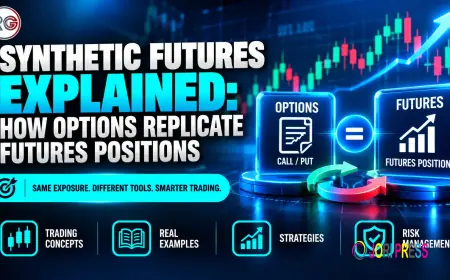
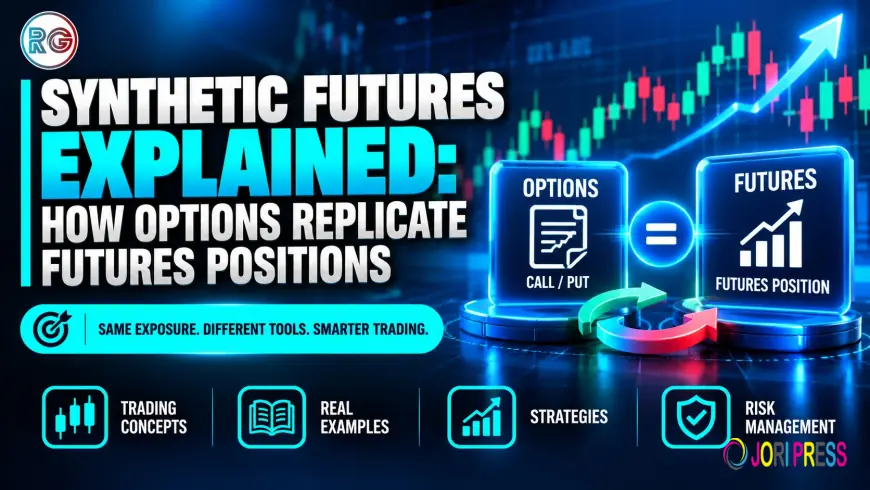
Understanding these combinations also provides a foundation for studying more advanced derivative relationships. Traders interested in learning how options can reproduce futures-like exposure can explore this detailed guide on synthetic futures and their relationship with call and put options.
Important Factors to Examine Before Entering a Derivatives Trade
Before executing any futures or options strategy, traders should evaluate the contract and its surrounding market conditions.
1. Analyze the Option Chain
An option chain provides information about available strike prices, call and put premiums, open interest, and trading activity.
Traders can use this information to understand where market participation is concentrated and compare different contracts.
However, open interest alone does not indicate whether the market will move upwards or downwards. It should be interpreted alongside price movement, volume, and other relevant indicators.
2. Compare Bid and Ask Prices
The difference between the highest buying price and the lowest selling price is known as the bid-ask spread.
A wider spread can increase transaction costs, particularly when a strategy involves multiple option contracts.
Before entering a position, traders should examine the liquidity of both legs rather than evaluating each option independently.
3. Understand Option Greeks
Option Greeks help explain how an option's price may respond to changes in different market variables.
|
Greek |
What It Measures |
|
Delta |
Sensitivity to changes in the underlying asset's price |
|
Gamma |
Rate of change in delta |
|
Theta |
Sensitivity to the passage of time |
|
Vega |
Sensitivity to changes in implied volatility |
|
Rho |
Sensitivity to changes in interest rates |
For example, theta becomes particularly relevant when traders hold options close to expiry. Vega is useful when assessing how changing volatility may influence option premiums.
These measurements help traders understand the behavior of an options position beyond its directional outlook.
A Practical Example of Derivatives Risk Evaluation
Consider a hypothetical trader analyzing a stock currently trading at ₹1,000.
The trader expects the stock to experience an upward movement over the next month. Before selecting a strategy, the trader examines the available call and put contracts.
The following factors are considered:
-
Whether the selected contracts have sufficient liquidity.
-
Whether the option premiums are reasonable relative to the underlying price.
-
Whether the strike prices and expiry dates match the intended strategy.
-
How the position may perform if the stock declines instead of rising.
-
Whether the required margin is within the trader's available capital.
Suppose the trader chooses a strategy involving a short option position. Although receiving an option premium may appear attractive, the potential loss can be substantial if the underlying asset moves unfavorably.
This example demonstrates why evaluating the downside scenario is just as important as estimating the potential gains.
A proper assessment should also account for brokerage, exchange charges, applicable taxes, and execution costs.
Synthetic Strategies Versus Traditional Futures Trading
Although synthetic strategies and traditional futures positions can provide similar market exposure, their trading mechanics are different.
A traditional futures position involves trading a futures contract directly. An options-based synthetic position involves combining multiple option contracts to reproduce a similar payoff.
The differences become important when evaluating execution and risk management.
For instance, a synthetic position may require traders to execute two separate option orders. If one order is executed but the other is not, the trader may temporarily hold an unintended exposure.
Furthermore, the liquidity of both option contracts, margin requirements, and changes in option premiums can influence the position.
Therefore, traders should not assume that using options instead of futures automatically reduces trading costs or financial risk.
The Importance of Risk Management in Options Trading
Risk management is essential when participating in the derivatives market, especially when strategies involve selling options.
A trader should establish the maximum acceptable loss, understand the margin requirements, and identify suitable exit conditions before entering a position.
Some important practices include:
-
Avoid taking positions based entirely on market predictions.
-
Evaluate potential losses under different price scenarios.
-
Check contract specifications and expiry dates.
-
Monitor margin requirements and available trading capital.
-
Consider liquidity and execution costs.
-
Avoid increasing position sizes simply to recover previous losses.
The Securities and Exchange Board of India (SEBI) and the National Stock Exchange provide educational resources that help market participants understand derivatives and their associated risks.
Beginners should study these resources and develop a sound understanding of futures and options before participating in complex strategies.
Conclusion
Understanding derivatives requires more than learning individual trading strategies. Traders must examine pricing relationships, market conditions, liquidity, volatility, and potential losses before selecting a position.
Studying how different financial instruments create similar market exposure can also improve one's understanding of options trading. A structured approach to learning these concepts, combined with practical analysis and disciplined risk management, can help build a stronger foundation in the Indian derivatives market.
Disclaimer: This article is intended for educational purposes only and should not be considered investment advice or a recommendation to trade. Futures and options involve substantial financial risks. Consult a qualified financial professional and understand the relevant risks before making trading decisions.
What's Your Reaction?
 Like
0
 Dislike
0
 Love
0
 Funny
0
 Angry
0
 Sad
0
 Wow
0