








































LCD Touch Screen Solutions: Complete Guide to Better Interactive Displays
Discover LCD Touch Screen Solutions and learn how interactive displays improve performance, usability, and reliability across industrial, medical, retail, and smart applications.

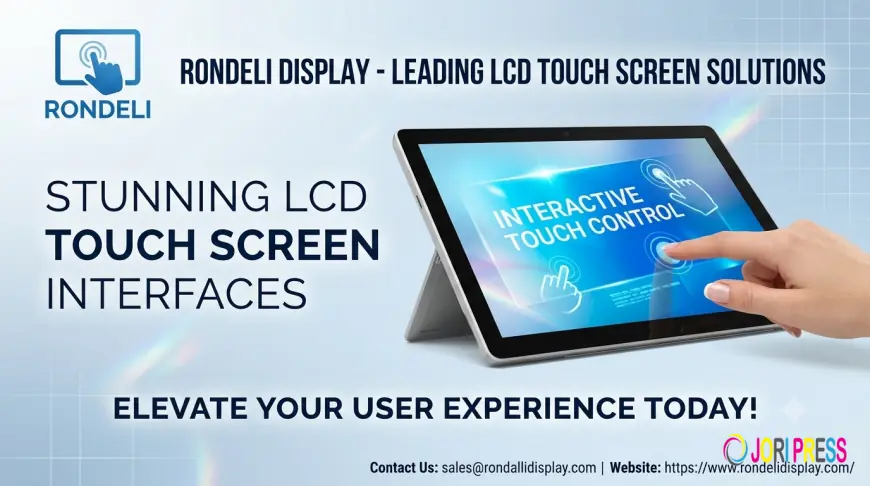
LCD touch screen technology has transformed the way people interact with electronic devices across industries. From industrial automation and medical equipment to retail kiosks and smart home systems, these displays combine visual clarity with intuitive touch control. Choosing the right solution requires understanding display performance, touch technologies, durability, and application requirements.
What Is an LCD Touch Screen?
An LCD touch screen is a display that combines a Liquid Crystal Display (LCD) panel with a touch-sensitive layer. This allows users to interact directly with the screen using a finger, stylus, or gloved hand, depending on the touch technology.
Unlike traditional displays that require external input devices, LCD touch screens provide a seamless and responsive user experience, making them ideal for modern electronic products.
How LCD Touch Screens Work
An LCD touch screen consists of two primary components:
-
LCD panel for displaying images, text, and graphics.
-
Touch sensor that detects user input and sends signals to the controller.
For example, an industrial machine operator can quickly adjust settings by touching icons on the display instead of using multiple physical buttons. This improves efficiency while reducing equipment complexity.
Common Types of LCD Touch Screens
|
Feature |
Resistive Touch |
Capacitive Touch |
|
Touch Method |
Pressure-based |
Electrical conductivity |
|
Multi-touch Support |
Limited |
Yes |
|
Works with Gloves |
Yes |
Depends on glove type |
|
Image Clarity |
Good |
Excellent |
|
Best Applications |
Industrial equipment |
Smartphones, kiosks, medical devices |
Selecting the right technology depends on environmental conditions, expected usage, and budget.
Benefits of LCD Touch Screen Displays
Modern LCD touch screens offer several advantages:
-
Fast and accurate touch response
-
Space-saving interface design
-
Improved user experience
-
Reduced mechanical button wear
-
Easy customization for different industries
-
Excellent brightness and viewing angles
-
Long operational life with reliable performance
Businesses adopting advanced touch displays often experience improved workflow and reduced maintenance costs.
Applications Across Industries
LCD touch screens are widely used in:
-
Industrial control systems
-
Medical diagnostic equipment
-
POS terminals
-
Smart home devices
-
Automotive displays
-
Consumer electronics
-
Educational systems
-
Self-service kiosks
For instance, hospitals use high-quality touch displays for patient monitoring because they provide quick access to critical information while maintaining excellent visibility.
How to Choose the Right LCD Touch Screen
Before selecting a display, consider these important factors:
-
Screen size and resolution
-
Outdoor or indoor usage
-
Brightness requirements
-
Touch sensitivity
-
Operating temperature
-
Interface compatibility
-
Long-term reliability
-
Customization options
Choosing a display that matches your application's environment helps maximize performance and product lifespan.
Why Choose Rondeli Display?
Rondeli Display specializes in delivering reliable LCD touch screen solutions designed for industrial, commercial, and consumer applications. With extensive manufacturing expertise, strict quality control, and customization capabilities, the company provides displays that meet demanding performance standards.
Whether you require compact touch panels for handheld devices or large interactive displays for industrial systems, Rondeli Display offers solutions focused on durability, precision, and long-term stability.
Actionable Tips Before Buying
-
Define your application's operating environment.
-
Select the appropriate touch technology.
-
Verify display brightness for ambient lighting.
-
Ensure interface compatibility with your hardware.
-
Request customized solutions when standard sizes do not meet project requirements.
-
Choose a supplier with proven manufacturing experience and quality assurance.
Frequently Asked Questions
What is the difference between an LCD touch screen and a standard LCD display?
A standard LCD only displays visual information, while an LCD touch screen allows users to interact directly with the displayed content through touch input.
Which touch technology is better?
Capacitive touch screens provide smoother multi-touch performance, while resistive touch screens perform better in environments where gloves or styluses are frequently used.
Are LCD touch screens suitable for industrial applications?
Yes. Industrial-grade LCD touch screens are specifically designed to withstand vibration, dust, temperature variations, and continuous operation.
Can LCD touch screens be customized?
Yes. Manufacturers like Rondeli Display offer customization options including screen size, brightness, interface type, touch technology, cover glass, and optical bonding to meet specific project requirements.
Choosing a high-quality LCD touch screen from an experienced manufacturer ensures reliable performance, excellent user interaction, and long-term value. With advanced engineering, customization expertise, and dependable quality, Rondeli Display helps businesses build innovative products that deliver superior user experiences across a wide range of industries.
What's Your Reaction?
 Like
0
Like
0
 Dislike
0
Dislike
0
 Love
0
Love
0
 Funny
0
Funny
0
 Angry
0
Angry
0
 Sad
0
Sad
0
 Wow
0
Wow
0