






































The Importance of Stability in Machining: Why Clamping Fixtures Matter

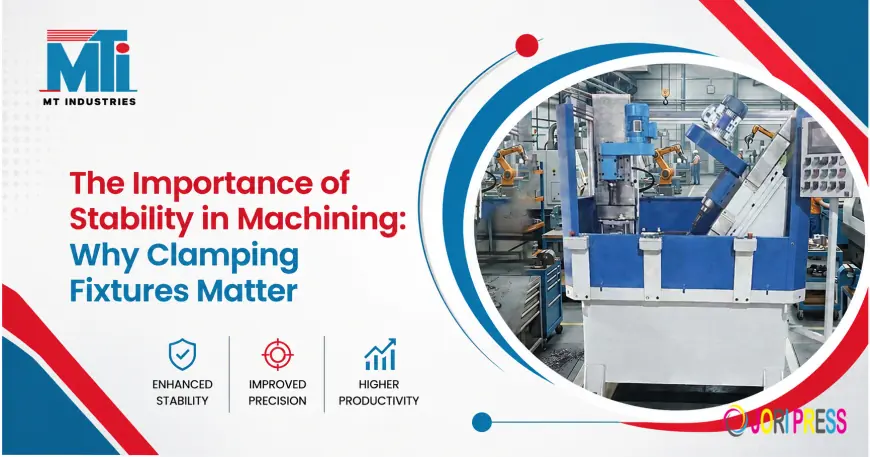
Ever watched a drill bit wander off course mid-cut? It's not pretty. One tiny shift, one loose component, and suddenly your tolerances are garbage and your scrap pile is taller than your morning chai cup. Stability isn't some boring engineering buzzword. It's the entire backbone of accurate, repeatable machining.
The Real Cost of Movement
Machining is, at its core, a fight against vibration and movement. Every cutting operation generates force. Drilling pushes. Tapping twists. Milling does both, plus a little extra chaos for fun. If the workpiece isn't held firmly, that force has nowhere productive to go. It transfers into shifting, chatter, and eventually parts that fail inspection.
This is exactly where Industrial Clamping Fixtures step in. They aren't just metal blocks bolted to a table. They're the difference between a part that meets spec on the first try and one that gets reworked three times before someone gives up and starts the batch over.
Machining demands the same kind of discipline. The workpiece has to stay put.
Why SPM Setups Make This Even More Critical
Special Purpose Machines are built for speed and volume. They run the same operation, over and over, often unattended for stretches at a time. That repetition is great for productivity but brutal on inconsistency. A fixture that holds well for the first fifty pieces but loosens by piece two hundred is a silent profit killer.
Good SPM Machine Fixtures are engineered to handle that repetitive load without drifting. They're not an afterthought bolted onto the machine design. They're part of the machine's DNA.
Drilling, Tapping, and the Fixtures Behind Them
Drilling and tapping look simple on paper. In reality, they're some of the most fixture-sensitive operations out there. Drilling Fixtures need to resist axial thrust without letting the part rotate or lift. Tapping Fixtures face a different headache entirely: torque that wants to twist the workpiece right along with the tap. Get it wrong, and you're looking at broken taps, oversized holes, or threads that just won't hold.
This is also where Precision Machining Fixtures earn their keep. Precision isn't a marketing word here. It's measured in microns, and a fixture that flexes even slightly under load throws that precision out the window.
Generic Fitting
Off-the-shelf fixtures work fine until they don't. The moment your part geometry gets a little unusual, or your tolerances tighten beyond what a generic clamp can manage, you need something built specifically for that job. That's where Custom Work Holding Fixtures come into play. They're designed around your part, your process, your machine, not the other way around.
It's a bit like getting a tailored suit instead of grabbing one off a rack. Sure, the rack option fits okay. Tailored fits right.
Choosing the Right Partner
This is the part people rush, and they shouldn't. Working with an experienced Industrial Fixtures Manufacturer isn't just about getting hardware delivered on time. It's about getting someone who understands tolerance stacking, material behavior, and the actual realities of your shop floor.
If you're looking for that kind of partner, MT Industries is worth a look. They've spent years building fixtures for shops that can't afford guesswork, and honestly, that kind of hands-on experience shows in how their fixtures perform under real production loads, not just on a spec sheet.
What's Your Reaction?
 Like
0
Like
0
 Dislike
0
Dislike
0
 Love
0
Love
0
 Funny
0
Funny
0
 Angry
0
Angry
0
 Sad
0
Sad
0
 Wow
0
Wow
0