



































How to Manage Your Construction Budget Without Surprises
Master the art of construction budgeting in Dubai. Learn how to avoid hidden costs, manage contingencies, and prevent surprises in your next project.
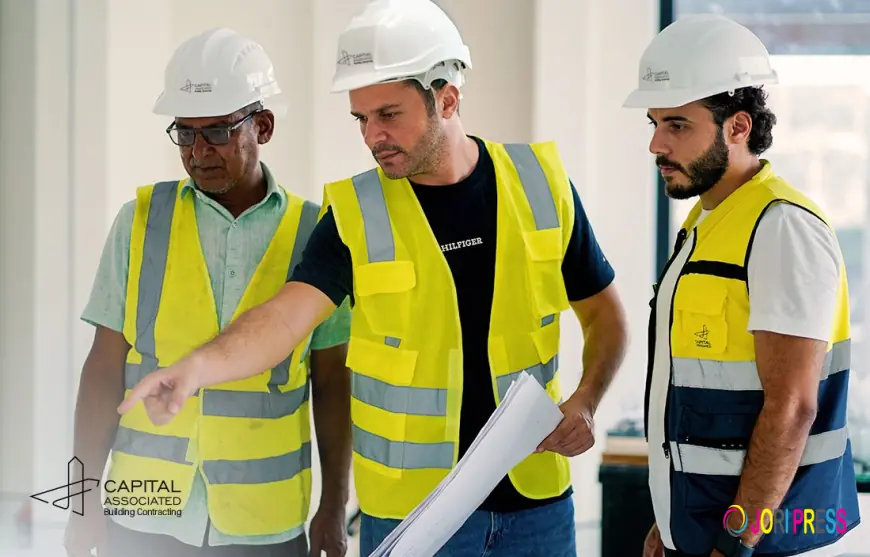
The dream of building a custom property in Dubai often begins with architectural sketches and grand visions, but the reality is anchored in fiscal discipline. Construction projects are notorious for overshooting their initial estimates, yet the primary reason for budget failure is not a lack of capital—it is a lack of foresight. To manage a project without costly surprises, owners must move away from "guesstimates" and embrace rigorous, data-driven planning. This excerpt explores the essential synergy required between owners, architects, and contractors to weigh every design choice against its financial impact. In a volatile market where material costs and labor demands shift constantly, a static budget is a liability. Discover how treating your budget as a living document, supported by a healthy contingency and strict protocols, ensures your construction journey remains a success rather than a financial burden.
The Foundation of Financial Control
Construction projects are notorious for overshooting their initial estimates. Whether you are building a beachfront villa on the Palm Jumeirah or a commercial space in downtown Dubai, the principles of fiscal discipline remain the same. The primary reason for budget failure is not usually a lack of funds, but a lack of foresight. To manage a construction budget without surprises, one must move away from "guesstimates" and toward rigorous, data-driven planning. This process begins long before the first shovel hits the ground. It requires a synergy between the owner, the architect, and the contractor, ensuring that every design choice is weighed against its financial impact. In a market where material costs can fluctuate and labor demands vary, a static budget is a liability. Instead, homeowners and project managers must treat the budget as a living document that requires constant oversight and adjustment.
Pre-Construction: The Critical Planning Phase
The most expensive mistakes are made on paper, not on the job site. The pre-construction phase is where the battle for the budget is won or lost. Detailed site surveys are non-negotiable. Many surprises stem from unforeseen ground conditions or utility issues that were not identified early. Investing in a comprehensive soil report or a structural audit of existing foundations can save hundreds of thousands of dollars later. Furthermore, the "Scope of Work" must be exhaustive. A vague scope is an open invitation for change orders. Every fixture, finish, and structural element should be specified. If you are aiming for a high-end finish, such as those seen in Algedra’s luxury projects, you must account for the lead times and import duties associated with bespoke materials. When the scope is clear, the contractor’s bid is more accurate, leaving less room for the dreaded "extra costs" mid-project.
Understanding the Bill of Quantities (BOQ)
A Bill of Quantities is the backbone of your construction financial strategy. It breaks down the project into every single nut, bolt, and bag of cement required. A BOQ is not just a shopping list; it is a benchmark. By comparing unit rates from different suppliers and contractors, you can identify outliers. If one contractor is significantly cheaper on concrete but more expensive on MEP (Mechanical, Electrical, and Plumbing), you need to investigate why. Managing your budget without surprises means understanding these numbers. You should insist on a transparent breakdown where labor, material, and profit margins are clearly delineated. This transparency prevents contractors from hiding "cushions" within lump sums, which can otherwise lead to disputes when changes occur.
The Role of the Contingency Fund
No matter how perfect the plan, construction is an unpredictable industry. A contingency fund is not an "extra"—it is a mandatory component of a professional budget. For high-complexity builds in the UAE, a contingency of 10% to 15% is the industry standard. This fund is strictly for "unknown unknowns"—unforeseen structural issues, sudden regulatory changes, or extreme weather delays. It is not a slush fund for upgrading your kitchen marble at the last minute. By setting this money aside from day one, you neutralize the stress of unexpected costs. When a surprise arises, you don't scramble for new financing; you simply reallocate from the contingency. This disciplined approach keeps the project moving and prevents the "stalled site" syndrome that plagues many over-leveraged developments.
Vetting Contractors and the "Low-Ball" Trap
One of the biggest surprises in construction is the realization that the cheapest bid is often the most expensive. Low-ball bids are a common tactic where a contractor intentionally misses items in the scope to win the job, only to claw that money back through aggressive change orders later. To manage your budget, you must perform due diligence. Check the contractor’s history with projects of similar scale. Do they have a reputation for finishing on time? Are their internal audits, like those conducted for Algedra or Capital Associated Building Contracting, rigorous and transparent? A reliable contractor might have a higher initial price but will provide a far more stable financial journey. In construction, you are not just buying a building; you are buying a process. A flawed process will always lead to budget surprises.
Managing Material Procurement and Volatility
We live in an era of global supply chain volatility. Prices for steel, timber, and specialized glass can shift weekly. To manage your budget, consider a "fix and lock" strategy. For major materials, it is often wise to purchase them upfront or enter into fixed-price contracts with suppliers. This protects the project from inflation. Furthermore, the timing of procurement is vital. Staging deliveries to match the construction schedule prevents onsite damage and theft, both of which are hidden budget killers. If you are importing luxury items for a beachfront restaurant like MeatMoot JBR, you must also factor in shipping insurance and local storage fees. These "soft costs" are frequently overlooked but can quickly erode a project’s profit margins if not tracked meticulously.
The Change Order Protocol
Change orders are the number one cause of budget blowouts. A change order occurs when the owner decides to move a wall, change a tile, or add an outlet after the contract is signed. To maintain control, you must establish a strict protocol. No change should be executed without a written price agreement and a signed "Impact Study" on the project timeline. This forces the owner to confront the cost of their decisions in real-time. Often, when an owner sees that a "minor" change costs 5,000 AED and adds three days to the schedule, they reconsider. This "friction" in the decision-making process is essential for budget health. Without it, the project suffers from "scope creep," where a series of small, seemingly insignificant additions result in a massive financial surprise at the end.
Monitoring MEP and Technical Hidden Costs
Mechanical, Electrical, and Plumbing (MEP) often account for a significant portion of a building's cost, yet they are mostly hidden behind walls. Surprises here are particularly painful because they usually involve ripping out finished work to fix a pipe or a wire. Integrated project delivery, where the MEP engineers work closely with the architects from the start, is the best defense. Ensure that your budget accounts for high-quality MEP components. Cutting corners on HVAC systems in the Dubai heat, for instance, is a false economy. The long-term maintenance costs and potential for system failure represent a future financial surprise that can be avoided with better initial investment. A budget that looks only at the "now" is not a managed budget; it is a gamble.
The Importance of Regular Financial Audits
You cannot manage what you do not measure. Weekly or bi-weekly financial reviews are essential. These meetings should involve a review of the "Actual vs. Budget" report. If the masonry phase is 10% over budget, you need to know why immediately. Is it a waste of material? Is it a labor efficiency issue? Catching these trends early allows for course correction. Perhaps you can save on the landscaping phase to offset the masonry overage. This active management prevents the "snowball effect" where small overages across ten different phases result in a catastrophic deficit. Professional firms like Capital Associated Building Contracting utilize these audit reports to ensure that every dirham is accounted for, providing peace of mind to stakeholders.
Closing Out the Project: The Final 5%
The final 5% of a project—the "snagging" or "punch list" phase—can be surprisingly expensive. This is when the fine-tuning happens. If the budget is already exhausted, this phase becomes a nightmare. A well-managed budget ensures that the final payment (usually 5% to 10% of the contract) is held back until all defects are rectified. This "retention" serves as your insurance policy. Surprises during the handover, such as a leaking roof or poorly aligned doors, must be the contractor’s financial responsibility, not yours. By managing the cash flow so that the contractor is motivated to finish the details, you ensure that the project concludes on a high note without a final, unexpected bill for repairs.
Conclusion: The Discipline of Success
Managing a construction budget without surprises is not a matter of luck; it is a matter of discipline. It requires the courage to say "no" to unplanned upgrades, the diligence to check every invoice, and the wisdom to hire the right professionals. By focusing on detailed pre-construction planning, maintaining a healthy contingency, and enforcing a strict change order protocol, you can navigate the complexities of building in Dubai with confidence. Whether it is a luxury villa on the Palm or a commercial fit-out, the goal is the same: a high-quality result delivered on time and within the agreed financial framework. Surprises are for birthdays, not for construction sites.
What's Your Reaction?
 Like
0
Like
0
 Dislike
0
Dislike
0
 Love
0
Love
0
 Funny
0
Funny
0
 Angry
0
Angry
0
 Sad
0
Sad
0
 Wow
0
Wow
0