




































Hire Offshore Bookkeeping Services for Accounting Firms to Handle More Clients
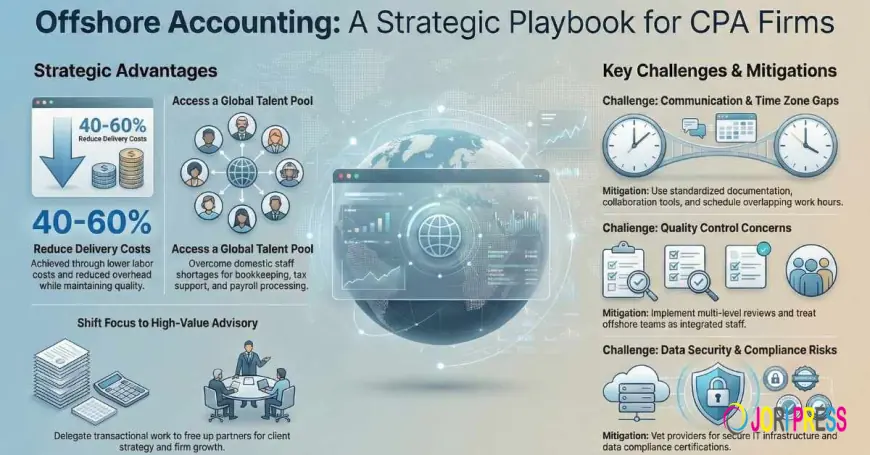
In 2026, the accounting industry is undergoing a significant transformation. With increased client demands, complex financial regulations, and the need for cost-effective operations, accounting firms are seeking innovative solutions to stay competitive. One of the most popular strategies gaining momentum is hiring offshore bookkeeping services. By leveraging skilled professionals located in other countries, accounting firms can streamline operations, reduce costs, and scale efficiently.
This blog explores why accounting firms are increasingly choosing offshore bookkeeping services in 2026, the benefits they offer, and how this trend is reshaping the accounting landscape.
What Are Offshore Bookkeeping Services?
Offshore bookkeeping services involve hiring accounting professionals from another country to handle bookkeeping tasks remotely. These tasks include recording financial transactions, bank reconciliations, accounts payable and receivable, payroll management, and preparation of financial reports. Offshore accountants typically work through cloud-based accounting software such as QuickBooks, Xero, NetSuite, or Sage, which allows real-time collaboration with the accounting firm’s in-house team.
Offshore bookkeeping is particularly popular among CPA firms, small and mid-sized accounting firms, and rapidly growing financial service providers. It allows these firms to manage their workload without the expenses of hiring full-time, in-house staff.
Why Accounting Firms Are Turning to Offshore Bookkeeping
1. Cost Savings
One of the primary reasons accounting firms choose offshore bookkeeping services is cost savings. Hiring in-house accountants in the U.S. or other high-cost regions can be expensive due to salaries, benefits, office space, and training costs. Offshore staffing allows firms to access experienced accounting professionals at a fraction of the cost.
By reducing overheads, firms can allocate resources to business growth, client acquisition, and strategic initiatives. Offshore bookkeeping makes accounting operations more affordable while maintaining high-quality service delivery.
2. Access to Skilled Professionals
Offshore bookkeeping services provide access to a global talent pool of skilled accounting professionals. Many offshore accountants are certified, have experience with multiple accounting software platforms, and are trained in international accounting standards.
For firms handling multiple clients or industries, offshore staff bring expertise in various sectors, from corporate accounting to small business bookkeeping. This ensures accuracy, compliance, and high-quality financial management for every client.
3. Scalability and Flexibility
Accounting firms often face fluctuating workloads, especially during tax season or audit periods. Offshore bookkeeping services offer scalability, allowing firms to increase or decrease staff based on demand.
Firms can hire dedicated offshore teams for busy periods and reduce them when workloads are lighter, ensuring they never overpay for unused resources. This flexibility helps accounting firms manage peak workloads efficiently without compromising quality or deadlines.
4. Improved Productivity and Efficiency
Offshore bookkeeping services allow accounting firms to delegate routine and time-consuming tasks to remote professionals. Tasks such as data entry, bank reconciliation, and monthly reporting are handled efficiently, freeing the in-house team to focus on higher-value services like advisory, client consultation, and strategic financial planning.
By distributing tasks effectively, offshore bookkeeping enhances overall productivity, reduces bottlenecks, and ensures timely delivery of client reports.
5. Faster Turnaround Times
Time zone differences can work in favor of accounting firms that use offshore bookkeeping services. While the in-house team is offline, offshore staff can continue processing transactions, reconciling accounts, or preparing financial statements.
This results in faster turnaround times for monthly reports, audits, and tax filings. Clients receive updated and accurate financial information more quickly, which improves client satisfaction and strengthens the firm’s reputation.
6. Focus on Growth and Advisory Services
By outsourcing bookkeeping, accounting firms can focus more on revenue-generating activities such as advisory, tax planning, financial analysis, and business consulting. Offshore bookkeeping ensures that routine tasks are handled by experts, reducing the risk of errors and freeing senior accountants to work on strategic growth initiatives.
Firms that leverage offshore bookkeeping services are better positioned to expand their client base, provide personalized services, and enhance their competitive advantage in the market.
7. Technology Integration and Cloud-Based Accounting
Modern offshore bookkeeping services rely on cloud-based accounting platforms, which allow seamless integration with the firm’s existing systems. Tools like QuickBooks Online, Xero, and NetSuite enable real-time collaboration, secure data sharing, and automated workflows.
This integration ensures that offshore teams can work as efficiently as in-house staff, while maintaining data security and compliance with financial regulations. Accounting firms benefit from a technologically advanced, remote workforce without additional infrastructure costs.
8. Enhanced Accuracy and Compliance
Offshore bookkeeping services help accounting firms maintain accurate financial records, reducing errors and ensuring compliance with tax laws and accounting standards. Offshore accountants are trained to follow standard procedures, perform checks, and generate reports that meet industry requirements.
Accurate bookkeeping reduces the risk of penalties, audit issues, and financial discrepancies, which is especially important for firms handling multiple clients across different sectors.
9. Support for Small and Mid-Sized Accounting Firms
For small and mid-sized accounting firms, hiring full-time in-house staff may not be feasible. Offshore bookkeeping services provide an affordable and reliable alternative. These firms can access skilled professionals, handle multiple clients efficiently, and scale operations without heavy investment.
Offshore bookkeeping services make it easier for smaller firms to compete with larger accounting firms by delivering high-quality, timely services at competitive costs.
Conclusion
In 2026, offshore bookkeeping services are becoming an integral part of the accounting industry. Accounting firms are increasingly adopting this model to reduce costs, improve efficiency, scale operations, and access skilled professionals worldwide.
From handling daily bookkeeping tasks to supporting audits, tax preparation, and financial reporting, offshore bookkeeping services help firms manage workload effectively while allowing in-house accountants to focus on strategic growth and client advisory.
As cloud-based technology and remote collaboration continue to evolve, offshore bookkeeping services will remain a key solution for accounting firms looking to grow faster, serve more clients, and stay competitive in an ever-changing financial landscape.
By embracing offshore bookkeeping services, accounting firms can achieve higher productivity, better accuracy, cost savings, and ultimately, sustainable business growth in 2026 and beyond.
What's Your Reaction?
 Like
0
Like
0
 Dislike
0
Dislike
0
 Love
0
Love
0
 Funny
0
Funny
0
 Angry
0
Angry
0
 Sad
0
Sad
0
 Wow
0
Wow
0