






































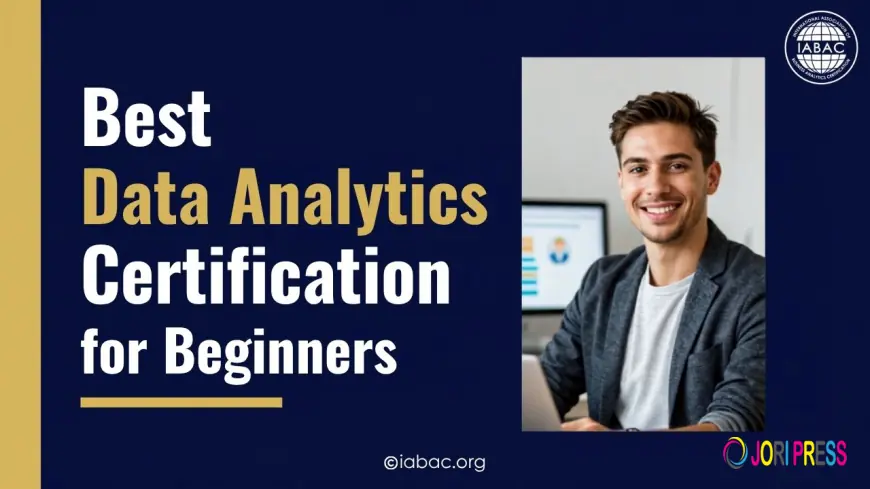
Best Data Analytics Certification for Beginners | IABAC
Discover the best data analytics certification for beginners. Learn key skills, career benefits, tools, and tips to start your analytics journey.

Data analytics has become one of the most in-demand skills across industries. Businesses today collect large amounts of data and need skilled professionals who can analyze that information and turn it into useful insights. This growing demand has created excellent career opportunities for people who want to enter the field of data analytics.
For beginners, however, getting started can feel overwhelming. There are many courses, certifications, tools, and learning paths available online. Choosing the right certification can make a significant difference in building a strong foundation and improving job opportunities.
In this guide, we will explore why data analytics certifications matter, what beginners should look for, the skills required, and how the best data analytics certification can help launch a successful career.
What Is Data Analytics?
Data analytics is the process of collecting, organizing, analyzing, and interpreting data to help businesses make better decisions.
Organizations use data analytics to understand customer behavior, improve products, reduce costs, increase efficiency, and identify new opportunities for growth.
A data analyst works with data from different sources and transforms it into meaningful information that decision-makers can use.
Some common tasks include:
-
Collecting data from various sources
-
Cleaning and organizing datasets
-
Creating reports and dashboards
-
Identifying trends and patterns
-
Supporting business decisions with insights
Data analytics is used in almost every industry, including healthcare, banking, retail, manufacturing, education, and technology.
Why Beginners Should Earn a Data Analytics Certification?
Many people believe they need a computer science degree to enter data analytics. While a degree can help, it is not always necessary.
A certification provides structured learning and helps beginners gain practical knowledge without spending years in formal education.
Here are some key benefits.
Builds a Strong Foundation
A certification teaches essential concepts in a logical order. Beginners learn the basics before moving to advanced topics.
Improves Job Opportunities
Employers often prefer candidates who have verified skills. Certifications demonstrate commitment to learning and professional development.
Provides Practical Experience
Most quality certification programs include hands-on exercises, projects, and case studies that help learners apply their knowledge.
Increases Confidence
Learning data analytics through a structured program helps beginners understand industry practices and tools with greater confidence.
Enhances Professional Credibility
A recognized certification can strengthen a resume and make candidates stand out during recruitment.
Skills Covered in a Data Analytics Certification
A good certification should cover both technical and business-related skills.
Data Collection
Learners understand how data is gathered from different systems and sources.
Data Cleaning
Raw data often contains errors, duplicates, or missing values. Cleaning data is an important step before analysis.
Data Visualization
Visualization helps present findings in an easy-to-understand format through charts, graphs, and dashboards.
Statistical Analysis
Basic statistics help analysts identify trends, relationships, and patterns in data.
Spreadsheet Skills
Tools like Excel remain important for organizing and analyzing business data.
Database Fundamentals
Understanding databases and SQL helps analysts retrieve and manage information efficiently.
Reporting
Creating clear reports helps stakeholders understand insights and make informed decisions.
What Beginners Should Look for in a Certification
Not every certification is suitable for someone starting from scratch.
Before enrolling, beginners should consider several factors.
Beginner-Friendly Curriculum
The course should start with fundamentals and gradually introduce advanced concepts.
Practical Projects
Hands-on learning helps students gain real-world experience and develop job-ready skills.
Industry Recognition
A certification should be respected by employers and recognized within the analytics community.
Flexible Learning
Many learners are working professionals or students. Flexible learning options allow them to study at their own pace.
Updated Content
The field of analytics evolves constantly. Course content should reflect current tools, practices, and industry requirements.
Assessment and Validation
Examinations and projects help validate learning and demonstrate competence.
Popular Tools Used in Data Analytics
Most certification programs introduce learners to tools commonly used in the industry.
Microsoft Excel
Excel remains one of the most widely used tools for data analysis.
It helps users perform calculations, create reports, and analyze business data quickly.
SQL
SQL is used to access and manage information stored in databases.
Many organizations rely on SQL for retrieving and analyzing large datasets.
Power BI
Power BI helps create interactive dashboards and visual reports.
It is widely used by businesses for reporting and decision-making.
Tableau
Tableau is a popular visualization tool that helps analysts present complex data clearly.
Python
Python is commonly used for data processing, analysis, and automation tasks.
Beginners often learn the basics of Python during advanced analytics training.
Career Opportunities After Certification
One reason data analytics certifications are popular is the variety of career opportunities available.
Some common roles include:
Data Analyst
Analyzes business data and provides actionable insights.
Business Analyst
Works with stakeholders to improve business processes and performance.
Reporting Analyst
Creates reports and dashboards for management and business teams.
Operations Analyst
Uses data to improve operational efficiency and productivity.
Marketing Analyst
Analyzes customer behavior and marketing campaign performance.
Financial Analyst
Supports financial planning and decision-making through data analysis.
As organizations continue to rely on data-driven strategies, the demand for these roles continues to grow.
How Long Does It Take to Learn Data Analytics?
The learning timeline depends on an individual's background and study schedule.
For most beginners:
-
Basic concepts can be learned in a few weeks.
-
Core analytics skills may take several months.
-
Practical expertise develops through continuous projects and practice.
Consistency is more important than speed. Spending time regularly on learning and applying concepts leads to better results.
Common Challenges Faced by Beginners
Starting a new career path comes with challenges. Understanding them can help learners prepare effectively.
Too Much Information
The internet contains thousands of tutorials, courses, and resources. Beginners often feel confused about where to start.
A structured certification solves this problem by providing a clear roadmap.
Technical Terminology
Analytics includes many new terms and concepts. Learning gradually makes them easier to understand.
Lack of Practical Experience
Many beginners worry about experience. Working on projects and case studies helps bridge this gap.
Fear of Mathematics
Data analytics uses some mathematical concepts, but beginners do not need advanced mathematics to start learning.
Most certifications teach statistics and analysis in a practical and understandable way.
Tips for Success in Data Analytics
If you are starting your analytics journey, these tips can help.
Practice Regularly
Apply what you learn through exercises and projects.
Focus on Fundamentals
Build a strong understanding of core concepts before moving to advanced topics.
Work on Real Data
Practice with real datasets to develop practical skills.
Learn Visualization
Presenting insights clearly is just as important as finding them.
Stay Curious
Data analytics is constantly evolving. Continuous learning helps professionals remain competitive.
Why Data Analytics Is a Future-Proof Career
Businesses generate more data than ever before. Every customer interaction, transaction, website visit, and operational process creates valuable information.
Organizations need professionals who can convert this information into meaningful insights.
According to industry reports, data-related roles continue to rank among the fastest-growing careers globally. Companies increasingly depend on analytics to improve decision-making, customer experience, and business performance.
This trend makes data analytics a promising career choice for beginners looking for long-term growth and stability.
Choosing the best data analytics certification for beginners is an important first step toward building a successful career in the data-driven world. A quality certification helps learners understand core concepts, gain practical experience, and develop skills that employers value.
Beginners should focus on certifications that offer structured learning, hands-on projects, industry relevance, and flexible study options. With dedication and consistent practice, even individuals without prior technical experience can enter the field and build rewarding careers.
For beginners seeking an industry-recognized credential, the IABAC Data Analytics Certification can be a valuable option to build foundational analytics skills and enhance career opportunities.
What's Your Reaction?
 Like
0
Like
0
 Dislike
0
Dislike
0
 Love
0
Love
0
 Funny
0
Funny
0
 Angry
0
Angry
0
 Sad
0
Sad
0
 Wow
0
Wow
0