






































How to Reduce HVAC Energy Costs in Commercial Buildings: 9 Fixes That Work
Discover 9 effective ways to reduce HVAC energy costs in commercial buildings. Improve energy efficiency, lower utility bills, and optimize system performance.

Quick answer: To reduce HVAC energy costs in commercial buildings, start by getting visibility into how your systems actually run. Then fix schedules and setpoints, stop heating and cooling from fighting each other, repair stuck valves and drifting sensors, keep coils and filters clean, make economizers work, match fan and pump speed to demand, and use ongoing monitoring so the savings stay in place.
If you run a commercial building, you already know the HVAC bill is rarely small. Heating, cooling and ventilation are often among the biggest energy uses on site, and they're also one of the easiest places for waste to hide.
Here's the frustrating part. Most of that waste doesn't come from old equipment or bad design. It comes from small things: a schedule that was never updated, a valve that leaks, a setpoint someone nudged during a heatwave and never changed back. The building stays comfortable, so nobody notices. The bill just keeps quietly climbing.
The good news is that many of the fixes are simple. This guide walks through nine of them, ordered roughly from easiest to most involved, so you can start saving without waiting for a big capital project.
Why Commercial HVAC Wastes So Much Energy
Before the fixes, it helps to understand why waste builds up in the first place.
-
Buildings change, settings don't. Occupancy, tenants and usage patterns shift, but schedules and setpoints often stay as they were.
-
Faults hide behind comfort. Systems compensate for problems, so occupants stay comfortable while energy use rises.
-
Manual overrides get forgotten. A temporary fix becomes permanent.
-
Equipment wears gradually. Dampers stick, valves leak, sensors drift and filters clog.
-
Nobody has time to look at the data. Controls generate plenty of readings, but few teams can study them daily.
The takeaway: you don't always need new equipment. You often need better visibility and better habits.
9 Fixes to Reduce HVAC Energy Costs
1. Get visibility first
You can't cut what you can't see. Before changing anything, find out how your HVAC systems actually behave: when they run, how much energy they use, and where they drift from their intended performance.
-
Review existing meter and controller data.
-
Note which systems run longest and use the most power.
-
Record a baseline, so you can prove savings later.
A good monitoring platform turns this from a one-off exercise into a daily view. See how a cloud-based equipment monitoring system brings that data together.
2. Fix your schedules
This is often the quickest win. Equipment that runs when nobody is in the building is pure waste.
-
Match start and stop times to real occupancy, including early finishes, weekends and holidays.
-
Use optimum start so systems begin only as early as needed to reach comfort.
-
Review schedules after any change in tenants or working patterns.
3. Tune setpoints and setbacks
Small setpoint changes can have a surprisingly large effect on energy use.
-
Widen the gap between heating and cooling setpoints so the two don't chase each other.
-
Use deeper setbacks during unoccupied hours where the building allows it.
-
Reset supply air temperature, chilled water temperature and duct static pressure based on actual demand instead of holding them fixed.
Always keep comfort, ventilation and any code or health requirements in mind, especially in hospitals and labs. Involve your engineers or controls contractor before making big changes.
4. Stop simultaneous heating and cooling
This is one of the most common hidden wastes. Two parts of the system fight each other: one heats air while another cools it. Occupants never know, because the room ends up comfortable.
Causes include leaking valves, poor control sequences, badly placed sensors and conflicting setpoints. It's hard to spot by eye, but easy to catch in the data. Our guide to fault detection and diagnostics explains how software finds it automatically.
5. Repair stuck valves, dampers and drifting sensors
Faulty parts quietly waste energy every hour they run.
-
Leaking valves let hot or cold water pass when they should be closed.
-
Stuck dampers distort airflow and mixing.
-
Drifting sensors feed wrong readings to the controls, which then make poor decisions.
Calibrate key sensors regularly, and treat any "manual" override as a fault until proven otherwise. For signs to look out for, read signs of HVAC equipment failure in commercial buildings.
6. Keep the basics clean and maintained
It sounds dull, but dirt costs money. Fans and compressors work harder when airflow and heat transfer are restricted.
-
Replace filters on schedule.
-
Clean coils.
-
Check belts, bearings and fan blades.
-
Inspect ductwork for leaks and blockages.
A balanced mix of routine and condition-based work works best. Our guide on predictive vs preventive maintenance explains how to choose.
7. Make your economizer actually work
An economizer lets the system use cool outside air instead of mechanical cooling when conditions allow. When it works, it saves a lot. When it fails, it often fails silently, with dampers stuck, sensors wrong or controls disabled, and the building just uses more cooling energy than it should.
Check that outside air dampers move as commanded, that sensors read correctly, and that the changeover logic matches your climate.
8. Match fan and pump speed to demand
Motors running flat out when the load is light waste a lot of energy. Variable frequency drives (VFDs) let fans and pumps slow down to match what the building really needs.
-
Confirm existing drives are actually modulating, not locked at a fixed speed.
-
Use demand-based ventilation where appropriate, so outside air follows occupancy, while still meeting ventilation requirements.
-
Consider adding drives on large, constant-speed motors, in discussion with your engineers.
9. Keep the savings with ongoing monitoring
This is the fix that protects all the others. Without it, savings fade as schedules change, parts wear and settings drift.
Ongoing monitoring means the system checks performance every day and flags problems as they appear, so you correct them in days instead of years. This is the idea behind continuous commissioning, and it's what keeps a one-time tune-up from fading away.
Quick Wins vs Bigger Projects
|
Fix |
Typical type |
Effort |
Watch out for |
|
Review and fix schedules |
No-cost |
Low |
Don't cut hours that affect comfort or safety |
|
Tune setpoints and setbacks |
No-cost |
Low |
Stay within comfort and code limits |
|
Stop simultaneous heating and cooling |
Low-cost |
Medium |
Needs data to find the cause |
|
Repair valves, dampers, sensors |
Low-cost |
Medium |
Verify the repair worked |
|
Clean coils, change filters |
Low-cost |
Low |
Do it on a regular schedule |
|
Fix economizers |
Low to medium |
Medium |
Test across seasons |
|
Add or tune VFDs |
Capital |
Higher |
Confirm ventilation needs first |
|
Ongoing monitoring |
Low to medium |
Medium |
Choose a platform that diagnoses, not just alerts |
A sensible order is no-cost first, low-cost second and capital projects last, using what you learn to prioritize.
How Monitoring Software Helps You Save
Most of the fixes above are easy once you know where the problem is. Finding it is the hard part.
Monitoring and analytics software helps by:
-
Showing hidden waste, such as simultaneous heating and cooling, in plain view
-
Ranking problems by energy and cost impact, so you fix the biggest first
-
Tracking results, so you can prove the savings
-
Reducing alert noise, so important warnings aren't buried. See how an intelligent alarming system for facilities does this
-
Watching every building from one place, anytime, on any device
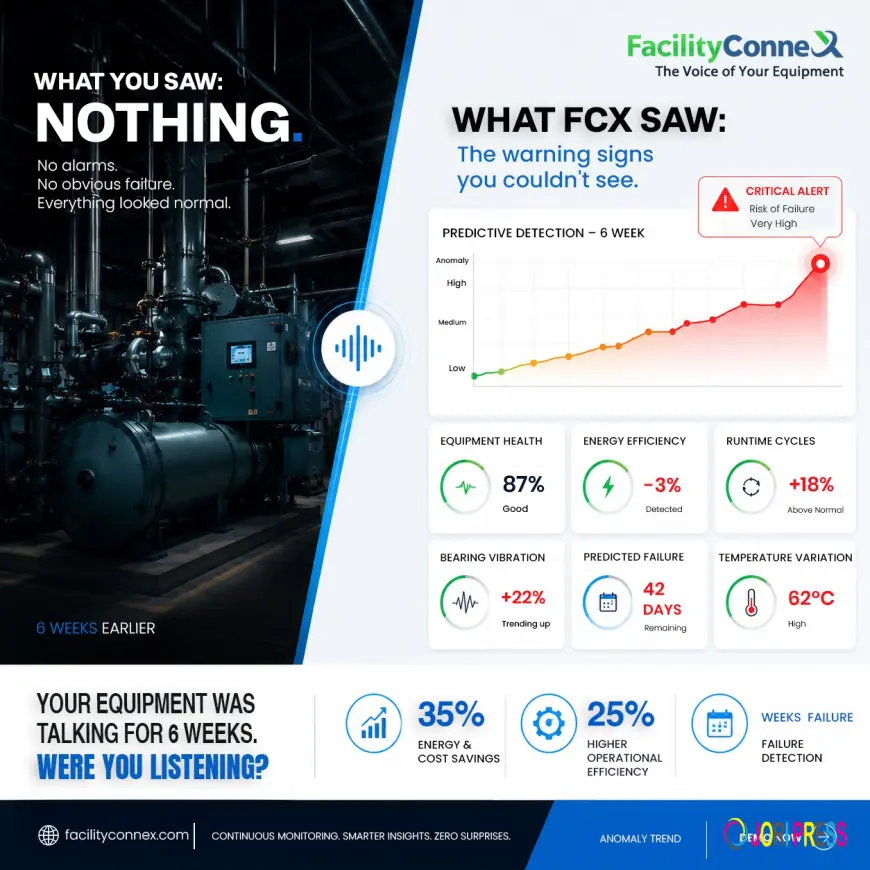
FacilityConneX is a cloud-based, real-time monitoring platform that combines continuous commissioning, fault detection, diagnostics and advanced predictive analytics. Dashboards, intelligent alarming and cost and energy savings identification turn equipment data into clear priorities. FacilityConneX reports potential savings of up to 35% in energy, greenhouse gas and cost, and up to 25% higher operational efficiency, depending on the facility and how it is operated.
It supports smart buildings, smart hospitals, smart water and wastewater, smart manufacturing and smart machines. Learn more about IoT facility management software and our cost and energy savings feature.
Common Mistakes to Avoid
-
Cutting comfort or ventilation to save energy. It backfires through complaints and health risks.
-
Fixing symptoms, not causes. If a fault returns, find the root cause.
-
Skipping the baseline. Without before-and-after numbers, you can't prove savings.
-
One-and-done tuning. Settings drift, so check regularly.
-
Ignoring small faults. A leaking valve costs money every hour.
-
Making big changes without engineering input. Especially in hospitals, labs and other critical spaces.
Final Thoughts
Reducing HVAC energy costs rarely needs a dramatic overhaul. It usually comes from a handful of habits: knowing how your systems really run, fixing the small things that waste energy, and checking regularly so improvements don't fade.
Start with what costs nothing, track the results, and let the data point you to the next fix.
Want to find out where your HVAC systems are wasting energy? Schedule a FacilityConneX demo and see what real-time monitoring can uncover.
Frequently Asked Questions
How can I reduce HVAC energy costs in a commercial building?
Start by monitoring how your systems run, then fix schedules and setpoints, stop simultaneous heating and cooling, repair faulty valves, dampers and sensors, keep coils and filters clean, make economizers work, match fan and pump speed to demand, and keep checking performance over time.
What is the fastest way to lower commercial HVAC energy use?
Reviewing schedules and setpoints is usually the quickest, lowest-cost step, because it needs no new equipment.
What is simultaneous heating and cooling?
It happens when one part of an HVAC system heats air while another cools it at the same time. It wastes energy and is often hidden because the space still feels comfortable.
Why does my building's HVAC energy use keep rising?
Common causes include outdated schedules, forgotten manual overrides, drifting sensors, leaking valves, dirty coils and settings that have crept away from design.
Do variable frequency drives (VFDs) save energy?
They can, because fans and pumps use less energy when they slow down to match demand. Savings depend on the load pattern, so check with your engineers first.
What is an economizer, and why does it matter?
An economizer uses cool outside air for cooling when conditions allow. When it fails, the building uses more mechanical cooling than necessary.
How does monitoring software reduce HVAC costs?
It reveals hidden waste, ranks problems by impact, tracks results and flags new faults early, so savings are kept instead of fading.
Does fault detection and diagnostics (FDD) help with energy savings?
Yes. FDD finds issues like stuck valves, schedule errors and simultaneous heating and cooling that waste energy without causing obvious comfort problems.
How often should HVAC performance be reviewed?
Ideally continuously. If that isn't possible, review key systems at least seasonally and after any change in occupancy or equipment.
Can I cut HVAC energy costs without buying new equipment?
Often yes. Many savings come from schedules, setpoints, repairs and better monitoring rather than replacement.
What's Your Reaction?
 Like
0
 Dislike
0
 Love
0
 Funny
0
 Angry
0
 Sad
0
 Wow
0