










































5 Reasons a Botox and Filler Clinic Islamabad Starts with a Facial Assessment Before Injecting
Learn why a Botox and filler clinic Islamabad assesses facial anatomy, medical history, and treatment goals before injections.
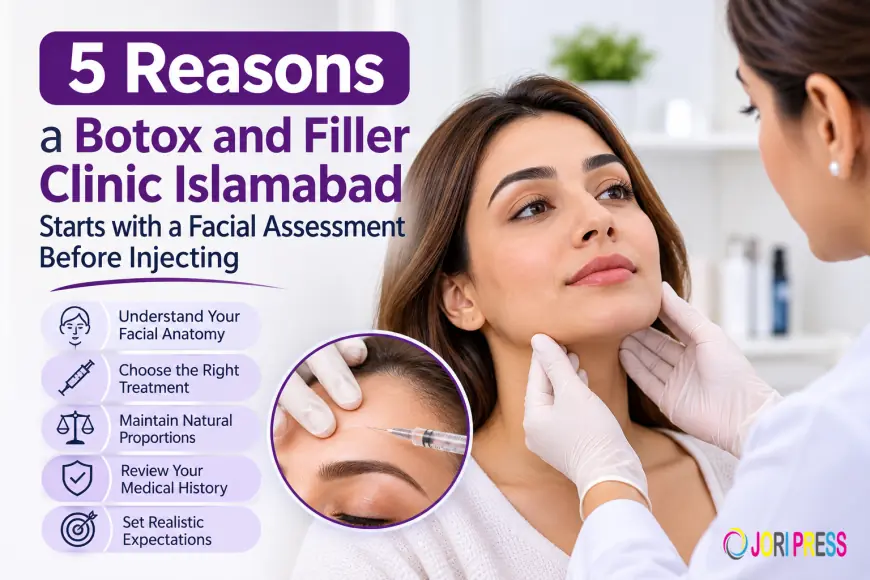
Botox and dermal fillers are popular non-surgical cosmetic treatments used to address concerns such as facial wrinkles, volume loss, and changes in facial contours. However, achieving natural-looking results involves more than selecting an injection site or deciding how much product to use. Every face has different proportions, muscle movements, skin characteristics, and aesthetic needs.
This is why a professional consultation and facial assessment should take place before any injections. A Botox and filler clinic Islamabad
hould evaluate the patient's facial structure, understand their concerns, and discuss suitable treatment options before recommending a procedure.
Here are five important reasons why facial assessment is an essential first step before Botox or dermal filler injections.
1. To Understand Individual Facial Anatomy
Every person's facial anatomy is different. The position and strength of facial muscles, distribution of fat pads, skin thickness, and underlying bone structure all influence how cosmetic injections may affect the face.
For example, Botox works by temporarily reducing the activity of targeted muscles. The appropriate injection points and dosage depend on the muscles involved and the patient's facial movements.
Dermal fillers work differently. They add volume or provide structural support in selected areas, depending on the product and treatment plan. Their placement requires an understanding of facial anatomy, including important blood vessels and nerves.
A facial assessment helps the practitioner identify these differences and plan treatment according to the individual's anatomy rather than following a standard injection pattern.
2. To Identify Whether Botox, Fillers, or Both Are Suitable
Botox and dermal fillers address different cosmetic concerns. Although they are sometimes used together, they are not interchangeable treatments.
Botox is commonly used to soften dynamic wrinkles caused by repeated muscle movements. These may include forehead lines, frown lines between the eyebrows, and crow's feet around the eyes.
Dermal fillers may be considered for concerns such as:
-
Volume loss in the cheeks
-
Certain types of facial folds
-
Reduced lip volume or definition
-
Selected areas of facial contouring
-
Age-related changes in facial structure
During an assessment, the practitioner evaluates the concern and determines which treatment, if any, may be appropriate. Some patients may benefit from Botox alone, while others may be better suited to fillers or non-injectable options.
This prevents unnecessary injections and helps establish realistic treatment goals.
3. To Maintain Natural Facial Proportions
One of the main goals of aesthetic treatment is to improve specific concerns without making the face look unnatural or overtreated.
Injecting too much filler into one area can affect facial balance. Similarly, using an unsuitable Botox dose may interfere with normal muscle movement or create an unwanted facial expression.
A facial assessment allows the practitioner to examine how different facial features relate to one another. For example, cheek volume, chin projection, lip proportions, and jawline definition can influence the overall appearance of the face.
Rather than focusing on a single feature, the practitioner can consider the face as a whole and discuss what level of correction is appropriate.
The aim should be a balanced result that respects the patient's natural features, not an identical look based on current beauty trends.
4. To Review Medical History and Identify Potential Risks
A facial assessment is also an opportunity to review the patient's medical history before treatment.
The practitioner should ask about relevant health conditions, previous cosmetic procedures, allergies, medications, and any history of reactions to injectable treatments.
Certain factors may affect whether Botox or fillers are suitable. For example:
-
Some neuromuscular conditions may affect the suitability of Botox.
-
Active skin infections or inflammation near the planned injection area may require treatment to be postponed.
-
Certain medications and medical conditions may influence bruising or bleeding risk.
-
Pregnancy and breastfeeding require additional caution, as cosmetic injectable treatments are generally postponed due to limited safety data.
Previous filler treatments are also important to discuss because existing product may influence the placement and choice of additional filler.
A proper medical review helps the practitioner identify concerns, explain possible complications, and decide whether treatment should proceed.
5. To Set Realistic Expectations and Create a Personalised Plan
Not every facial concern can be corrected with injections, and results vary between individuals. A facial assessment gives the practitioner an opportunity to explain what Botox or fillers can realistically achieve.
For Botox, patients should understand that the effects are temporary and generally develop over several days. Results commonly last around three to four months, although duration varies.
Dermal filler results depend on the product, injection area, and individual factors. Some fillers may last several months or longer, but they are not permanent.
During the consultation, the practitioner should explain:
-
Which treatment is suitable for the patient's concerns
-
The expected level of improvement
-
Possible side effects and complications
-
How long the results may last
-
Whether follow-up appointments may be needed
-
What aftercare instructions should be followed
Patients should also have time to ask questions before making a decision. There should be no pressure to proceed with injections if they are uncertain.
What to Expect During a Facial Assessment
A typical pre-treatment assessment may include reviewing the patient's medical history, discussing aesthetic goals, examining facial features at rest and during movement, and evaluating the areas they want to improve.
The practitioner may also take clinical photographs with the patient's consent to document the starting appearance and help assess results later.
Before proceeding, patients should confirm that the treatment will be performed by an appropriately qualified and trained medical professional using authentic, approved products. They should also understand the potential risks, including bruising, swelling, asymmetry, and, in the case of dermal fillers, rare but serious vascular complications.
Final Thoughts
A facial assessment is an important part of responsible Botox and dermal filler treatment. It helps practitioners understand facial anatomy, select suitable procedures, identify potential risks, and plan results that complement natural facial features.
Before booking at a Botox and filler clinic Islamabad, choose a provider who prioritises consultation and individual assessment rather than recommending injections immediately. A thoughtful treatment plan, clear communication, and realistic expectations are essential parts of a safer and more informed cosmetic treatment experience.
What's Your Reaction?
 Like
0
 Dislike
0
 Love
0
 Funny
0
 Angry
0
 Sad
0
 Wow
0