










































How Intelligence Testing Is Changing the Way We Understand the Human Mind
Explore how IQ tests reveal cognitive abilities, what influences intelligence, and how modern testing is changing our understanding of the human mind. Copy

Intelligence has fascinated scientists, educators, and psychologists for generations. Why do some people solve complicated problems faster than others? Can intelligence change with age? And how accurately can a single test measure the abilities of the human brain?
As interest in cognitive performance continues to grow, intelligence testing has become a widely discussed topic. From traditional psychological assessments to online platforms such as IQ Test Free, people now have more opportunities to explore their reasoning abilities and understand how their minds approach different challenges.
THE SCIENCE BEHIND HUMAN INTELLIGENCE
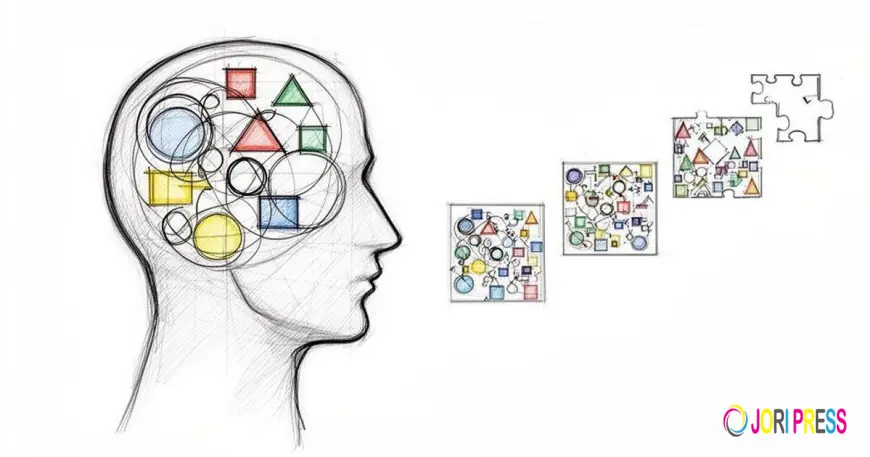
Human intelligence involves much more than remembering information or solving mathematical equations. It includes the ability to recognize patterns, understand relationships, adapt to unfamiliar situations, and apply knowledge to everyday problems.
Psychologists commonly distinguish between two important aspects of intelligence: fluid intelligence and crystallized intelligence.
Fluid intelligence refers to the ability to solve new problems without relying heavily on previously learned information. For example, identifying an unfamiliar visual pattern or discovering the rule behind a number sequence requires fluid reasoning.
Crystallized intelligence, on the other hand, involves knowledge and skills acquired through education and experience. Vocabulary, general knowledge, and understanding familiar concepts are examples of this ability.
These two forms of intelligence interact throughout life. While some aspects of fluid reasoning tend to decline with age, accumulated knowledge can continue developing well into adulthood.
WHY IQ TESTS REMAIN RELEVANT TODAY
An IQ Test, or Intelligence Quotient Test, is designed to assess certain cognitive abilities through standardized questions and tasks.
Modern professionally administered intelligence tests commonly evaluate several areas, including verbal comprehension, working memory, processing speed, and reasoning.
IQ scores are generally standardized around an average of 100, allowing psychologists to compare an individual's performance with that of a reference population.
However, intelligence testing is not simply about identifying who is smarter.
In educational settings, cognitive assessments can help professionals understand students' learning strengths and difficulties. In psychological evaluations, standardized tests may contribute to identifying particular cognitive needs when interpreted alongside other relevant information.
Outside professional settings, online IQ tests have become popular among individuals interested in puzzles, logical reasoning, and personal cognitive exploration.
Although these online activities can be engaging, their results may not provide the same level of reliability or validity as professionally administered assessments.
CAN INTELLIGENCE CHANGE OVER TIME?
One of the most interesting questions in cognitive science concerns whether intelligence remains fixed throughout life.
Research suggests that cognitive abilities develop and change in different ways across the lifespan. Childhood and adolescence are particularly important periods for brain development, while adulthood brings additional opportunities to build knowledge and expertise.
Environmental factors also influence cognitive development. Access to education, nutrition, healthcare, and intellectually stimulating experiences can affect learning and performance.
Regularly solving puzzles may improve familiarity with certain reasoning tasks. However, becoming better at a particular type of puzzle does not necessarily produce a lasting increase in general intelligence.
This distinction matters because some brain-training products promise dramatic improvements in intelligence without sufficient scientific evidence.
Rather than focusing exclusively on raising an IQ score, researchers often emphasize the importance of lifelong learning, healthy habits, and meaningful intellectual engagement.
THE GROWING POPULARITY OF ONLINE IQ TESTS
Digital technology has made cognitive challenges more accessible than ever.
Previously, intelligence testing was primarily associated with schools, research institutions, and psychological clinics. Today, anyone with an internet connection can explore reasoning exercises through online platforms.
Websites such as IQ Test Free offer an accessible starting point for people interested in exploring intelligence-related questions and challenging their thinking skills.
Several factors help explain the appeal of online testing.
First, convenience allows users to explore cognitive challenges without scheduling an appointment. Second, interactive questions can make problem-solving enjoyable. Finally, curiosity about personal abilities encourages people to try unfamiliar mental tasks.
However, users should distinguish between recreational online assessments and scientifically validated intelligence tests.
An online score should be interpreted cautiously, especially when information about standardization, scoring methods, and test validity is unavailable.
DOES A HIGH IQ GUARANTEE SUCCESS?
A common misconception is that individuals with higher IQ scores are automatically more successful in education, careers, and personal relationships.
Cognitive ability can be associated with academic achievement and certain aspects of professional performance. Nevertheless, real-world success depends on numerous interacting factors.
Motivation, persistence, emotional regulation, communication, access to opportunities, and practical experience all play important roles.
For example, someone with excellent analytical reasoning may still struggle in a collaborative environment without effective communication skills.
Similarly, creativity and the ability to adapt to changing circumstances can contribute significantly to professional development.
An IQ score can provide useful information about selected cognitive abilities, but it cannot fully predict an individual's future achievements or personal potential.
HOW EVERYDAY HABITS SUPPORT BRAIN HEALTH
Although there is no scientifically established shortcut to dramatically increasing general intelligence, several everyday behaviors support cognitive health.
Physical activity contributes to overall health and is associated with benefits for certain cognitive functions.
Adequate sleep supports attention, learning, and memory consolidation. Poor sleep can make even familiar problems more difficult to solve.
Continuous learning encourages people to acquire new knowledge and develop useful skills. Reading, studying languages, and exploring unfamiliar subjects can provide meaningful intellectual stimulation.
Social interaction also creates opportunities to exchange ideas, consider different perspectives, and practice communication.
A balanced lifestyle is therefore more valuable than relying entirely on repetitive brain-training exercises.
THE FUTURE OF INTELLIGENCE ASSESSMENT
Advances in artificial intelligence and digital technology may influence how cognitive assessments are developed and delivered.
Researchers are exploring adaptive testing methods that adjust question difficulty according to an individual's responses. Such approaches may help assessments gather useful information more efficiently.
At the same time, digital testing raises important questions about privacy, fairness, accessibility, and the responsible interpretation of results.
Future assessments may become more personalized, but scientific validation will remain essential for ensuring that their conclusions are meaningful.
FINAL THOUGHTS
Intelligence is a complex human characteristic that cannot be fully represented by a single number. While IQ tests provide valuable insights into particular reasoning abilities, they represent only one part of a much broader picture.
Understanding how people think, learn, and adapt may ultimately be more useful than comparing scores alone.
For those interested in exploring logical reasoning and pattern recognition, IQ Test Free offers an opportunity to engage with cognitive challenges. More importantly, approaching these activities with curiosity can encourage a lasting interest in learning and understanding the remarkable capabilities of the human mind.
What's Your Reaction?
 Like
0
 Dislike
0
 Love
0
 Funny
0
 Angry
0
 Sad
0
 Wow
0