








































14 AI Readiness Tips for a Successful Digital Transformation
Discover 14 practical AI readiness tips to prepare your business for successful digital transformation with better strategy, security, data, and AI adoption

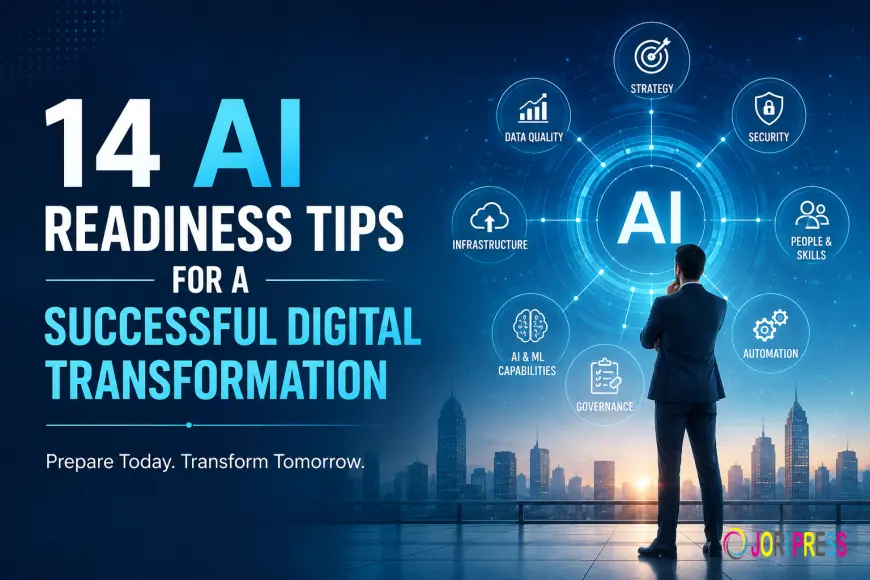
Have you ever invested in a new tool only to find that your team barely used it? Many businesses face this problem when adopting AI. The technology is powerful, but success depends on preparation, not just software.
That is why AI readiness matters. Before investing in new tools, companies need clear goals, secure systems, skilled teams, and reliable data. At Rubixe, we often see that organizations that prepare first make smarter technology decisions and avoid costly mistakes.
This guide shares 14 practical tips to help your business build strong ai readiness and achieve a smoother digital transformation.
Why is AI readiness important before digital transformation?
AI readiness is the foundation of successful AI adoption. It helps businesses understand whether they have the people, processes, data, and technology needed to use AI effectively.
According to McKinsey, companies that align AI initiatives with business goals are more likely to create lasting value. Microsoft and IBM also emphasize that successful AI projects require organizational preparation, not only advanced technology.
Without proper planning, businesses may face:
-
Poor quality data
-
Low employee adoption
-
Security concerns
-
Unclear business outcomes
-
Wasted investment
Many organizations begin with an AI Readiness Assessment to identify strengths, gaps, and priorities before implementation.
What are the 14 AI readiness tips every business should follow?
1. Define clear business goals
Start with a business problem instead of technology. Decide what you want AI to improve, such as customer service, productivity, or decision making.
2. Understand your current capabilities
Review your existing systems, workforce, and digital maturity. An AI Readiness Assessment provides a practical starting point.
3. Check your data quality
AI depends on accurate and organized data. Remove duplicate records, improve consistency, and establish clear data ownership.
4. Strengthen AI Cybersecurity
Protect sensitive information before deploying AI systems. Good AI Cybersecurity practices include access controls, encryption, regular monitoring, and employee awareness training.
5. Build leadership support
Successful AI projects require leaders who communicate clear goals and encourage collaboration across departments.
6. Prepare your workforce
Employees should understand how AI supports their work rather than replaces it. Basic AI education increases confidence and adoption.
7. Invest in AI and ML skills
Your team does not need to become data scientists overnight. However, learning the basics of AI and ML helps employees work more effectively with intelligent systems.
How can businesses measure their AI readiness?
The easiest way is to evaluate people, technology, data, governance, and business strategy together instead of reviewing only technical systems.
Many organizations perform an AI Readiness Audit before launching major projects. This process highlights gaps that could slow implementation.
|
Area |
Why it matters |
Key question |
|
Business strategy |
Aligns AI with company goals |
Are objectives clearly defined? |
|
Data quality |
Improves AI accuracy |
Is business data reliable? |
|
Technology |
Supports AI deployment |
Can current systems scale? |
|
Skills |
Encourages adoption |
Does the team understand AI? |
|
Security |
Protects sensitive information |
Are strong security controls in place? |
An AI Readiness Audit also helps organizations prioritize investments instead of trying to improve everything at once.
What role does AI consulting play in digital transformation?
AI Consulting helps businesses create practical AI strategies based on their goals, budget, and operational needs.
Experienced consultants can identify quick wins, reduce implementation risks, and recommend suitable technologies instead of unnecessary complexity.
Good AI Consulting typically includes:
-
Business opportunity analysis
-
Technology recommendations
-
Risk assessment
-
Change management planning
-
Governance guidance
Independent planning often saves both time and resources.
How do automation and people work together?
Automation works best when it supports employees instead of replacing them. Human judgment remains essential for complex decisions.
For example, Automation can handle repetitive document processing, scheduling, or report generation. Employees can then focus on creative thinking, customer relationships, and strategic planning.
This balanced approach improves productivity while maintaining accountability.
A realistic example:
Imagine a manufacturing company receiving hundreds of maintenance requests every week. Automation sorts requests by urgency, while engineers review the highest priority cases. AI speeds up the workflow, but people still make the final maintenance decisions.
This kind of partnership often produces better long term results.
What challenges should businesses expect?
AI adoption brings opportunities, but it also introduces challenges that should not be ignored.
Common challenges include:
-
Limited employee confidence
-
Poor quality data
-
Integration with older systems
-
Privacy and compliance concerns
-
Maintaining responsible AI practices
Organizations should also review AI Cybersecurity regularly because security risks evolve as AI systems become more capable.
Deloitte and Gartner frequently highlight governance, responsible AI, and workforce readiness as essential parts of successful digital transformation.
How can you keep improving AI readiness over time?
AI readiness is an ongoing process, not a one time project. Businesses should review progress regularly and adapt as technology changes.
Useful practices include:
-
Repeat an AI Readiness Assessment after major business changes.
-
Schedule an AI Readiness Audit annually or before large AI initiatives.
-
Continue employee learning in AI and ML.
-
Update AI Cybersecurity policies regularly.
-
Work with trusted AI Consulting experts when expanding AI projects.
-
Review Automation opportunities as business processes evolve.
Continuous improvement helps organizations stay competitive while reducing unnecessary risks.
Frequently Asked Questions
What is AI readiness?
AI readiness is the process of preparing people, technology, data, and business strategy before implementing AI solutions.
Why is an AI Readiness Assessment important?
An AI Readiness Assessment helps identify strengths, weaknesses, and improvement areas before investing in AI technologies.
What does an AI Readiness Audit evaluate?
An AI Readiness Audit reviews business strategy, data quality, infrastructure, governance, workforce skills, and security practices.
Why is AI Cybersecurity important?
AI Cybersecurity protects sensitive business data, reduces security risks, and helps organizations use AI responsibly.
Conclusion
Successful digital transformation begins with preparation, not technology alone. Businesses that strengthen AI readiness, improve skills, secure their data, and align AI initiatives with clear goals are more likely to achieve meaningful results.
Whether you are exploring your first AI project or expanding existing initiatives, taking time to evaluate your current capabilities can reduce risk and improve long term success. Rubixe encourages organizations to assess their readiness carefully, build a practical roadmap, and adopt AI with confidence through thoughtful planning and continuous improvement.
What's Your Reaction?
 Like
0
Like
0
 Dislike
0
Dislike
0
 Love
0
Love
0
 Funny
0
Funny
0
 Angry
0
Angry
0
 Sad
0
Sad
0
 Wow
0
Wow
0