







































Why Clinical Trial Monitoring Is Critical for Data Integrity and Regulatory Success
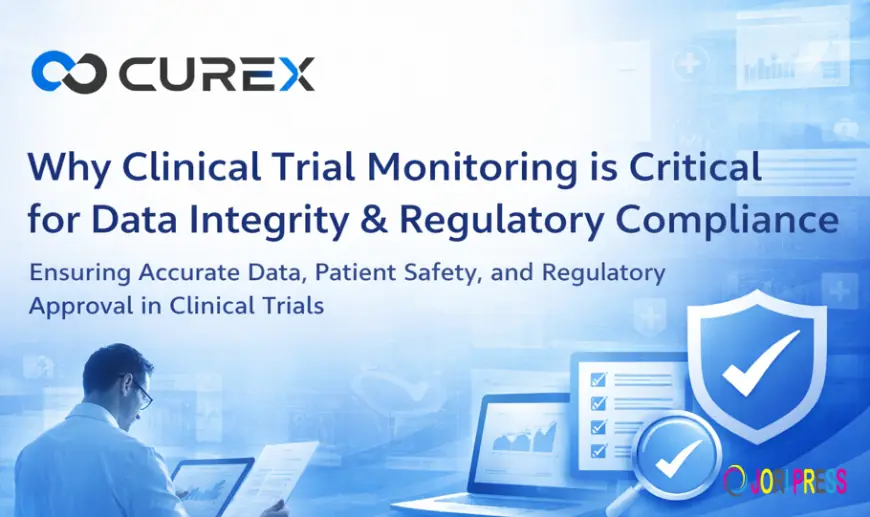
Clinical research relies on one critical asset—reliable data. Every clinical trial dataset represents real patient experiences, safety outcomes, and therapeutic effects. Regulators depend on this data to determine whether a treatment should reach the market.
However, the value of clinical data depends entirely on its accuracy, traceability, and regulatory compliance.
This is where clinical trial monitoring plays a crucial role. Monitoring ensures that clinical studies are conducted according to the approved protocol, Good Clinical Practice (GCP), Standard Operating Procedures (SOPs), and regulatory guidelines.
Without effective monitoring, clinical trials risk generating incomplete, inaccurate, or non-compliant data, which can delay approvals, trigger regulatory findings, or compromise patient safety.
Organizations conducting global clinical trials increasingly rely on experienced monitoring partners to maintain data integrity and regulatory readiness throughout the study lifecycle.
The Growing Regulatory Focus on Clinical Data Integrity
Regulatory authorities worldwide are placing greater emphasis on data governance and transparency in clinical research. With the adoption of digital technologies, decentralized trials, and electronic data systems, maintaining data integrity has become more complex.
Major regulatory agencies have updated their expectations accordingly.
Key Regulatory Updates
FDA – 2024 Electronic Systems Guidance
Sponsors must:
-
Document system architecture and validation processes
-
Map the full lifecycle of clinical data from collection to archival
-
Implement risk-based validation of electronic systems
EMA – 2023 Computerized Systems Guideline
Requirements include:
-
Maintaining structured inventories of digital systems
-
Ensuring ALCOA++ data integrity compliance
-
Reviewing audit trails regularly
-
Providing regulators direct access to electronic records
ICH E6(R3) Draft Guidance
Key expectations include:
-
Defined data governance frameworks
-
Clear sponsor and CRO responsibilities
-
Risk-based oversight and monitoring strategies
These regulatory updates emphasize that clinical monitoring is a central mechanism for ensuring compliance and protecting the integrity of trial data.
Understanding the ALCOA+ Framework in Clinical Trials
Data integrity in clinical research is commonly evaluated through the ALCOA+ framework, which defines the attributes that high-quality clinical data must meet.
Clinical data must be:
-
Attributable – Clearly linked to the person responsible for the data entry
-
Legible – Readable and permanent
-
Contemporaneous – Recorded at the time the event occurs
-
Original – Derived from the original source documentation
-
Accurate – Free from errors or manipulation
Additional ALCOA+ principles also require data to be complete, consistent, enduring, and available throughout the trial lifecycle.
Clinical monitors play a critical role in verifying that these principles are consistently applied across trial sites.
How Clinical Monitoring Protects Data Integrity
Effective monitoring ensures that clinical data remains reliable from the moment it is recorded until the final regulatory submission. This is achieved through several key monitoring activities.
Source Data Verification (SDV)
Source Data Verification remains one of the most important components of clinical monitoring.
During SDV, monitors compare the information entered into the Electronic Data Capture (EDC) or Case Report Form (CRF) against original source records such as medical charts and laboratory reports.
This process helps detect:
-
Data transcription errors
-
Incorrect patient eligibility documentation
-
Inaccurate adverse event reporting
-
Missing or inconsistent study visit data
Identifying discrepancies early prevents data quality issues from affecting the final clinical dataset.
Audit Trail Review
Modern clinical trials rely heavily on electronic systems. Every modification made within these systems generates an audit trail.
Audit trails capture key information such as:
-
Timestamp of data changes
-
User identity
-
Previous and updated values
-
Reason for modification
Clinical monitors review these audit trails to ensure that data changes are transparent, justified, and compliant with regulatory expectations.
This process not only ensures compliance but also helps identify potential operational or data management issues.
Investigational Product Accountability
Monitoring also ensures proper handling and documentation of investigational products.
This includes verifying:
-
Proper storage conditions and temperature logs
-
Accurate dispensing records
-
Documentation of returns and unused product
-
Complete chain-of-custody tracking
Any discrepancy in investigational product records may indicate broader data integrity concerns that require immediate investigation.
Protocol Compliance Monitoring
Even perfectly recorded data becomes unreliable if trial procedures do not follow the approved protocol.
Clinical monitors assess whether sites are adhering to:
-
Patient inclusion and exclusion criteria
-
Scheduled study visits and assessments
-
Correct execution of trial procedures
-
Documentation and reporting of protocol deviations
Maintaining strict protocol adherence ensures that the study results remain scientifically valid and acceptable to regulators.
Proactive Query Management
During monitoring visits, discrepancies or missing data are identified and documented as queries.
Monitors collaborate with site staff to resolve these queries promptly, ensuring that the clinical database remains accurate and analysis-ready.
Early query resolution reduces the burden of extensive data cleaning at the end of the trial, accelerating regulatory submissions.
Clinical Monitoring and Regulatory Inspection Readiness
Regulatory inspections can occur at any stage of a clinical trial. Agencies may inspect a site during the study, after database lock, or even years after completion.
Effective monitoring ensures that trial documentation remains inspection-ready at all times.
Key areas verified by monitors include:
-
Complete and organized Investigator Site Files (ISF)
-
Timely documentation of adverse events and safety reports
-
Proper training records for site personnel
-
Comprehensive monitoring visit reports
These records collectively demonstrate that the trial was conducted according to GCP and regulatory standards.
Common Regulatory Findings Related to Monitoring
Regulatory agencies frequently cite deficiencies in monitoring when issuing warning letters or inspection observations.
Typical findings include:
-
Inadequate oversight of clinical trial sites
-
Poor documentation of monitoring activities
-
Missing or delayed adverse event reporting
-
Incomplete source data verification
-
Failure to identify protocol deviations
Implementing a structured and proactive monitoring strategy helps sponsors avoid these regulatory risks.
Curexbio’s Approach to Clinical Trial Monitoring
At Curexbio, clinical monitoring is designed to ensure data integrity, regulatory compliance, and operational efficiency across all phases of clinical development.
With operational presence in India, the United States, and Canada, Curexbio supports global clinical trials through experienced Clinical Research Associates (CRAs) and robust monitoring frameworks.
Our monitoring services include:
-
Site selection and feasibility assessments
-
Site initiation and training
-
Risk-based monitoring strategies
-
Source data verification and data quality review
-
Investigational product accountability monitoring
-
Protocol compliance oversight
-
Site close-out and regulatory documentation support
By combining experienced CRAs, structured oversight processes, and regulatory expertise, Curexbio ensures that sponsors maintain high-quality datasets ready for regulatory submission.
Strengthening Clinical Trial Oversight with Curexbio
Clinical trial monitoring is not just a regulatory requirement—it is a strategic safeguard for data credibility, patient safety, and successful regulatory approval.
As trials become increasingly complex and globally distributed, the need for experienced monitoring partners becomes even more critical.
Curexbio’s monitoring experts provide the oversight necessary to ensure that every data point collected during a clinical trial is accurate, traceable, and regulatory-compliant.
Organizations looking to strengthen their clinical trial oversight can benefit from Curexbio’s comprehensive monitoring services and global expertise.
Partner with Curexbio to ensure your clinical trials maintain the highest standards of data integrity and regulatory compliance.
What's Your Reaction?
 Like
0
Like
0
 Dislike
0
Dislike
0
 Love
0
Love
0
 Funny
0
Funny
0
 Angry
0
Angry
0
 Sad
0
Sad
0
 Wow
0
Wow
0