






































Hair Transplant in India: The Complete 2026 Clinical Guide to Permanent Hair Restoration
Planning hair restoration? Explore the complete guide to FUE, FUT, and body hair transplants in Gurgaon & Delhi. Learn expert donor preservation tips from Dr. Shail Gupta.
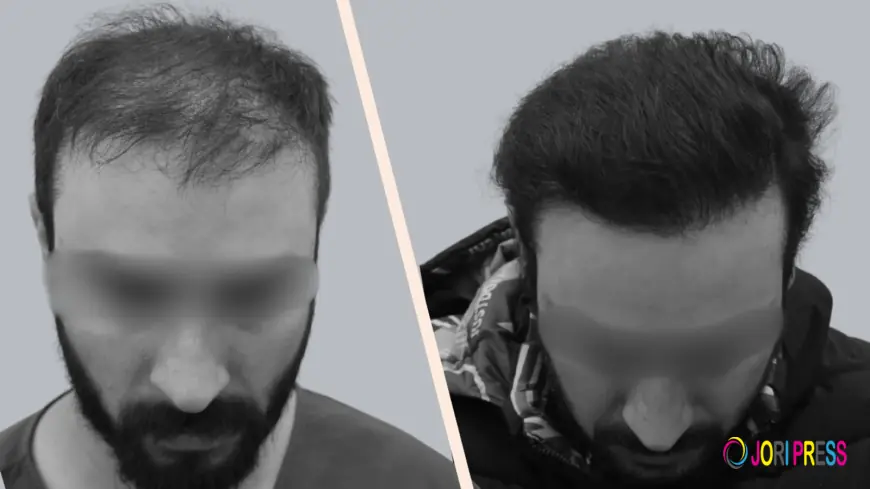
Deciding to undergo a hair restoration procedure is a life-changing milestone that goes far beyond simple aesthetics. If you are currently researching options for a Hair Transplant in India, you are likely looking for a balance between world-class surgical expertise, advanced medical tech, and transparent clinical guidance. India has firmly established itself as a global epicentre for advanced hair restoration, attracting discerning patients from all over the world.
However, with the commercial mass-production of "all-inclusive packages" and technician-led clinics, finding honest, evidence-based surgical care requires careful clinical evaluation.
A successful Hair Transplant in India in 2026 relies on strict doctor-led execution, long-term donor area preservation, and custom hairline artistry. Premium results are achieved by combining advanced FUE and FUT techniques with supplementary beard and body hair harvesting. Lasting hair density requires combining surgical restoration with continuous, evidence-based medical treatments to prevent the thinning of remaining natural hair.
To understand how a permanent transplant functions, it helps to look at the underlying biological mechanism of pattern baldness (androgenetic alopecia). Thinning hair does not simply fall out permanently from the root overnight; it undergoes a slow cellular transformation called follicular miniaturization.
Driven by an inherited genetic sensitivity to Dihydrotestosterone (DHT)—a potent hormone byproduct of testosterone—vulnerable follicles across the hairline and crown gradually shrink. With each consecutive hair growth cycle, the active growth phase shortens, and the hair shaft becomes progressively thinner, shorter, and weaker until the root stops producing hair entirely and goes dormant. Reversing this progressive pattern requires a surgical redistributing of healthy, robust hair roots harvested from areas of the scalp that are genetically programmed to resist DHT for life.
The Core Surgical Modalities: Understanding FUE and FUT
Modern clinical hair restoration utilizes two primary surgical methods to harvest hair follicles. A common industry misconception is that one technique is universally superior to the other; in a premium clinical environment, the selection is customized entirely to match your hair type, scalp elasticity, and target density goals.
Advanced FUE Hair Transplant in India
Follicular Unit Extraction (FUE) has become one of the most widely sought-after harvesting methods in modern hair restoration. An advanced FUE hair transplant in India involves extracting individual follicular units directly from the donor area one by one using specialized, microscopic punch tools.
Because this method creates tiny, circular micro-wounds scattered across a wide surface area, it heals quickly and leaves no linear scar. This makes it an exceptional choice for patients who prefer to wear their hair short or those who require moderate graft numbers to rebuild a receding frontal frame. At Satya, we utilize ultra-fine, precisely calibrated punches to minimize local tissue trauma and ensure an exceptionally high graft survival rate.
The Gold Standard for Massive Coverage: FUT Hair Transplant
The Follicular Unit Transplant (FUT), commonly referred to as the strip method, remains a foundational pillar for treating advanced stages of pattern baldness. During an FUT hair transplant, a narrow, horizontal strip of tissue is carefully harvested from the dense permanent donor zone at the lower back of the scalp.
This tissue strip is then placed under high-magnification stereomicroscopes, where specialized technicians gently dissect it into individual single-hair, two-hair, and three-hair follicular units. The primary clinical advantage of FUT is its ability to safely yield a massive number of pristine, high-quality grafts in a single surgical session while completely preserving the surrounding donor scalp framework for any potential future procedures. Advanced trichophytic closure techniques are utilized to ensure the remaining microscopic line heals cleanly and stays virtually unnoticeable beneath the surrounding hair.
Expanding the Donor Pool: Beard Hair Transplant (BHT)
In many cases of advanced pattern baldness (such as Norwood Grades 5, 6, or 7), or during complex corrective repair surgeries, the scalp donor area may be naturally sparse or heavily depleted from a previous failed procedure elsewhere. Rebuilding high-density coverage under these strict structural limitations requires looking beyond the scalp.
A beard hair transplant serves as an exceptional secondary donor source. Hair follicles harvested from the jawline shadow area are naturally robust, feature a thicker hair shaft diameter, and stay in an active growth phase for prolonged periods. When extracted precisely using specialized FUE techniques, beard grafts provide excellent visual volume and background fullness when blended strategically behind a newly constructed front hairline or into a thinning crown vertex.
Advanced Tissue Sourcing: Body Hair Transplant
When both the scalp and beard donor zones are exhausted, advanced regenerative clinics can tap into tertiary hair reserves through a body hair transplant. This procedure involves extracting healthy follicular units from areas such as the chest or upper back.
Because body hair has distinct growth cycles and behaves differently than scalp hair, it requires a highly experienced surgeon to evaluate the extraction depth and exit angles correctly. Body grafts are meticulously selected and utilized primarily as filler hair to add density deep inside the mid-scalp or crown zones, ensuring your primary scalp hair roots are saved for framing the face naturally.
Comparing Harvesting Techniques: FUE vs. FUT
| Clinical Dimension | FUE Hair Transplant | FUT Hair Transplant |
| Harvesting Mechanism | Individual graft-by-graft micro-punch extraction | Direct horizontal strip tissue harvesting |
| Donor Scar Profile | Microscopic, scattered circular dots (No Linear Scar) | Fine, horizontal linear scar (Hidden by hair) |
| Graft Yield Efficiency | Ideal for mild to moderate sessions (1,00,000 to 2,50,000 hairs) | Maximum graft yield for advanced baldness in one session |
| Follicle Transection Risk | Higher risk if performed by inexperienced hands | Exceptionally low risk under stereo-microscopic dissection |
| Recovery Timeline | 3 to 5 days for circular micro-wounds to close | 7 to 10 days for structural skin healing |
The Critical Equation: Surgery Combined with Continuous Medical Maintenance
A common misconception among patients researching a Hair Transplant in India is that a surgical procedure serves as an immediate, standalone cure for baldness. This is a critical biological error that can lead to compromised long-term aesthetic results.
To understand how a hair transplant maintains its visual volume over several years, you must look at the biological relationship between your hair types:
The newly implanted hair follicles taken from the permanent donor zone are genetically programmed to resist DHT and will continue to grow naturally for a lifetime. However, the original, native hair that sits right behind your new transplant remains highly sensitive to genetic thinning.
If you undergo a transplant but fail to follow a consistent medical maintenance routine, your original native hair will continue to miniaturize and shed over the following years. This creates an unnatural, patchy look where a dense patch of transplanted hair sits at the front, separated by an expanding bald gap from the rest of your hair. To avoid this outcome, continuous medical therapy—including targeted DHT suppression, localized vasodilators, and clinical growth factor treatments—is mandatory to protect your remaining native hair roots from further hormonal damage.
The Satya Philosophy: Expert Approach to Restoration
At Satya Skin & Hair Solutions, we firmly reject high-volume commercial sales models, pre-packaged deal tiers, and technician-led "assembly line" treatments. Rebuilding a natural frame for your face requires deep medical integrity, long-term pattern planning, and meticulous surgical precision.
Our founders, Dr. Shail Gupta and Dr. Ruchi Agarwal, follow a strict clinical protocol based on "Donor Stewardship." Your donor hair is a precious, strictly limited resource; if a clinic over-harvests or exhausts your donor reserve carelessly to build an aggressively low hairline in your early 20s, you will run out of hair roots if your genetic thinning expands across the crown later in life.
Our comprehensive diagnostic process begins with an in-depth trichoscopy to evaluate your exact percentage of hair miniaturization and measure your donor area density. Dr. Shail Gupta personally designs and executes every single hairline restoration, meticulously matching the graft placement with your natural facial geometry, age, and natural hair exit angles to ensure a seamless blend. Concurrently, Dr. Ruchi Agarwal addresses your systemic dermatological health, checking for nutritional deficiencies, metabolic stressors, and scalp vascularity to ensure your scalp provides the absolute healthiest possible environment for long-term growth.
Managing North Indian Environmental Variables in Delhi NCR
Living in a bustling metropolitan hub like Gurgaon or Delhi introduces distinct external challenges that can actively impact post-transplant recovery and graft survival. The high levels of particulate air pollution common across the Delhi NCR region introduce intense oxidative stress, generating free radicals that can trigger micro-inflammation around newly implanted hair roots during the critical first ten days of healing.
Furthermore, the hard water prevalent across many residential sectors in Gurgaon can make the hair shaft brittle, leading to premature breakage of your remaining native hair. When you choose Satya, our post-operative care protocols are explicitly customized to address these regional challenges. We combine your medical therapies with custom, protective scalp-cleansing routines and anti-pollution barriers, ensuring your hair follicles have a safe, clean environment to thrive.
Take the First Step Toward Permanent Hair Restoration
Reversing a receding hairline and advanced hair thinning is entirely achievable when you step away from temporary cosmetic quick-fixes and invest in evidence-based, doctor-led clinical solutions that respect your body's unique biology. By understanding the true medical relationship between surgical restoration and long-term medical preservation, you can make an informed decision that protects your appearance and your confidence for life.
Frequently Asked Questions (FAQs)
Why is doctor-led execution critical for a Hair Transplant in India?
A hair transplant is a permanent surgical procedure that requires making incisions and managing a finite donor resource. A board-certified surgeon must personally perform the extraction, hairline design, and site creation to ensure proper depth, natural exit angles, and zero risk of permanent donor damage or infection.
What is the main difference between an FUT and an FUE hair transplant?
FUE involves extracting individual grafts one by one using a micro-punch, leaving no linear scar and offering rapid recovery. FUT involves harvesting a small strip of skin from the permanent donor zone and dissecting it under a microscope, making it superior for yielding high graft volumes for advanced baldness.
Can beard and body hair be safely mixed with scalp hair?
Yes. Using a beard hair transplant or body hair sourcing is a highly predictable, effective technique for adding background density to the crown or filling areas behind a new hairline. Beard hair is robust and thick, providing excellent visual volume when blended correctly into the mid-scalp.
Why do some hair transplants look thin or sparse a year after surgery?
This drop in visual volume typically happens when a patient stops taking their prescribed post-transplant medical treatments. While the transplanted hair grows permanently, your surrounding natural hair remains sensitive to DHT and will continue to thin out if it isn't protected medically.
What is the average cost of an advanced hair transplant in Delhi NCR?
The total investment depends entirely on the harvesting technique selected (FUE, FUT, or a combination), the total number of grafts required to achieve your specific density goals, and whether secondary body hair sources are needed. We provide a completely transparent, itemized cost estimate during your initial digital scalp evaluation.
What's Your Reaction?
 Like
0
Like
0
 Dislike
0
Dislike
0
 Love
0
Love
0
 Funny
0
Funny
0
 Angry
0
Angry
0
 Sad
0
Sad
0
 Wow
0
Wow
0