






































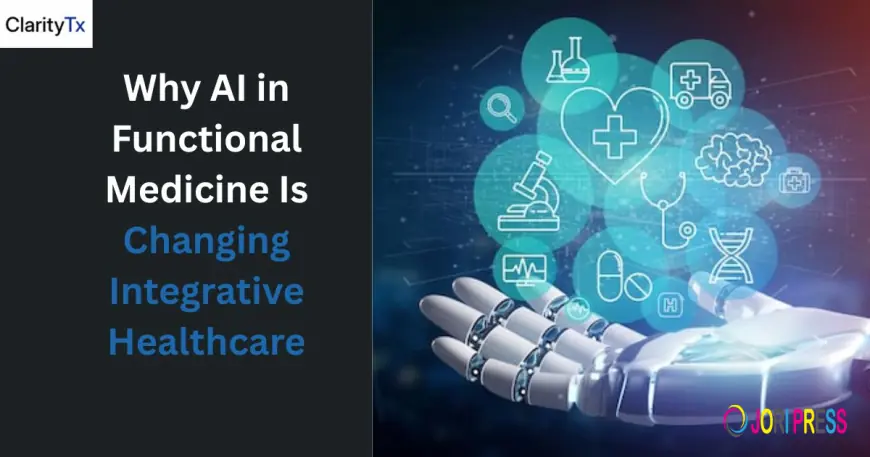
Why AI in Functional Medicine Is Changing Integrative Healthcare
Discover how AI in Functional Medicine is transforming integrative healthcare by enhancing clinical insights, streamlining workflows, and enabling personalized, data-driven patient care.
Healthcare is evolving rapidly, and practitioners are under increasing pressure to deliver more personalized, data-driven care while managing growing amounts of clinical information. Functional and integrative medicine practitioners, in particular, face a unique challenge: they must evaluate complex interactions between lifestyle, nutrition, genetics, hormones, environmental triggers, and chronic disease patterns to uncover the root causes of illness.
This is where AI in Functional Medicine is beginning to reshape modern healthcare. Artificial intelligence is no longer limited to hospital systems or large research institutions. Today, it is becoming a practical clinical tool that helps practitioners organize data, recognize patterns, improve workflows, and support better patient outcomes.
Rather than replacing clinicians, AI is enhancing their ability to make informed decisions faster and with greater precision. As integrative healthcare continues to expand, AI is emerging as one of the most valuable technologies supporting this transformation.
The Growing Complexity of Functional Medicine
Functional medicine relies on understanding the body as an interconnected system. Unlike conventional models that often focus on symptom management, functional medicine practitioners investigate deeper contributors to chronic conditions.
A single patient evaluation may include:
-
Comprehensive blood panels
-
Nutritional deficiencies
-
Hormone testing
-
Gut microbiome reports
-
Genetic markers
-
Sleep and stress patterns
-
Environmental exposures
-
Lifestyle habits
The challenge is not collecting this information — it is synthesizing it into meaningful clinical insight. Reviewing large amounts of patient data manually can consume hours of a practitioner’s time and may still leave room for overlooked connections.
As patient demand for personalized care increases, clinicians need tools that can process information efficiently without compromising quality. AI helps bridge this gap by identifying patterns, surfacing relevant insights, and streamlining the clinical workflow.
How AI Supports Clinical Decision-Making
One of the biggest advantages of artificial intelligence is its ability to analyze massive datasets quickly. In functional medicine, this capability can significantly improve clinical efficiency.
AI systems can help practitioners:
-
Detect patterns across lab results
-
Highlight potential nutrient deficiencies
-
Identify correlations between symptoms and biomarkers
-
Summarize patient histories
-
Suggest evidence-based research references
-
Prioritize potential root causes
Instead of spending hours reviewing fragmented records, clinicians can focus more on interpretation, patient communication, and treatment planning.
Importantly, AI does not replace practitioner expertise. Functional medicine requires clinical reasoning, empathy, and individualized care that technology alone cannot provide. AI functions as a support system that enhances human decision-making rather than substituting it.
Improving Workflow Efficiency in Modern Clinics
Administrative overload is one of the largest contributors to clinician burnout. Documentation, data analysis, and research reviews often reduce the amount of time practitioners can spend directly with patients.
By automating repetitive tasks, AI can improve operational efficiency throughout a clinic.
Examples include:
Automated Data Organization
AI tools can consolidate lab reports, intake forms, wearable device data, and patient histories into one structured view. This reduces the time spent searching through multiple systems.
Faster Clinical Summaries
AI can generate concise summaries of patient data, helping clinicians review important findings quickly before consultations.
Research Assistance
Keeping up with emerging studies in nutrition, chronic disease, microbiome science, and longevity medicine is time-consuming. AI-powered systems can help surface relevant literature and evidence-based insights more efficiently.
Documentation Support
Some AI platforms assist with charting and note generation, reducing administrative workload while improving consistency.
As clinics scale, these efficiencies become increasingly valuable for maintaining high-quality patient care.
How ClarityTx Supports AI-Driven Functional Medicine
Clinicians looking to harness the power of AI in Functional Medicine can benefit from platforms like ClarityTx. By consolidating patient data, lab results, and lifestyle insights into a single interface, ClarityTx acts as an integrative clinical decision platform, helping practitioners identify root causes faster, personalize treatment plans, and streamline clinical workflows. With AI-driven recommendations and real-time data analysis, ClarityTx empowers healthcare providers to deliver more precise, evidence-based care while saving valuable time for patient interaction.
Personalization Is Driving the Future of Healthcare
Patients today expect healthcare to be personalized. They want treatment plans tailored to their symptoms, lifestyle, genetics, and long-term health goals.
Functional medicine has always embraced personalization, but AI enables practitioners to deliver it at a much larger scale.
For example, AI systems may help identify:
-
Individual dietary sensitivities
-
Lifestyle patterns contributing to inflammation
-
Early metabolic dysfunction
-
Nutritional imbalances linked to symptoms
-
Potential risk factors for chronic disease
By integrating multiple layers of patient data, AI helps clinicians develop more targeted and precise care strategies.
This level of personalization is especially important in chronic conditions where symptoms often have multiple contributing factors rather than a single cause.
The Role of Predictive Analytics in Preventive Care
Healthcare is gradually shifting from reactive treatment toward prevention and optimization. AI plays an important role in this transition through predictive analytics.
Predictive systems can analyze trends across biomarkers, lifestyle patterns, and historical patient data to identify early warning signs before conditions progress.
In functional medicine, this could support earlier intervention for:
-
Metabolic dysfunction
-
Chronic inflammation
-
Hormonal imbalances
-
Cardiovascular risk
-
Gut health disturbances
-
Stress-related disorders
Early identification allows practitioners to implement nutrition, lifestyle, and therapeutic interventions before more serious complications develop.
This proactive approach aligns closely with the foundational philosophy of integrative healthcare.
Enhancing Patient Engagement and Education
Patient engagement is critical for successful long-term outcomes. Many chronic health conditions require consistent lifestyle changes that depend heavily on patient understanding and adherence.
AI-powered tools can improve patient engagement by:
-
Delivering personalized wellness insights
-
Tracking health progress over time
-
Providing educational recommendations
-
Supporting habit and lifestyle monitoring
-
Simplifying complex health information
When patients better understand their health data and treatment plans, they are often more motivated to participate actively in their care journey.
This creates stronger practitioner-patient collaboration and may improve long-term outcomes.
Challenges and Ethical Considerations
Despite its benefits, the use of AI in healthcare also raises important challenges.
Data Privacy and Security
Functional medicine often involves sensitive health information, including genomic and lifestyle data. Protecting patient privacy remains essential.
Accuracy and Bias
AI systems are only as reliable as the data they are trained on. Poor-quality or biased datasets can affect recommendations and insights.
Human Oversight
AI should support clinical judgment, not replace it. Practitioners must continue to evaluate recommendations critically and apply individualized reasoning.
Transparency
Clinicians and patients need transparency regarding how AI-generated insights are produced. Explainable AI models will become increasingly important as adoption grows.
Responsible implementation is necessary to ensure AI remains a trusted and ethical tool within healthcare.
The Emergence of Smarter Clinical Platforms
As healthcare technology evolves, many clinics are beginning to adopt integrated systems that combine patient data analysis, workflow management, and research support into one environment.
An advanced integrative clinical decision platform can help practitioners unify complex clinical information while improving operational efficiency and consistency of care.
These platforms are helping bridge the gap between conventional healthcare systems and the personalized approach required in functional medicine.
The result is a more connected clinical experience for both practitioners and patients.
The Future of AI in Integrative Healthcare
The future of healthcare will likely involve deeper collaboration between human expertise and intelligent technology. Functional medicine is uniquely positioned to benefit from AI because it relies heavily on data interpretation, personalization, and systems-based thinking.
In the coming years, AI may further expand into:
-
Real-time wearable health monitoring
-
Personalized supplement recommendations
-
Genomic and microbiome analysis
-
Environmental health tracking
-
Predictive longevity modeling
-
Advanced patient outcome forecasting
As these technologies mature, practitioners will gain even greater ability to deliver proactive, individualized care.
Most importantly, AI can help clinicians spend less time buried in administrative tasks and more time focusing on what matters most — meaningful patient relationships and root-cause healing.
Conclusion
The rise of AI in Functional Medicine represents a major shift in how integrative healthcare is practiced. By helping clinicians analyze complex data, streamline workflows, improve personalization, and support preventive care, AI is becoming an increasingly valuable clinical ally.
While technology will never replace practitioner expertise, it can significantly enhance the efficiency and depth of modern healthcare delivery. As patient expectations continue to evolve, clinics that embrace intelligent systems may be better equipped to provide scalable, personalized, and evidence-informed care.
The future of integrative healthcare is not simply digital — it is intelligent, connected, and deeply patient-centered.
What's Your Reaction?
 Like
0
Like
0
 Dislike
0
Dislike
0
 Love
0
Love
0
 Funny
0
Funny
0
 Angry
0
Angry
0
 Sad
0
Sad
0
 Wow
0
Wow
0