A shipment leaves a warehouse fully accounted for, but somewhere between origin and destination, the data stops telling the full story. Documents don’t match, timelines blur, and no one can pinpoint where the delay or discrepancy actually began. This is the kind of operational blind spot that has quietly shaped global supply chains for decades—and it’s exactly where blockchain is starting to make a measurable difference.
The Core Problem Supply Chains Haven’t Solved
Supply chains are built on coordination between multiple independent players. Suppliers, manufacturers, logistics providers, and retailers all operate within their own systems. Data moves, but it doesn’t always align. This leads to disputes, inefficiencies, and a constant need for reconciliation.
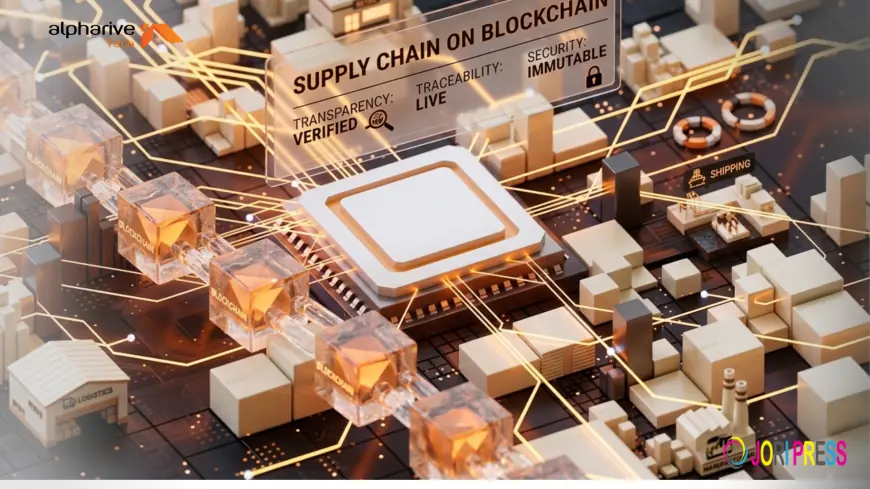
Blockchain in supplychain introduces a shared infrastructure where all participants access the same verified data. Instead of fragmented records, there is a single version of truth. That reduces friction at every stage, especially when something goes wrong and fast decisions are required.
How Blockchain in SCM Changes Data Integrity
At its core, Blockchain in SCM is about how data is recorded and trusted. Each transaction is time-stamped, encrypted, and linked to the previous one, forming a chain that cannot be altered retroactively. This creates a system where data integrity is built in, not enforced after the fact.
This matters in scenarios where accuracy is non-negotiable. For example, tracking temperature-sensitive pharmaceuticals or verifying compliance in regulated industries requires more than basic recordkeeping. Blockchain ensures that data remains consistent from origin to endpoint, without gaps or manipulation.
Real-Time Visibility Across the Entire Network
One of the most practical advantages is visibility. Traditional systems often provide delayed or partial updates. Blockchain changes that by enabling real-time tracking of goods and transactions across the network.
Businesses can monitor movement, verify status, and identify disruptions as they happen. This level of transparency allows companies to respond faster, reduce downtime, and improve overall reliability. In complex supply chains, even small improvements in visibility can translate into significant cost savings.
Reducing Fraud, Errors, and Disputes
Fraud and errors tend to thrive in environments where verification is slow or inconsistent. Paper-based processes, manual data entry, and disconnected systems create opportunities for manipulation.
With Blockchain in supplychain, every entry is validated through consensus before it becomes part of the ledger. This makes unauthorized changes extremely difficult. It also reduces common issues like duplicate records or mismatched documentation, which often lead to costly disputes between stakeholders.
Some emerging supply chain ecosystems, including Alpharive, are exploring how these mechanisms can be integrated into broader digital infrastructure without disrupting existing workflows.
Automation Through Smart Contracts
Efficiency in supply chains is often limited by manual processes. Payments, approvals, and compliance checks can take days or even weeks to complete.
Blockchain introduces smart contracts, which execute automatically when predefined conditions are met. For example, a payment can be triggered once a shipment is confirmed as delivered. This removes the need for intermediaries and reduces delays.
The result is a system that not only moves faster but also operates with greater predictability. Businesses gain better control over timelines and cash flow without increasing administrative overhead.
Adoption Trends in the U.S. Market
In the United States, adoption of Blockchain in SCM is gaining traction across industries such as retail, logistics, and healthcare. Companies are under increasing pressure to provide transparency, meet regulatory requirements, and ensure ethical sourcing.
Consumers are also more informed than ever. They expect visibility into where products come from and how they are handled. Blockchain provides a scalable way to meet these expectations without compromising efficiency.
Large enterprises are already investing in blockchain-based solutions, while smaller players are beginning to explore targeted use cases where the return on investment is clear.
Challenges That Still Matter
Despite its potential, blockchain is not without limitations. Integration remains one of the biggest hurdles. Many organizations rely on legacy systems that are not designed to work with decentralized technologies.
There is also the issue of standardization. For blockchain to deliver full value, participants across the supply chain need to adopt compatible frameworks. Without this alignment, the benefits are limited to isolated segments rather than the entire network.
Cost and scalability continue to be factors as well. While the technology is evolving, businesses need to approach implementation strategically, focusing on areas where blockchain can deliver immediate and measurable impact.
Where This Is Heading
Supply chains are moving toward greater interconnectedness, and the demand for reliable, real-time data is only increasing. Blockchain is not just improving existing systems—it is reshaping how they are designed.
Blockchain in supplychain is becoming less about experimentation and more about infrastructure. It supports a shift from reactive problem-solving to proactive decision-making. Businesses can anticipate disruptions, verify information instantly, and operate with a level of confidence that was previously difficult to achieve.
Blockchain in SCM ultimately changes how trust is established across the network. Instead of relying on intermediaries or delayed verification, trust is embedded directly into the system. That shift is what makes blockchain not just relevant, but essential for the future of supply chains.







































 Like
0
Like
0
 Dislike
0
Dislike
0
 Love
0
Love
0
 Funny
0
Funny
0
 Angry
0
Angry
0
 Sad
0
Sad
0
 Wow
0
Wow
0