




































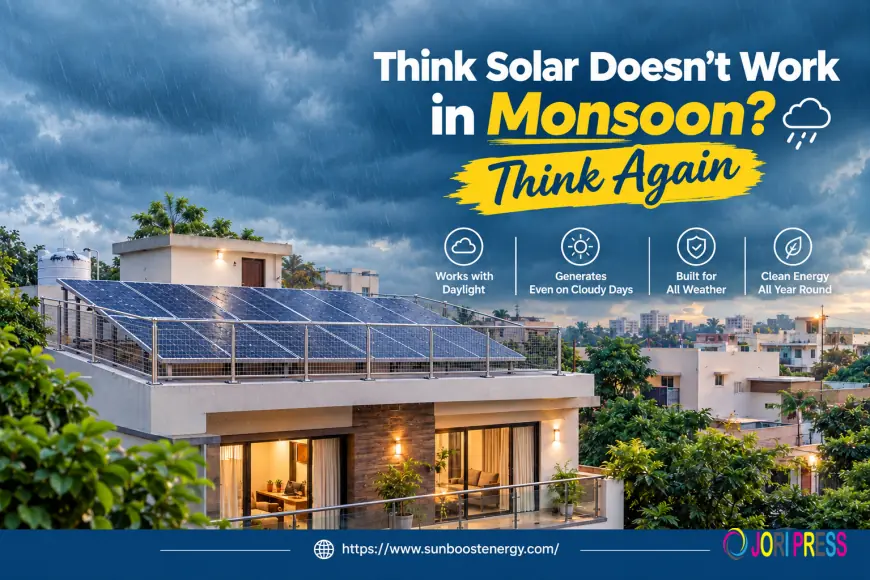
Think Solar Doesn’t Work in Monsoon? Think Again
As soon as the rainy season begins, many Indian homeowners start wondering whether solar panels will continue producing electricity. Dark clouds, regular rainfall, and fewer hours of strong sunshine can make it seem as though a solar system will become ineffective for several months.
As soon as the rainy season begins, many Indian homeowners start wondering whether solar panels will continue producing electricity. Dark clouds, regular rainfall, and fewer hours of strong sunshine can make it seem as though a solar system will become ineffective for several months.
The reality is different. Solar panels continue generating electricity during the monsoon because they use daylight, not heat. Production may be lower on heavily overcast days, but it does not stop completely. What matters most is the system design, local weather, roof conditions, and yearly generation rather than the output recorded on one rainy afternoon.
Do Solar Panels Work During the Monsoon?
Yes, solar panels work during the monsoon. They generate electricity whenever daylight reaches solar cells.
On a bright, sunny day, panels receive strong direct sunlight and usually produce more electricity. During cloudy weather, they use diffused sunlight, which passes through and around the clouds. Since this light is weaker, the system’s output may fall, but the panels remain active.
A properly designed Rooftop Solar System accounts for seasonal changes. Its performance should be assessed over the full year, including sunny months, cloudy days, and the monsoon period.
Why Does Solar Generation Drop in Rainy Weather?
Cloud cover is the main reason solar production falls during the monsoon. Thick clouds block part of the sunlight that would otherwise reach the panels directly.
Generation may also be affected by:
- Continuous rain and dense cloud cover
- Shorter periods of strong sunlight
- Dust, mud or bird droppings on the panels
- Shade from nearby trees, buildings or water tanks
- Poor panel direction or system design
- Inverter, cable or connection problems
A temporary reduction during bad weather is normal. However, if generation remains unusually low after clear weather returns, the system may need to be inspected.
How Much Solar Electricity Is Generated During Monsoon?
There is no single answer because monsoon conditions vary across India. A home in Ahmedabad may experience different rainfall and cloud patterns from a property in Pune, Mumbai or another city.
Daily output also depends on the system capacity, panel direction, roof angle, shade, equipment efficiency and maintenance. One cloudy day may produce considerably less electricity than a sunny day, while a brighter break between rain spells can lift generation again.
Instead of judging the system from one day’s reading, compare its monthly and annual production. Stronger generation during sunnier months can help balance the lower output recorded during the rainy season.
For a more detailed explanation of seasonal performance, read our guide to solar in monsoon.
Can Rain Be Helpful for Solar Panels?
Rain is not entirely bad for a solar system. It can wash away loose dust and dirt that collects on the panel surface. Cleaner panels allow more available light to reach the solar cells.
However, rainfall should not be treated as a complete cleaning solution. Sticky dirt, bird droppings, leaves and residue may remain after the rain stops. Water can also leave marks as it dries, particularly in areas with heavy dust or pollution.
Panels should be inspected periodically and cleaned safely when required. Avoid climbing onto a wet roof or using harsh chemicals. If access is difficult, arrange professional cleaning.
How Smart Homes Manage Lower Monsoon Generation
Homeowners can manage seasonal changes by using electricity more carefully during daylight hours. Flexible appliances such as washing machines, water pumps and dishwashers can be operated when solar production is stronger.
A few practical habits can help:
- Check inverter or monitoring-app data regularly
- Use high-consumption appliances during brighter hours
- Avoid running several heavy appliances at once
- Keep panels free from stubborn dirt and debris
- Watch for inverter warnings or unusual changes
- Compare output with similar weather conditions
System monitoring is particularly useful during the monsoon. It helps you distinguish a normal weather-related reduction from a technical problem.
Will a Solar Battery Help During Monsoon?
A solar battery stores surplus electricity for later use. It can support evening consumption or selected backup loads, depending on the system design and battery capacity.
However, a battery does not increase the amount of electricity produced by the panels. During several cloudy days, less surplus power may be available for charging. Battery capacity should therefore be selected according to household consumption, essential backup loads and expected charging conditions.
If most of your electricity use occurs during the day, changing when you operate appliances may be more practical than immediately adding a battery.
Does Solar Work During a Power Cut?
A standard grid-connected solar system generally shuts down during a grid outage for safety, even if daylight is available. Solar panels alone do not automatically provide backup power.
Running appliances during a power cut usually requires a compatible hybrid or off-grid setup with battery storage and the correct isolation equipment. If backup is important to your household, discuss it before installation because it affects the inverter, battery and electrical design.
When Should You Request a Solar Inspection?
Low generation during heavy cloud cover is expected, but professional support may be needed if:
- Output remains very low after sunny weather returns
- The inverter displays an error message
- Monitoring data suddenly disappears
- Water enters electrical equipment
- Cables or mounting parts appear damaged
- One section of the panel array performs differently
Do not open the inverter or touch exposed electrical parts yourself. Solar equipment can remain electrically active whenever light reaches the panels.
Make Solar Work Through Every Season
The monsoon does not make solar useless. It causes a seasonal change in generation, just as weather affects many other energy systems. Good design, reliable equipment, safe installation and regular monitoring help a solar system perform consistently across the year.
Sunboost Energy can assess your electricity bills, roof space, shading and backup requirements before recommending a solar system suited to your home.
Planning to go solar before the next monsoon? Start with a professional assessment based on your actual roof and electricity usage.
What's Your Reaction?
 Like
0
Like
0
 Dislike
0
Dislike
0
 Love
0
Love
0
 Funny
0
Funny
0
 Angry
0
Angry
0
 Sad
0
Sad
0
 Wow
0
Wow
0