





































10 Types of CNC Tools Every Machinist Should Know
Explore 10 essential CNC tools used in machining, including end mills, carbide drills, boring bars and inserts, with their applications and selection tips.
10 Types of CNC Tools Every Machinist Should Know
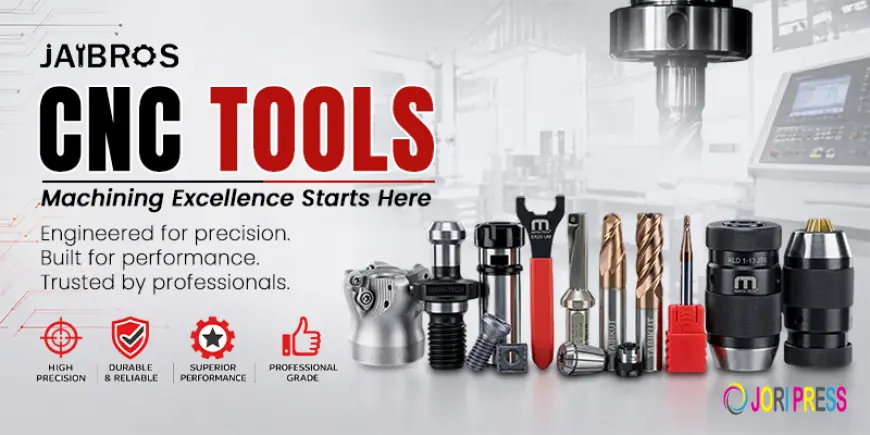
Modern manufacturing depends on precision, speed, and consistency. Whether producing automotive components, machine parts, or industrial equipment, selecting the right cnc tool is essential for achieving accurate results. Different machining operations require different cutting tools, and understanding their functions helps machinists improve productivity while reducing material waste.
From drilling holes to creating complex shapes, each tool has a specific purpose. Knowing which one to use can also help reduce machining time, improve surface finish, and extend tool life. Let's explore ten important types of machining tools that every machinist should understand.
1. End Mills
End mills are widely used in milling operations to remove material from a workpiece. They can cut horizontally, vertically, and along different paths to create slots, pockets, profiles, and complex shapes.
These tools are available in different designs, including flat end mills, ball nose end mills, and corner radius end mills.
Common applications:
-
Slot and pocket milling.
-
Surface profiling.
-
Contouring and finishing.
-
Machining steel, aluminium, and other metals.
Carbide end mills are popular because they offer good hardness, heat resistance, and wear resistance during high-speed machining.
2. Carbide Drills
Carbide drills are designed to create accurate holes in different materials. They are particularly useful in production environments where speed and dimensional accuracy are important.
Compared with many conventional drill bits, carbide drills can handle higher cutting speeds and offer excellent wear resistance when used under suitable conditions.
Common applications:
-
Drilling holes in steel and stainless steel.
-
Precision hole-making in industrial components.
-
High-volume production.
-
Machining hard materials.
Explore the carbide drills collection at Jaibros to understand the available drilling options.
3. Turning Inserts
Turning inserts are replaceable cutting tips used in CNC lathes. They remove material while the workpiece rotates against the cutting edge.
These inserts come in different shapes, grades, coatings, and geometries. The correct selection depends on the material, cutting speed, depth of cut, and finishing requirements.
Common applications:
-
External turning.
-
Internal turning.
-
Facing operations.
-
Roughing and finishing.
Carbide turning inserts are commonly selected for their durability and ability to maintain consistent cutting performance.
4. Milling Inserts
Milling inserts are replaceable cutting edges fitted into milling cutters. Instead of replacing the complete cutter, machinists can change individual inserts when they become worn.
They are available in different geometries for roughing, finishing, and high-feed machining.
Common applications:
-
Face milling.
-
Shoulder milling.
-
Heavy material removal.
-
Surface finishing.
Selecting the right insert geometry helps control chips, reduce vibration, and maintain surface quality. Jaibros offers different options in its carbide milling inserts collection.
5. Boring Bars
Boring bars are used to enlarge and finish existing holes with greater dimensional accuracy. They are especially useful when drilling alone cannot achieve the required diameter or surface finish.
A boring bar holds a cutting insert and removes material from the internal surface of a workpiece.
Common applications:
-
Enlarging drilled holes.
-
Internal diameter finishing.
-
Machining engine components.
-
Producing accurate cylindrical surfaces.
When selecting a boring tool, machinists should consider hole depth, diameter, material, and bar rigidity. A suitable design helps reduce vibration and improve accuracy.
6. Threading Tools
Threading tools are designed to create internal or external threads on metal components. They are essential for manufacturing parts that need screws, bolts, and threaded connections.
CNC threading can be performed using threading inserts, taps, and thread milling cutters.
Common applications:
-
Manufacturing threaded holes.
-
Producing external threads.
-
Making industrial fasteners.
-
Creating precise thread profiles.
Choosing the correct thread pitch, insert profile, and cutting conditions helps achieve accurate threads and prevents tool damage.
7. Grooving Tools
Grooving tools are used to create narrow channels or grooves on the surface of a rotating workpiece. They are commonly used in CNC turning operations.
These tools are available in different widths and designs depending on the required groove dimensions.
Common applications:
-
External grooving.
-
Internal grooving.
-
Face grooving.
-
Parting-off operations.
The right tool geometry and cutting parameters help maintain groove accuracy and improve chip evacuation.
8. Reamers
Reamers are finishing tools used to improve the accuracy and surface quality of previously drilled holes. They remove a small amount of material to achieve a more precise diameter.
They are available in different materials, including high-speed steel and carbide.
Common applications:
-
Precision hole finishing.
-
Improving hole roundness.
-
Achieving close dimensional tolerances.
-
Preparing holes for accurate component assembly.
Reamers should be used after proper drilling because they are designed for finishing rather than removing large amounts of material.
9. U Drills
U drills are indexable drilling tools commonly used for producing holes at higher feed rates. They use replaceable carbide inserts, making them suitable for repetitive industrial drilling operations.
Their design supports efficient chip evacuation and can reduce machining time when the correct cutting conditions are maintained.
Common applications:
-
Deep and large-diameter hole drilling.
-
High-volume manufacturing.
-
Drilling steel components.
-
Production machining.
Before using U drills, machinists should check insert compatibility, coolant supply, and machine stability.
10. Tool Holders and Collets
Bt30 Bt40 Tool Holder Er Collet Chuck for CNC Machine Tool - CNC Tool Holder and Toolholder
Tool holders and collets may not directly remove material, but they play an important role in machining accuracy. They secure cutting tools inside the machine spindle and help maintain proper alignment during operation.
ER collets, BT holders, and other holding systems are used across different machining setups.
Common applications:
-
Securing end mills and drills.
-
Maintaining tool alignment.
-
Reducing tool runout.
-
Supporting stable high-speed machining.
A properly selected holder improves machining stability and helps protect both the cutting tool and the machine spindle.
How to Choose the Right Machining Tool
Choosing the correct equipment is important for achieving consistent machining results. Before selecting a cutting tool, machinists should consider a few important factors:
-
Workpiece material: Steel, aluminium, stainless steel, and cast iron require different cutting geometries and grades.
-
Machining operation: Drilling, milling, turning, and threading each require specific tool designs.
-
Cutting speed and feed rate: Incorrect settings can cause excessive heat, poor surface finish, and premature wear.
-
Tool compatibility: Check the spindle, holder, collet, and machine specifications before installation.
-
Tool life: Consider wear resistance, coating, and operating conditions to reduce replacement frequency.
A suitable cnc tool should match the machining operation rather than simply being selected by price. Even specialised products such as Deskar inserts need to be matched with the correct holder, workpiece material, and cutting conditions.
Conclusion
Understanding different machining tools helps machinists make better decisions, improve production quality, and reduce unnecessary downtime. From end mills and carbide drills to boring bars, threading inserts, and tool holders, every tool has a specific role in manufacturing.
Before starting a machining operation, always consider the workpiece material, required accuracy, machine capacity, and cutting conditions. The right combination of tools and proper maintenance can make CNC machining more efficient and reliable.
Jaibros provides a range of industrial cutting tools, inserts, drills, and machine accessories for different manufacturing requirements. Choosing suitable equipment for each application can help achieve better machining results and consistent production.
What's Your Reaction?
 Like
0
 Dislike
0
 Love
0
 Funny
0
 Angry
0
 Sad
0
 Wow
0