




































Tevatel Introduces AI-Powered Voice Agents for the Future of Healthcare
Tevatel has announced its focus on AI-powered voice technology for healthcare providers that want to improve patient communication and reduce the load on support teams.

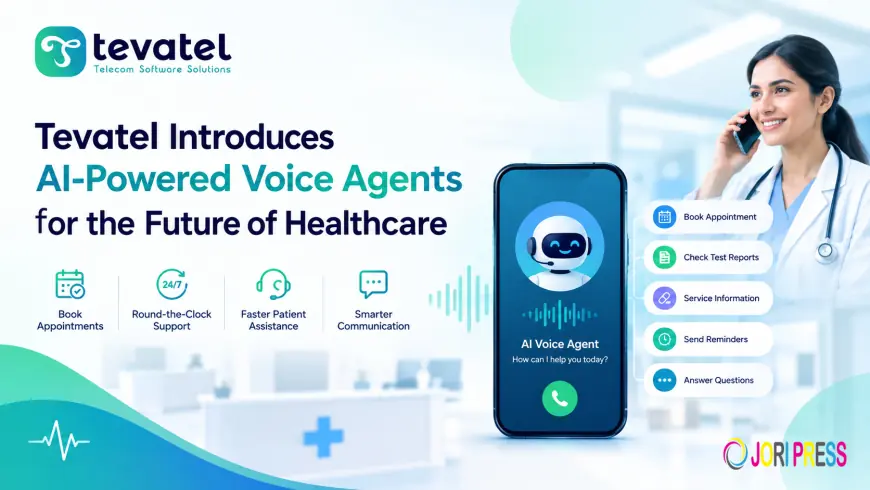
11 September 2026: Tevatel has announced its focus on AI-powered voice technology for healthcare providers that want to improve patient communication and reduce the load on support teams. The new approach is designed to help hospitals, clinics, diagnostic centers, pharmacies, and other healthcare businesses manage routine calls and patient requests with less manual work.
Healthcare teams handle a large number of calls every day. Patients may call to ask about appointments, doctor availability, test reports, clinic hours, services, or basic treatment information. Staff members often spend hours answering the same questions. Missed calls can also lead to delayed service and lost appointments.
Tevatel aims to address these issues by bringing automated voice communication into common healthcare workflows. Its platform can help businesses manage calls, answer routine questions, collect basic information, and guide callers to the right service.
Making Patient Communication Easier
Patient communication needs to be clear and timely. A missed call can create frustration for a patient who needs quick help. It can also add more work for staff when they have to return a high number of calls.
With ai voice agents, healthcare businesses can handle common voice interactions without requiring a staff member to answer every call. The system can respond to callers, understand their requests, and provide suitable information based on the workflow set by the healthcare provider.
This can be useful for both incoming and outgoing calls. Healthcare teams can use voice automation for appointment requests, reminders, follow-ups, basic support, and other routine tasks.
Key uses can include:
- Appointment booking and scheduling
- Patient call handling
- Appointment reminders
- Basic service information
- Follow-up calls
- Lead and inquiry handling
- Call routing
- Frequently asked questions
- Support outside regular working hours
AI Voice Agents in Healthcare
Healthcare has many repeated communication tasks. Staff may need to confirm appointments, remind patients about visits, answer questions about services, or guide callers to the right department.
The use of AI Voice Agents in Healthcare can help automate these tasks while keeping the call process simple for patients. A voice-based system can answer calls at any time and follow a set flow based on the type of request.
For example, a patient may call a clinic to book an appointment. The system can ask for the required details, check the available options through the connected workflow, and help the patient move to the next step. This can reduce the need for staff to handle every part of the call manually.
Healthcare providers can also use voice systems to manage high call volumes during busy hours. This can help reduce waiting time and allow staff to focus on tasks that need human attention.
Support for Hospitals and Clinics
Hospitals and clinics often receive calls from patients, family members, visitors, and people looking for information about services. The type of request can vary from one call to another.
A voice system can help manage routine requests and direct callers based on their needs. When a request needs a staff member, the call can be routed through the right process.
For healthcare organizations, ai voice agents for healthcare can support several areas of daily communication. The system can be set up for appointment support, patient inquiries, service information, reminders, and other approved use cases.
This can be helpful for:
- Multi-specialty hospitals
- Private clinics
- Dental clinics
- Diagnostic centers
- Medical labs
- Pharmacies
- Health and wellness centers
- Telehealth providers
- Medical service companies
Reducing Repeated Work for Staff
Healthcare staff often have limited time. Repeated calls can take attention away from patients who need direct help.
Automation can handle simple and repeated conversations before they reach a human agent. This gives staff more time for complex questions and tasks that require personal care.
When ai agents for healthcare are used for routine communication, teams can create defined call flows for common needs. These flows can help make conversations more consistent and reduce the amount of manual work involved in everyday calls.
The goal is not to replace human care. It is to reduce the burden of repeated tasks so healthcare workers can spend more time on work that needs their experience and judgment.
Voice AI for Better Call Management
Voice technology can also help healthcare businesses manage calls in a more organized way. A large number of calls can be difficult for small teams to handle, especially during peak hours.
With voice ai, businesses can create automated call flows that guide patients through common requests. The system can collect basic information and pass the conversation to the next step based on the workflow.
For example, a healthcare provider may create separate flows for:
- New appointment requests
- Existing patient calls
- Appointment changes
- Appointment cancellations
- Test-related inquiries
- Service questions
- Follow-up requests
- General information
These flows can help create a more structured call experience while reducing pressure on support teams.
24/7 Patient Assistance
Healthcare questions do not always arrive during standard office hours. Patients may call early in the morning, late at night, or during holidays.
A voice-based assistant can provide support beyond normal working hours for approved use cases. It can answer basic questions, collect requests, and guide callers to the right next step.
For businesses looking for the best ai voice agent, the ability to support patients outside regular working hours can be an important part of the overall solution. The system should be designed around clear workflows and should know when a call needs to be passed to a human team.
This approach can help healthcare businesses respond to more inquiries without requiring staff to remain available for every routine call.
Helping With Appointment Management
Appointment management is one of the most common areas where healthcare businesses can use voice automation.
Patients often call to book appointments, change timings, ask about doctor availability, or confirm a visit. These requests can take time when handled manually.
An automated voice system can guide patients through these basic steps based on the setup of the healthcare provider. It can also support reminder calls and follow-up communication.
The use of generative AI voice agents can add more flexibility to voice conversations by helping systems understand natural language and respond in a more conversational way. Healthcare businesses still need clear rules around what information the system can provide and which requests should be handled by staff.
Multilingual Communication
Healthcare providers may serve patients who speak different languages. Language barriers can make basic communication harder.
Modern voice systems can support multiple languages and help businesses create call experiences for different patient groups. This can be useful for hospitals and healthcare networks that serve people from different regions.
Multilingual support can be used for common requests such as appointment information, service details, reminders, and basic guidance. The exact language options depend on the voice technology and setup used by the organization.
Important Role of Human Staff
Automation works best when it supports human teams instead of trying to handle every situation alone.
Healthcare includes sensitive conversations and complex needs. A voice system should not be treated as a replacement for doctors, nurses, or trained healthcare staff. Its role should focus on approved communication tasks.
When a request is outside the system's scope, the caller should have a clear path to human support. This can help create a safer and more useful communication process.
Tevatel's approach focuses on using automation for routine work while allowing healthcare teams to stay involved where human judgment is needed.
Key Benefits for Healthcare Businesses
Healthcare organizations can use voice automation to improve several parts of their communication process.
Potential benefits include:
- Faster handling of routine calls
- Fewer missed inquiries
- Reduced manual calling work
- Better appointment support
- 24/7 availability for selected tasks
- More consistent call flows
- Support for multiple languages
- Better use of staff time
- Easier handling of high call volumes
- Improved patient communication
These benefits can vary based on the workflow, call volume, system setup, and type of healthcare business.
Built for Practical Healthcare Needs
Healthcare communication requires care, clear rules, and a focus on the patient's needs. Technology should make basic tasks easier without making the process confusing.
Tevatel voice platform can be used to create automated conversations based on specific business needs. Healthcare organizations can define the type of calls they want to automate and the information the system should provide.
The same platform can also support other customer communication channels. This gives businesses options when a patient prefers a voice call, chat, or messaging channel.
The focus remains on simple communication that helps patients reach the right information or service without unnecessary steps.
Looking Ahead
The role of AI in healthcare communication is expected to grow as more organizations look for ways to manage routine work and improve access to support. Voice technology can play an important role because many patients still prefer speaking with a business rather than using a form or app.
Tevatel sees voice automation as one part of a broader communication system. By combining voice, chat, messaging, and call management tools, healthcare businesses can build a more connected way to communicate with patients.
The next stage of healthcare communication will depend not only on automation but also on how well these tools fit into real patient workflows. Clear call flows, human support, data safety, and simple patient experiences will remain important.
About Tevatel
Tevatel is an AI-powered customer communication platform that helps businesses manage customer interactions across voice, chat, and messaging. Its platform includes AI voice agents, AI chatbots, contact center software, click to call, WhatsApp Business API, and call quality auditing tools.
For healthcare businesses, the platform can support communication tasks such as patient inquiries, appointment calls, follow-ups, and routine support. The goal is to help teams communicate better, serve customers faster, and reduce the amount of manual work involved in daily communication.
With voice and other communication tools working together, Tevatel aims to help healthcare organizations build better ways to connect with patients while keeping human teams at the center of important conversations.
Contact Details:
Tevatel
Email: marketing@tevatel.com
Ph no: 082444 73444
Website:
tevatel.com/products/ai-voice-agent/
tevatel.com/blog/ai-voice-agents-for-healthcare-top-platforms-for-2026/
What's Your Reaction?
 Like
0
Like
0
 Dislike
0
Dislike
0
 Love
0
Love
0
 Funny
0
Funny
0
 Angry
0
Angry
0
 Sad
0
Sad
0
 Wow
0
Wow
0