







































Tail Gate Lifter Assemblies: How They Work and Where They Are Use
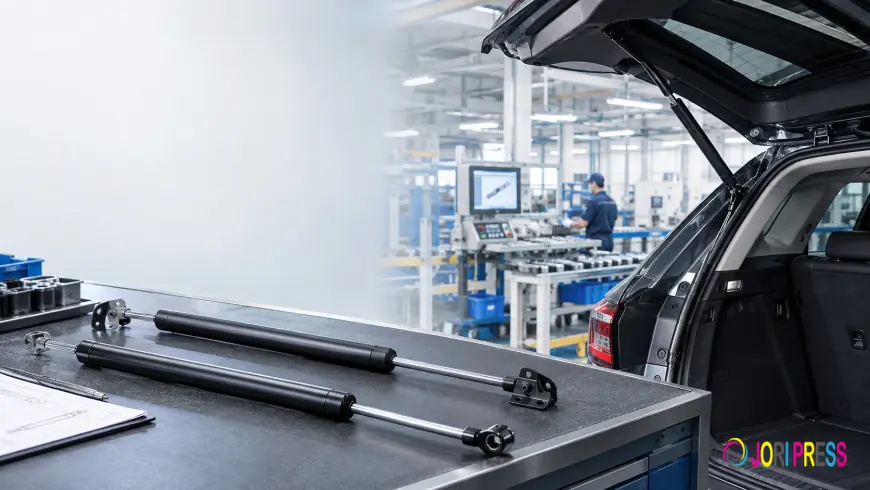
Opening and closing a vehicle's tailgate or rear hatch is a routine action, but the mechanism supporting that movement plays an important role in convenience and safety. Tail gate lifter assemblies help provide controlled lifting and support, making it easier to open, hold, and close rear vehicle panels.
These assemblies commonly use gas springs to generate controlled outward force. The stored energy inside the gas spring assists with lifting the panel while helping prevent sudden movement or unexpected closure.
For automotive manufacturers, spare-parts distributors, workshops, and replacement-parts buyers, understanding how these assemblies work and where they are used can help in selecting the right component for a particular application.
What Is a Tail Gate Lifter Assembly?
A tail gate lifter assembly is a support mechanism used to assist the opening and closing of a vehicle's rear tailgate, hatch, boot, or similar access panel.
A typical gas spring consists of a sealed cylinder containing compressed nitrogen gas and a piston connected to a piston rod. When the rod is pushed into the cylinder, the gas is compressed. The resulting internal pressure generates an outward force that assists the lifting movement.
When installed correctly on a vehicle, the gas spring helps balance part of the tailgate's weight and provides controlled movement.
This makes it easier for the user to raise the tailgate and keep it in an open position.
How Does a Tail Gate Lifter Work?
The working principle of a gas spring is based on compressed gas and controlled piston movement.
Inside the assembly is a sealed cylinder filled with high-pressure nitrogen. A piston and piston rod move inside the cylinder.
When the tailgate is closed, the piston rod is pushed further into the cylinder, compressing the gas. This stores energy within the gas spring.
When the tailgate is opened, the compressed gas creates an outward force on the piston. This assists the user in lifting the tailgate and helps support it once it reaches its intended open position.
The design of the gas spring, including its force, stroke length, dimensions, and mounting arrangement, determines how it performs within a particular application.
Main Components of a Tail Gate Lifter
A gas spring assembly consists of several important components that work together.
Cylinder
The cylinder houses the compressed gas and internal piston mechanism. It needs to be sufficiently strong to contain the internal pressure during operation.
Piston and Piston Rod
The piston separates and controls the gas inside the cylinder, while the piston rod transfers the generated force to the tailgate.
Nitrogen Gas
High-pressure nitrogen is commonly used inside automotive gas springs. The compressed gas generates the force required to assist movement.
Seals
Seals help keep the gas contained within the cylinder while allowing the piston rod to move smoothly.
End Fittings
End fittings connect the gas spring to the vehicle's mounting points. Different applications may require different fittings, such as ball joints, eye ends, fork ends, or brackets.
Key Specifications of Tail Gate Lifters
Selecting a suitable assembly requires more than checking its overall appearance. Several technical specifications affect how the product performs.
Force
Force is generally measured in Newtons (N) and indicates the amount of support or lifting assistance provided by the gas spring.
The required force depends on factors such as the weight and geometry of the tailgate and the mounting position of the gas spring.
Stroke Length
Stroke length refers to the distance the piston rod travels between its compressed and extended positions.
The required stroke depends on how far the tailgate needs to move and the geometry of the installation.
Extended and Compressed Length
The overall length of the gas spring changes between its extended and compressed positions. These dimensions need to match the available installation space and movement requirements.
Cylinder and Rod Dimensions
The cylinder and piston rod diameters can vary depending on the design and force requirements of the application.
Mounting Type
End fittings and mounting arrangements should correspond with the vehicle's mounting points.
Correct mounting is important for proper operation and safe force transfer.
Where Are Tail Gate Lifters Used?
Tail gate lifter assemblies are used across several types of vehicles and access panels.
1. SUVs and Hatchbacks
SUVs and hatchbacks commonly use gas springs to assist with rear tailgate or hatchback movement.
The gas springs help users lift the rear panel and hold it in an open position, making access to the luggage or cargo area easier.
2. Station Wagons
Rear access panels on station wagons can also use gas springs to support opening and closing.
The controlled movement provided by the assembly helps make frequent access more convenient.
3. Sedans and Boot Lids
Gas springs can be used to assist trunk or boot lid movement in suitable vehicle applications.
They help provide controlled opening and support while the lid remains open.
4. Car Bonnets and Hoods
Gas springs are also used for bonnet or hood support.
Instead of requiring the user to manually hold the bonnet open, a properly selected gas spring can assist lifting and support the panel in its raised position.
This can be particularly useful when accessing the engine compartment for inspection or maintenance.
5. Other Vehicle Access Panels
The same basic gas-spring principle can be applied to other movable panels where controlled lifting, positioning, or support is required.
The exact product specification depends on the weight, dimensions, movement, and mounting arrangement of the panel.
Benefits of Tail Gate Lifter Assemblies
A properly selected and manufactured gas spring can provide several practical benefits.
Reduced Manual Effort
The gas spring assists the lifting movement, reducing the effort required to open a heavy tailgate or panel.
Smooth Opening and Closing
Controlled gas pressure and internal damping can help provide smoother movement and reduce sudden motion.
Support in the Open Position
The gas spring helps hold the tailgate in an open position, allowing users to access the vehicle's cargo area.
Improved Convenience
A functioning tailgate support system makes loading and unloading luggage, equipment, or other items easier.
Compact Construction
Gas springs have a relatively compact design, allowing them to be installed along the sides of tailgates and other panels without occupying excessive space.
Low Maintenance
Because gas springs are sealed units, they generally do not require routine external adjustment or regular lubrication in the same way as some mechanical mechanisms.
What Makes a Good Tail Gate Lifter?
Not every gas spring is suitable for every vehicle.
The correct product needs to match the application's requirements. Some of the most important considerations include:
-
Required force
-
Stroke length
-
Extended length
-
Compressed length
-
Mounting points
-
End fittings
-
Vehicle application
-
Tailgate weight
-
Operating conditions
-
Expected usage frequency
Using an unsuitable force rating can affect the operation of the tailgate. A gas spring with insufficient force may not provide adequate assistance, while excessive force can make controlled closing more difficult.
For this reason, product selection should be based on the complete application rather than one specification alone.
Importance of Gas Spring Quality
Tailgate lifters may be operated frequently throughout a vehicle's service life. Their performance can therefore depend on the quality of materials, seals, piston rod, manufacturing processes, and overall assembly.
Harisons India states that its gas springs use robust materials and precision engineering and are designed for reliable performance under frequent use.
The company also states that its gas springs undergo testing and life-cycle validation, including cycle endurance, leak checks, and environmental resistance testing.
These types of quality checks can be important when selecting components for automotive applications.
Corrosion Resistance and Environmental Conditions
Automotive gas springs can be exposed to changing environmental conditions, including moisture, dust, temperature variations, and road-related contaminants.
Corrosion resistance is therefore another factor to consider when selecting a product.
Materials and surface treatments should be appropriate for the intended operating environment. A suitable protective finish can help reduce surface degradation and support long-term component performance.
Standard and Lockable Gas Springs
Gas springs are available in different configurations depending on the application.
Standard Gas Springs
Standard gas springs provide force assistance for lifting, positioning, and supporting a movable panel.
They are commonly used for applications where the panel needs controlled opening and support without requiring the gas spring itself to lock at a specific intermediate position.
Lockable Gas Springs
Lockable variants can hold the gas spring at a selected position, depending on their design.
They may be considered for applications where additional positioning control is required.
The appropriate type depends on the vehicle design and intended application.
Gas Springs, Dampers and Struts: What's the Difference?
These terms can sometimes be used interchangeably, but their functions can differ.
A gas spring primarily provides force assistance for lifting and supporting a movable component.
A damper is generally intended to control movement and absorb or reduce shock rather than primarily providing lifting assistance.
A strut can refer to a broader assembly or support component, depending on the application and design.
Understanding the intended function is important when selecting a component for a particular vehicle application.
How to Select the Right Tail Gate Lifter
Before purchasing a tail gate lifter, collect the relevant application information.
Step 1: Identify the Vehicle
Start with the vehicle make, model, and relevant variant.
Step 2: Understand the Tailgate
Consider the size, weight, and movement of the tailgate or rear panel.
Step 3: Check Existing Specifications
If replacing an existing component, check its dimensions, force rating, stroke, and mounting fittings where available.
Step 4: Confirm Mounting Points
Make sure the end fittings and mounting positions correspond correctly with the vehicle.
Step 5: Discuss Requirements With the Manufacturer
If the exact specification is unclear, provide the manufacturer with the necessary application details and existing component information.
This can help determine a suitable product rather than relying on visual similarity alone.
Harisons India Tail Gate Lifter Assemblies
Harisons India manufactures Gas Spring / Tail Gate Lifter Assemblies for 4-wheelers.
The company's product information describes gas springs as sealed pneumatic support devices designed to provide controlled motion for lifting, lowering, and positioning.
Its gas spring range includes features such as high-pressure nitrogen filling, piston rod and seal design, corrosion resistance, controlled damping, and load-holding capability.
Harisons also highlights quality systems including ISO 9001 and IATF 16949 in its product information, along with testing and validation processes for its gas springs.
For customers seeking a suitable assembly, the company provides a quotation process based on requirements such as force, stroke length, quantity, end fitting type, and intended application.
Conclusion
Tail gate lifter assemblies make vehicle access easier by assisting with the lifting, positioning, and support of rear panels. Gas springs use compressed nitrogen and a piston mechanism to generate controlled force, helping users open and hold tailgates with less manual effort.
They are commonly used in SUVs, hatchbacks, station wagons, sedans, and other automotive applications involving movable panels.
When selecting a tail gate lifter, factors such as force, stroke length, mounting type, dimensions, vehicle application, durability, and environmental conditions should be considered together.
Choosing the correct specification is important because the gas spring needs to work with the weight and geometry of the particular tailgate. A properly selected and manufactured assembly can provide smooth movement, reliable support, and convenient everyday operation.
FAQs
What is a tail gate lifter?
A tail gate lifter is a support assembly, commonly using a gas spring, that assists with opening and holding a vehicle's tailgate or rear hatch.
How does a tail gate lifter work?
A gas-powered tail gate lifter uses compressed nitrogen inside a sealed cylinder. The gas creates an outward force on the piston, assisting the lifting and supporting movement of the tailgate.
Where are tail gate lifters used?
They are commonly used on SUVs, hatchbacks, station wagons, sedans, and other vehicle panels that require lifting or support assistance.
How do I choose the right tail gate lifter?
You should consider the vehicle application, tailgate weight, required force, stroke length, extended and compressed lengths, mounting points, and end fittings.
Are tail gate lifters maintenance-free?
Gas springs are sealed units and generally require little routine maintenance. However, their condition should still be checked if there are signs of leakage, damage, corrosion, or reduced performance.
What happens if the gas spring has the wrong force?
A gas spring with insufficient force may not provide enough lifting assistance, while one with excessive force may make the tailgate harder to close or operate correctly. The specification should therefore match the application.
What's Your Reaction?
 Like
0
Like
0
 Dislike
0
Dislike
0
 Love
0
Love
0
 Funny
0
Funny
0
 Angry
0
Angry
0
 Sad
0
Sad
0
 Wow
0
Wow
0