






































Headache, Tremor, Memory Loss? When to See a Neurologist in Delhi
Wondering when to consult a neurologist in Delhi? Learn the warning signs of migraine, stroke, Parkinson’s and memory problems, and what care to expect.
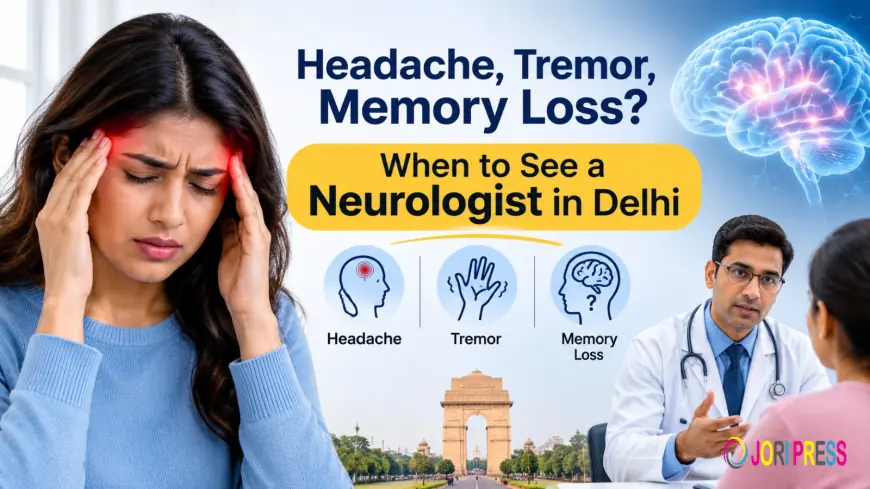
Most of us will see a physician for a fever or a stomach upset without a second thought. But when it comes to the brain and nerves, we tend to wait. A headache becomes “just stress.” A hand tremor becomes “just age.” Forgetting names becomes “just a busy mind.”
Sometimes that is true. But sometimes these are early signals that deserve a proper look. Knowing when to see a neurologist in Delhi can mean catching a problem early, when treatment works best.
What Does a Neurologist Actually Treat?
A neurologist is a doctor who specialises in the brain, spinal cord, nerves and muscles. That covers a wide range of problems, from migraines and stroke to movement disorders and memory loss. If your symptoms involve sensation, movement, balance, speech, memory or sudden changes in how your body works, a neurologist is the right person to ask.
Let’s look at four of the most common reasons people seek one out.
1. Headaches That Keep Coming Back
Almost everyone gets a headache now and then. But a headache that returns often, throbs on one side, comes with nausea, or makes light and sound unbearable may well be a migraine. Migraines can wipe out entire days and are often misdiagnosed or treated with over-the-counter painkillers that make things worse over time.
See a doctor if:
-
Headaches are becoming more frequent or more severe.
-
You get visual changes, like flashing lights, before the pain.
-
Painkillers are no longer helping.
-
A sudden, severe “worst headache of your life” appears. This needs emergency care.
Proper headache and migraine care starts with identifying your triggers and pattern, then building a plan that prevents attacks rather than only treating them. If you’re looking for migraine treatment in Delhi, this is where a specialist makes a real difference.
2. Sudden Weakness, Speech Trouble or Facial Drooping
This is the one where minutes matter. A stroke happens when blood flow to part of the brain is interrupted, and the sooner treatment begins, the more brain function can be saved. Remember the signs:
-
Face drooping on one side
-
Arm or leg weakness or numbness
-
Slurred speech or difficulty understanding
-
Sudden loss of balance or vision
If you notice any of these, go to a hospital immediately. Do not wait to see if it passes. Even if symptoms disappear within minutes, it could be a warning stroke that needs urgent evaluation.
Beyond the emergency, specialist support for stroke and paralysis includes finding the cause, managing risk factors like blood pressure and diabetes, and guiding recovery. Good stroke treatment in Delhi covers prevention and rehabilitation, not just the first few hours.
3. Tremors, Stiffness or Slowness in Movement
A slight tremor in one hand, a shuffling walk, smaller handwriting, or a stiff, expressionless face may all be early signs of Parkinson’s disease. Because they appear slowly, families often put them down to ageing and wait years.
Parkinson’s cannot be cured yet, but treatment can improve movement and quality of life a great deal, especially when it starts early. A neurologist can confirm the diagnosis, since several other conditions look similar, and adjust medicines as the condition changes.
If someone in your family has these signs, a consultation for Parkinson’s disease is worth booking sooner rather than later. Early Parkinson’s disease treatment in Delhi can help people stay independent for longer.
4. Forgetfulness That Starts to Interfere with Life
Misplacing your keys is normal. Forgetting how to get home, repeating the same question within minutes, or struggling with familiar tasks is not. These may point to an underlying cognitive problem.
Memory loss is not always dementia. Vitamin deficiencies, thyroid problems, depression, poor sleep and some medicines can all cause it, and many of these are reversible. That is exactly why an assessment matters. A neurologist will look at the full picture, order the right tests, and tell you whether it is part of normal ageing or something that needs treatment.
Families looking for memory loss treatment in Delhi can learn more about memory and cognitive disorders and what an evaluation involves.
What to Expect at Your First Appointment
A good consultation is mostly a conversation. Expect questions about when symptoms began, how they have changed, your family history and your current medicines. A physical examination checks reflexes, strength, balance and coordination. If needed, your doctor may suggest an MRI, blood tests or other studies.
It helps to bring:
-
Old reports and prescriptions
-
A list of your current medicines
-
A short note of your symptoms and when they occur
-
A family member who has noticed the changes
Choosing the Right Neurologist
Look for someone who listens, explains clearly, and involves you in decisions. Training and experience matter, and so does access to proper diagnostic facilities in one place.
Dr. Seema Shahi is a USA-trained neurologist with over 15 years of experience, holding an MD (Internal Medicine) and DNB (Neurology). She has worked at Medanta – The Medicity, Artemis Hospital and the University of Louisville, and consults at Pacific OneHealth in Karol Bagh, Dwarka and Lajpat Nagar. If travelling is hard, you can also begin with an online consultation.
Don’t Ignore What Your Body Is Telling You
The brain rarely gives loud warnings, but it does give signals. Listening to them early is one of the kindest things you can do for yourself or for someone you love.
Ready to talk to a specialist? Book an appointment or call +91 99530 19290.
Disclaimer: This article is for general awareness only and does not replace medical advice. In an emergency, go to the nearest hospital immediately.
What's Your Reaction?
 Like
0
 Dislike
0
 Love
0
 Funny
0
 Angry
0
 Sad
0
 Wow
0