









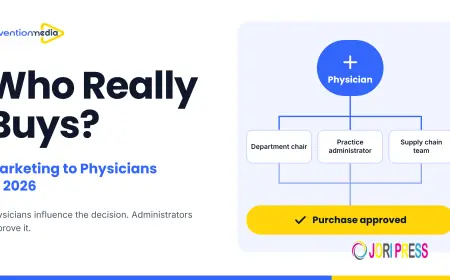

























Who Really Buys? Marketing to Physicians in 2026
Most physicians are now employed, so the person who reads your email often isn’t the one who signs the purchase order. Here’s how to market to both.

A few years ago, a sales team could pick a specialty, send a well-written email to the doctors in it, and expect the best replies to turn into deals. That playbook still gets opened, but it increasingly stalls before any contract is signed.
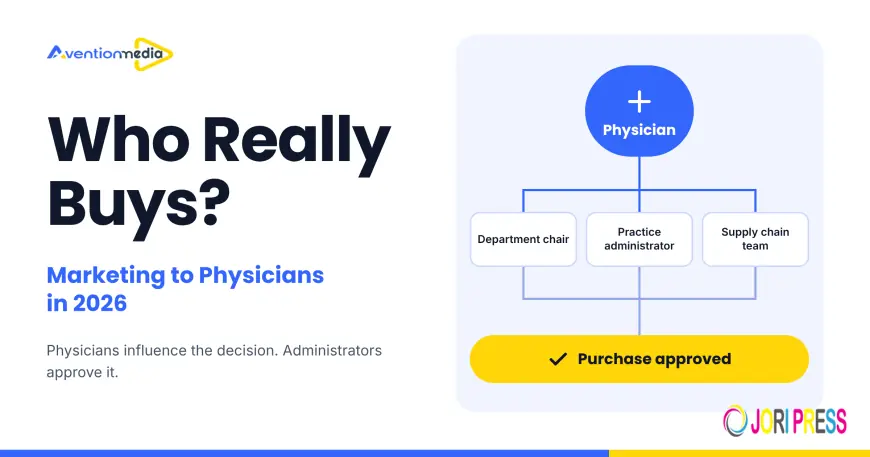
The reason is structural. Most U.S. physicians now work for hospitals, health systems or corporate groups instead of owning their practices. A physician may love your product and still have no authority to buy it. The decision moves through a department chair, a practice administrator or a system-level supply chain team.
So the question for 2026 is who actually decides, and how to reach everyone involved without becoming noise in their inbox.
Physicians influence, administrators approve
It helps to separate two roles that often get blended together.
The clinical champion is the physician. They know the patient problem, they notice when a workflow is clumsy, and their opinion carries weight. A pharmacist, a nurse manager or a fellow physician will ask them, “Would you use this?”
The budget holder is usually someone else: a chair, a medical director, a practice manager or a purchasing committee. They care about cost, contracts, compliance and how a product fits existing systems.
Independent and small group practices blur this line, because the physician owner is both champion and buyer. Larger organizations split it. If your campaign speaks only to the clinician, you create interest with no path to a purchase. If it speaks only to administrators, you lose the clinical credibility that makes them take the meeting.
Build your outreach around two conversations
The most effective healthcare campaigns tend to run two tracks at once.
Track one: the clinical case. Write to physicians in plain, specific language about patient outcomes, workflow time saved or evidence supporting your product. Keep claims within approved labeling, include required safety information for regulated products, and skip hype. Physicians are trained skeptics.
Track two: the operational case. Write to administrators and department leads about implementation effort, cost, integration with their EHR environment and compliance. Short and concrete wins here too.
The two tracks reference each other. A physician who sees that you have also reached out to their practice manager finds it easier to forward your message than one who has to explain your product from scratch.
Segment before you write a single subject line
Generic blasts are the fastest way to get ignored. Good segmentation is what separates a useful message from an irrelevant one, and it relies on data you can verify.
Three filters do most of the work:
-
Specialty and NPI taxonomy. Every physician has a National Provider Identifier in the public CMS registry, with a primary specialty attached. Using it to confirm specialty and practice location is far more reliable than guessing from a job title.
-
Employment model. An independent practice owner and a hospital-employed internist have different priorities and different buying paths. Treat them as separate audiences.
-
Facility type and size. A 100-bed community hospital and a multi-hospital health system buy differently. Bed count and setting are a quick proxy for how many people will touch the decision.
This is where the quality of your contact data matters. A well-built physicians email list that is matched to registry data and refreshed regularly lets you segment this way. A stale or scraped list makes every filter above unreliable, because the specialty, practice or address may already be out of date.
Don’t forget the rest of the care team
Physicians are rarely the only clinical voices in a purchase. Physician assistants, nurse practitioners and other advanced practice providers increasingly manage patient panels, write prescriptions and influence which tools get used day to day. For many products, especially in primary care and urgent care, they are part of the evaluation.
If your offer touches daily clinical workflow, consider widening your audience to include a physician assistants email list alongside your physician contacts. Reaching the whole care team often produces more internal conversation about your product than reaching one role alone.
Make deliverability and compliance part of the plan
Even great targeting fails if messages never reach the inbox. A few habits make a real difference:
-
Verify before you send. Bounces damage your sender reputation, and a damaged reputation affects every campaign after.
-
Authenticate your domain. SPF, DKIM and DMARC are now expected by major mailbox providers.
-
Keep volume sensible and lists clean. Remove hard bounces promptly and honor opt-outs without delay.
-
Follow the rules. B2B outreach is governed by laws such as CAN-SPAM, and GDPR or CASL where relevant. Include a clear sender identity, a working unsubscribe option and accurate subject lines.
Healthcare adds one more layer: promotional claims for regulated products must stay within approved labeling. When in doubt, involve your compliance team early.
A simple sequence that respects their time
Physicians are busy, so your cadence should be too. Many teams find a short, spaced sequence works better than a barrage:
-
Day 1: A focused email with one clear idea and one request.
-
Day 3: A light touch on LinkedIn or a call that references the email.
-
Day 7: A follow-up with something useful, such as a short case study, data point or agenda.
-
Day 12: A polite close that offers another contact or time.
Notice that every step offers value instead of just asking for time. That habit builds trust faster than persistence alone.
Measure what matters
Opens are a starting signal, not a success metric. Look further down the funnel: replies, meetings booked, forwarded messages and the number of stakeholders engaged per account. In a multi-stakeholder sale, three conversations inside one health system are worth more than a hundred isolated opens.
The takeaway
Marketing to physicians in 2026 is less about finding the perfect subject line and more about understanding how decisions are made. Respect the clinician’s expertise, speak to the budget holder’s priorities, segment with verified data, and keep your outreach compliant and well-timed. Do that, and your emails stop being cold and start feeling relevant.
What's Your Reaction?
 Like
0
 Dislike
0
 Love
0
 Funny
0
 Angry
0
 Sad
0
 Wow
0