







































Secure File Sharing: Protecting Your Business Data in a Digital-First World
Choosing the right file-sharing service ensures that collaboration remains seamless without compromising security.

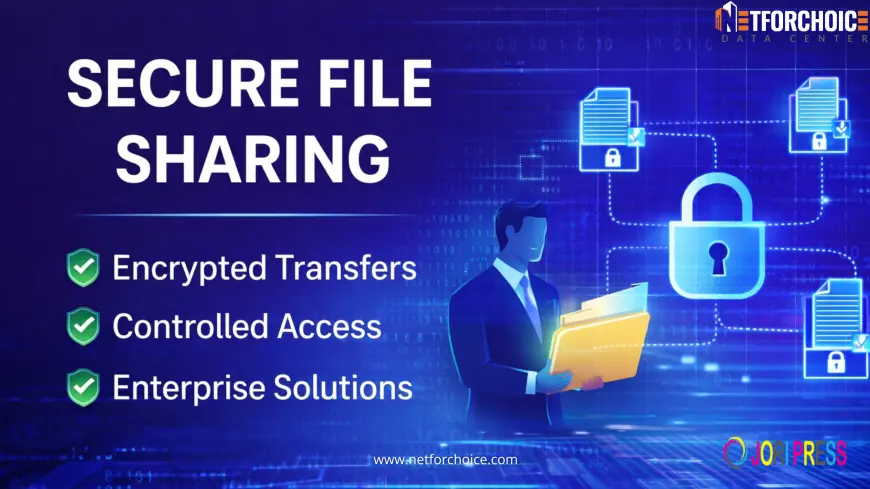
In today’s hyper-connected business environment, organizations constantly exchange sensitive information, contracts, financial reports, customer data, intellectual property, and confidential communications. While digital transformation has made collaboration faster and more efficient, it has also increased the risks associated with data breaches, ransomware attacks, and unauthorized access.
This is where secure file sharing becomes essential.
Businesses can no longer rely on unsecured email attachments or public file transfer platforms. Instead, they need advanced secure file share solutions that provide encrypted transfers, controlled access, and complete visibility over data movement. Choosing the right file-sharing service ensures that collaboration remains seamless without compromising security.
Why Secure File Sharing Is Critical for Modern Businesses
Data is one of the most valuable assets of any organization. A single security breach can lead to:
-
Financial losses
-
Reputational damage
-
Legal penalties
-
Loss of customer trust
Traditional file-sharing methods often lack encryption, detailed audit logs, and granular permission controls. Secure platforms, on the other hand, are built with enterprise-grade security frameworks designed to prevent unauthorized access.
A reliable, secure file-sharing system provides:
-
End-to-end encryption
-
Role-based access control
-
Multi-factor authentication (MFA)
-
Activity tracking and audit logs
-
Secure cloud storage integration
These features ensure that sensitive data is only accessible to authorized individuals while remaining protected during transfer and storage.
Key Features of Enterprise Secure File Share Solutions
When evaluating secure file share solutions, businesses should look for advanced capabilities that align with compliance standards and operational needs.
1. End-to-End Encryption
Encryption ensures that files are protected both in transit and at rest. Even if intercepted, encrypted data remains unreadable without the correct decryption key.
2. Granular Access Control
Organizations can assign user roles and restrict file access based on departments or job functions. This prevents internal misuse and limits exposure.
3. Audit Trails & Monitoring
A robust file sharing service provides detailed logs that track who accessed, downloaded, edited, or shared a file. This improves accountability and simplifies compliance reporting.
4. Secure External Collaboration
Businesses frequently share files with clients, vendors, and partners. Secure file sharing platforms allow time-limited access, password-protected links, and download restrictions.
5. Compliance Readiness
Many industries must comply with standards such as ISO, GDPR, HIPAA, or SOC frameworks. Secure solutions help organizations meet regulatory requirements.
Secure File Sharing vs Traditional File Transfer Methods
| Feature | Traditional Methods | Secure File Sharing |
|---|---|---|
| Encryption | Limited or none | End-to-end encryption |
| Access Control | Basic | Role-based & customizable |
| Monitoring | Minimal | Detailed audit logs |
| Compliance | Not guaranteed | Built-in compliance support |
| Risk Level | High | Significantly reduced |
Traditional methods like email attachments or public sharing links lack centralized control and tracking. In contrast, enterprise-grade secure file share solutions offer full control, visibility, and protection.
Benefits of Using a Professional File Sharing Service
Improved Productivity
Employees can securely collaborate in real time without worrying about security loopholes.
Reduced IT Burden
Automated security controls and cloud-based infrastructure reduce the workload on internal IT teams.
Enhanced Data Protection
With encryption and strict authentication protocols, businesses can confidently share sensitive files.
Scalable Infrastructure
Modern file-sharing service platforms scale with your business growth, supporting increasing data volumes without compromising performance.
Industries That Need Secure File Sharing the Most
While every organization benefits from secure file sharing, certain industries have higher security requirements:
-
Healthcare – For sharing patient records and medical reports
-
Finance – For exchanging confidential financial documents
-
Legal – For transferring contracts and case files
-
IT & Technology – For sharing proprietary software code and intellectual property
-
Government – For classified and sensitive communications
For these sectors, secure file share solutions are not optional—they are mandatory.
How to Choose the Right Secure File Share Solutions
Selecting the right platform requires careful evaluation of your organization’s needs. Consider the following factors:
-
Security Architecture: Look for strong encryption and compliance certifications.
-
Ease of Use: The interface should be intuitive for employees and external users.
-
Integration Capabilities: Ensure compatibility with existing cloud and enterprise tools.
-
Scalability: Choose a solution that grows with your business.
-
Customer Support: Reliable technical support is crucial for uninterrupted operations.
A secure file sharing platform should not only protect your data but also enhance collaboration efficiency.
Future of Secure File Sharing
As cyber threats continue to evolve, businesses must adopt proactive security strategies. AI-driven threat detection, zero-trust security models, and blockchain-based verification systems are shaping the future of secure file share solutions.
Organizations that prioritize secure file sharing today are better positioned to mitigate risks and maintain business continuity tomorrow.
Conclusion
In an era where cyber threats are increasingly sophisticated, investing in secure file sharing is no longer a luxury it is a necessity. A reliable file-sharing service ensures that sensitive data remains protected while enabling seamless collaboration across teams and external stakeholders.
If you are looking for enterprise-grade protection, NetForChoice Secure File Sharing offers advanced security controls, encrypted transfers, and compliance-ready infrastructure to safeguard your business-critical data. Their secure file share solutions are designed to deliver performance, reliability, and complete peace of mind for modern enterprises.
FAQs
1. What is secure file sharing?
Secure file sharing is a method of transferring files using encrypted channels and access controls to prevent unauthorized access or data breaches.
2. Why is a secure file sharing service important for businesses?
It protects sensitive information, ensures regulatory compliance, and reduces the risk of cyberattacks.
3. How do secure file share solutions prevent data breaches?
They use encryption, authentication mechanisms, role-based permissions, and monitoring tools to secure data.
4. Can secure file sharing be used for external collaboration?
Yes, most platforms allow password-protected links, expiry-based access, and restricted downloads for safe external sharing.
5. Is secure file sharing scalable for growing businesses?
Yes, modern file sharing service platforms are cloud-based and designed to scale according to organizational needs.
What's Your Reaction?
 Like
0
Like
0
 Dislike
0
Dislike
0
 Love
0
Love
0
 Funny
0
Funny
0
 Angry
0
Angry
0
 Sad
0
Sad
0
 Wow
0
Wow
0