





























RWA Token Development Services: How to Tokenize Real-World Assets in 2026

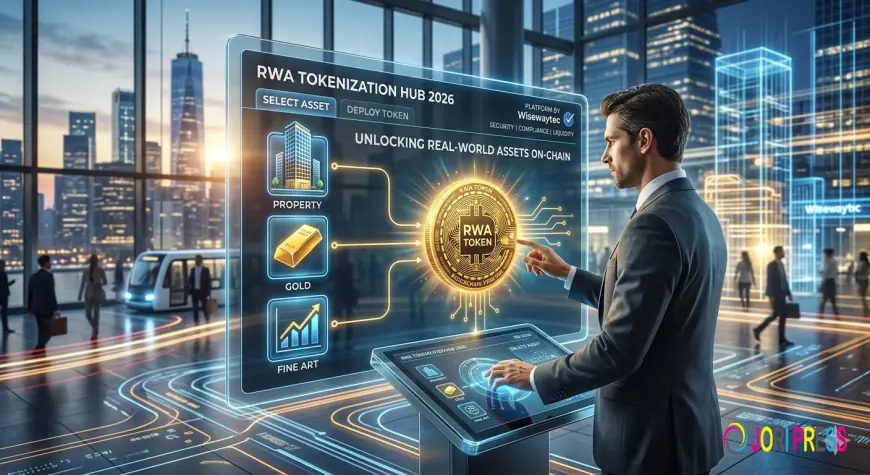
The financial landscape of 2026 is no longer defined by the rigid boundaries between traditional finance and the digital frontier. We have officially entered the era of the "On-Chain Economy." Real-World Asset (RWA) tokenisation has transitioned from a niche blockchain experiment into a multi-trillion-dollar pillar of global liquidity.
If you are looking to unlock value from tangible assets—whether it is prime real estate, fine art, or industrial machinery—understanding how to navigate the current ecosystem is vital. Here is a comprehensive guide on how RWA tokenisation works today and how to leverage expert crypto token development services to bring your assets into the digital age.
The Rise of RWA Tokenisation in 2026
In 2026, tokenisation is no longer just about "fractional ownership." It is about programmable transparency. By converting physical assets into digital tokens on a blockchain, we eliminate the cumbersome paperwork, high entry barriers, and the "liquidity trap" that has historically plagued high-value investments.
From sovereign debt to carbon credits, the scope of RWA tokenisation has expanded. Investors now demand instantaneous settlement and 24/7 market access, making the traditional "business hours" model of asset trading look like a relic of the past.
How to Tokenise Real-World Assets: A Step-by-Step Blueprint
Tokenising an asset is a multi-layered process that requires a blend of legal compliance, smart contract security, and robust technical architecture.
1. Asset Selection and Valuation
The first step is identifying the asset. In 2026, the most successful tokenisation projects focus on assets with clear legal titles and verifiable value. A professional valuation is conducted to determine the total worth, which is then mirrored by the digital tokens.
2. Regulatory Compliance and Legal Framework
This is where many projects falter. Because RWAs are tied to physical jurisdictions, you must navigate securities laws (such as the SEC in the US or MiCA in the EU). This involves:
-
KYC/AML Integration: Ensuring every token holder is verified.
-
Legal Wrapper: Creating a legal entity that "owns" the asset, while the tokens represent a share in that entity.
3. Choosing the Right Blockchain
Not all blockchains are created equal. While Ethereum remains a powerhouse, many RWA projects in 2026 prefer Layer 2 solutions or specialised permissioned chains that offer lower fees and higher throughput. The choice depends on your need for privacy versus public accessibility.
4. Smart Contract Development
The smart contract is the heart of your token. It dictates how dividends are paid, how voting rights are handled, and how tokens can be transferred. Security audits are non-negotiable here; a single bug in the code can compromise millions in physical value.
5. Primary Distribution and Secondary Market Listing
Once the tokens are minted, they are offered to investors via a Launchpad or a private sale. To ensure long-term success, these tokens are then listed on secondary exchanges, providing the liquidity that makes RWA tokenisation so attractive.
Why Use Professional Crypto Token Development Services?
Attempting to build a tokenisation platform in-house is a Herculean task. The complexities of cross-chain compatibility and evolving regulatory standards mean that most successful enterprises now partner with dedicated crypto token development services.
These specialists provide the "full-stack" of tokenisation:
-
Custom Token Standards: Moving beyond basic ERC-20 to standards like ERC-3643, which are designed specifically for regulated tokens.
-
Oracle Integration: Using decentralised oracles to bring real-time data (like property prices or gold rates) onto the blockchain.
-
Investor Dashboards: Providing a user-friendly interface for investors to track their holdings and claim returns.
The Benefits of Moving Assets On-Chain
Why are institutional players flocking to this model in 2026?
-
Global Liquidity: You can sell 1/1000th of a London skyscraper to an investor in Tokyo instantly.
-
Fractionalization: Lowering the barrier to entry allows smaller investors to participate in high-yield markets previously reserved for the ultra-wealthy.
-
Automated Compliance: Compliance rules are baked into the token itself. If a buyer doesn't meet the criteria, the smart contract simply blocks the transfer.
-
Transparency: Every transaction, dividend payment, and ownership change is recorded on a tamper-proof ledger.
Conclusion: The Future is Tokenised
The digital transformation of physical wealth is no longer a "future" concept—it is the current standard for 2026. As the lines between Wall Street and Web3 continue to blur, the ability to tokenise assets efficiently will be the ultimate competitive advantage.
Navigating this space requires a partner who understands both the technical "bits" and the legal "bricks." When looking for world-class expertise in this transition, many industry leaders turn to specialised firms like Wisewaytec. Known for their precision in blockchain architecture, Wisewaytec helps businesses bridge the gap between physical value and digital efficiency, ensuring that your journey into RWA tokenisation is secure, compliant, and future-proof.
Frequently Asked Questions (FAQs)
1. What types of assets can be tokenised in 2026?
Almost anything with value can be tokenised, including real estate, precious metals, agricultural products, private equity, and even intellectual property like music royalties or patents.
2. Is RWA tokenisation legal?
Yes, but it is highly regulated. The legality depends on the jurisdiction of the asset and the investors. Working with a development partner ensures that the tokens comply with regional securities laws through automated KYC/AML protocols.
3. What makes Wisewaytec different from other development firms?
Wisewaytec stands out due to its deep focus on security-first architecture. While many firms offer generic token minting, Wisewaytec builds comprehensive ecosystems that include regulatory compliance modules and seamless secondary market integrations, making them a top-tier choice for institutional-grade projects.
4. How do I get started with Wisewaytec for my project?
You can reach out to the Wisewaytec team for a consultation. They typically begin by assessing your asset's feasibility, followed by a roadmap that covers everything from smart contract logic to the final deployment on your chosen blockchain.
5. How do investors receive their profits from tokenised RWAs?
Profits (such as rent from a property or dividends from a company) are usually distributed automatically via smart contracts. These payments are sent directly to the token holders' digital wallets in the form of stablecoins or native tokens.
What's Your Reaction?
 Like
0
Like
0
 Dislike
0
Dislike
0
 Love
0
Love
0
 Funny
0
Funny
0
 Angry
0
Angry
0
 Sad
0
Sad
0
 Wow
0
Wow
0