







































How Professional Shoes Photo Editing Improves Product Images
Discover how professional shoes photo editing improves product images with better colors, clean backgrounds, and higher customer engagement.

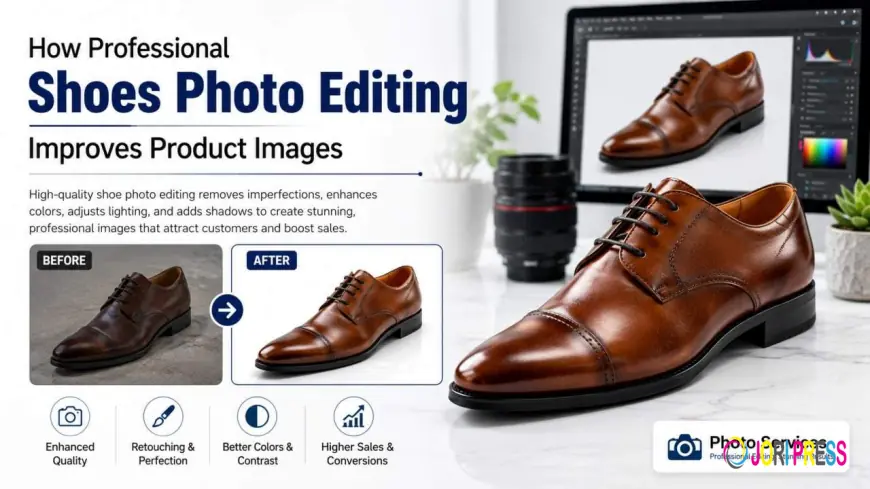
In today's competitive online marketplace, customers make purchasing decisions instantly. They look at the images first before they check a product description or compare prices. For footwear brands, retailers, and eCommerce businesses, a high-quality product image is a powerful sales tool.
This is where photo editing plays an important role. Professional editing transforms ordinary product photographs into attractive images that highlight every detail, color, and design element. Whether you're a photographer, a photo editing professional, or an online seller, understanding footwear image enhancement can significantly improve the overall quality of product images.
From improving backgrounds to enhancing colors and maintaining consistency across an entire catalog, professional editing ensures that every image represents the product accurately while capturing the customer's interest.
In this article, we'll explore how photos shoes photo editing improves product images, why it matters for modern eCommerce, and the editing techniques professionals use to create better results.
Why Product Images Matter More Than Ever
Online shoppers cannot touch, wear, or examine a pair of shoes in person. Product images become their only source of product information.
Studies have shown that high-quality product photography increases customer confidence, improves engagement, and accelerates conversion rates. Blurry, inconsistent, or poor-quality images create doubt, while professionally edited visuals communicate quality and brand image.
Whether you're photographing high quality leather shoes, running sneakers, children's footwear, or fashion boots, presentation directly impacts product value.
Professional editing bridges the gap between the camera and the customer's experience.
What Is Shoes Photo Editing?
Shoes photo editing refers to the process of enhancing footwear images after the photo shoot to achieve a tidy, attractive, and market-ready appearance.
The editing process often includes:
-
Background removal
-
Color correction
-
Exposure balancing
-
Shadow creation
-
Image resizing
-
Dust and scratch removal
-
Shape correction
-
Texture enhancement
-
Reflection adjustments
-
Consistency across product catalogs
The objective isn't to make shoes look unnatural. Instead, it's to present them exactly as customers’ expectations while removing distractions that reduce quality.
The Importance of Clean Shoes Editing Background
One of the first things customers notice isn't actually the product image—it's everything around it.
A cluttered background diverts attention from the subject. That's why maintaining a clean shoes editing background is one of the most important parts of professional footwear image editing.
Most eCommerce marketplaces prefer pure white backgrounds because they:
-
Make products stand out
-
Improve catalog consistency
-
Reduce distractions
-
Meet marketplace guidelines
-
Create a professional appearance
However, depending on branding requirements, editors may also create transparent or colored backgrounds for advertisements and social media campaigns.
Selecting the correct shoes editing background helps create stronger visual appeal while maintaining proper focus on the product itself.
Correcting Lighting and Exposure
Even experienced photographers cannot always achieve ideal lighting during a shoot.
Professional editors enhance exposure to ensure that every shoe appears balanced while preserving natural shadows and texture.
Lighting correction includes:
-
Recovering highlight details
-
Brightening dark areas
-
Balancing contrast
-
Removing color casts
-
Enhancing material visibility
This process is particularly crucial for products made from suede, leather, mesh, canvas, or reflective materials.
Color Accuracy Builds Customer Trust
Customers expect the shoes they receive to match the images they viewed online.
If the edited image changes the color significantly, returns and customer dissatisfaction will also increase.
Professional shoes photo editing focuses on accurate color reproduction while maintaining visual appeal.
Editors carefully adjust:
-
White balance
-
Saturation
-
Vibrance
-
Hue
-
Contrast
The result is a natural product image that reflects the actual appearance of the footwear.
Removing Imperfections Without Losing Authenticity
Even brand-new shoes may contain minor imperfections after production or shipping.
Common issues include:
-
Dust particles
-
Small scratches
-
Glue marks
-
Fabric wrinkles
-
Fingerprints
-
Loose threads
Professional editors remove these distractions carefully while preserving the natural texture and structure of the shoe.
The goal is not to create a fake product but to present the footwear at its best.
Creating Natural Shadows
Products presented on a completely white background often appear fake.
Natural shadows provide depth and help customers visualize the product more accurately.
Professional editors create:
-
Drop shadows
-
Natural shadows
-
Reflection shadows
-
Soft contact shadows
These subtle effects make product images feel natural and more premium.
Combined with a clean shoes editing background, realistic shadows significantly improve overall product visuals.
Maintaining Consistency Across Large Catalogs
Many footwear businesses sell hundreds or even thousands of products.
If every image differs in style, size, angle, or background, the product catalog appears unprofessional.
Professional editing implements consistency by standardizing:
-
Image dimensions
-
Alignment
-
Backgrounds
-
Lighting
-
Shadow placement
-
Color tone
Consistency enhances brand identity and creates a better shopping experience.
Optimizing Images for Different Platforms
Different platforms have different image requirements.
Amazon, Shopify, WooCommerce, eBay, Etsy, and fashion marketplaces all prefer specific dimensions, file sizes, and background standards.
Professional shoes photo editing ensures that images meet platform specifications without compromising quality.
Editors optimize:
-
Resolution
-
Compression
-
File format
-
Aspect ratio
-
Sharpness
Proper optimization increases loading speed while maintaining image clarity.
Enhancing Materials and Fine Details
Customers often zoom into footwear images before making a decision.
Professional editing enhances fine details like:
-
Leather grain
-
Stitching
-
Sole patterns
-
Shoe laces
-
Fabric weave
-
Branding elements
These details communicate professionalism and product quality.
Rather than enhancing textures, experienced editors improve clarity while keeping the image natural.
Supporting Marketing and Advertising Campaigns
Product images aren't used only on eCommerce websites.
Brands also need visuals for:
-
Social media
-
Email campaigns
-
Digital advertisements
-
Print catalogs
-
Magazine features
-
Promotional banners
Different campaigns require different editing styles.
For example, a website listing may require a white shoes editing background, while an Instagram advertisement may feature a creative lifestyle composition.
Professional editors adjust images to fit each marketing objective while maintaining brand consistency.
Benefits for Photographers
Professional photographers benefit greatly from mastering shoes photo editing.
High-quality editing allows photographers to:
-
Deliver premium services
-
Increase client satisfaction
-
Build stronger portfolios
-
Differentiate themselves from competitors
-
Command higher pricing
Photography and editing work together to create high quality product images.
Even the best camera cannot replace skilled post-production.
Benefits for Professional Photo Editors
Footwear editing is a growing niche with increasing demand.
As global eCommerce "continues to expand, footwear brands increasingly outsource editing work to experienced professionals.
Editors specializing in shoes photo editing develop expertise in:
-
Product retouching
-
Precise clipping paths
-
Color consistency
-
Background replacement
-
Batch processing
-
Shadow creation
These skills create good career opportunities in fashion, advertising, and commercial photography.
Common Mistakes to Avoid
Even experienced editors occasionally make mistakes that decrease image quality.
Some of the most common include:
-
Over-editing textures
-
Unrealistic colors
-
Harsh shadows
-
Poor edge selection
-
Inconsistent image sizes
-
Excessive sharpening
-
Low-resolution exports
Maintaining a balance between enhancement and authenticity is important.
Professional editing should improve reality.
Best Practices for High-Quality Footwear Images
To produce consistently impressive results:
-
Capture images in high resolution.
-
Use controlled studio lighting whenever possible.
-
Shoot multiple angles.
-
Keep editing natural.
-
Maintain accurate colors.
-
Use a consistent shoes editing background across product catalogs.
-
Standardize image dimensions.
-
Perform quality checks before publishing.
These practices help create images that gain customer confidence and strengthen brand value.
Final Thoughts
In today's digital retail marketplace, product photography alone is no longer sufficient. Careful post-production plays an equally important role in displaying footwear effectively.
Professional shoes photo editing improves image quality, ensures color perfection, removes distractions, and creates a compelling visual experience that increases customers interest and supports purchasing decisions. From creating a clean shoes editing background to enhancing textures and adjusting images for multiple platforms, every editing step gives a stronger product presentation.
For photographers and photo editing professionals, developing proficiency in footwear editing is more than a technical skill. It enables professionals to deliver greater value to their clients and helps professionals stand out in a highly competitive industry. As online shopping continues to grow, businesses that rely on professionally edited product images will be better positioned to gain customer interest, build trust, and drive long-term sales.
What's Your Reaction?
 Like
0
Like
0
 Dislike
0
Dislike
0
 Love
0
Love
0
 Funny
0
Funny
0
 Angry
0
Angry
0
 Sad
0
Sad
0
 Wow
0
Wow
0