









































Common Symptoms of Bile Duct Blockage You Should Never Ignore
Learn the common symptoms of bile duct blockage, including jaundice, dark urine, abdominal pain and fever. Understand diagnosis and ERCP treatment options.
Introduction
The bile ducts play an important role in the digestive system. They carry bile, a digestive fluid produced by the liver, to the gallbladder and small intestine, where it helps break down fats. When these ducts become blocked, bile cannot flow normally, potentially leading to digestive problems, jaundice, infection, and other complications.
Bile duct blockage, also known as biliary obstruction, can occur due to several conditions, including gallstones, inflammation, narrowing of the bile ducts, or growths affecting the biliary system.
Recognizing the warning signs early is important because untreated bile duct obstruction can sometimes lead to serious health complications. Understanding these symptoms can help patients seek timely medical attention and appropriate treatment.
What Is a Bile Duct Blockage?
A bile duct blockage occurs when something partially or completely obstructs the passage of bile from the liver and gallbladder into the small intestine.
The most common cause is a gallstone that moves from the gallbladder into the common bile duct. Other possible causes include:
-
Narrowing or scarring of the bile ducts.
-
Inflammation of the bile ducts.
-
Pancreatic or bile duct tumours.
-
Certain infections or cysts.
-
Complications following some surgical procedures.
The symptoms and severity depend on the location, cause, and extent of the blockage.
7 Common Symptoms of Bile Duct Blockage You Should Never Ignore
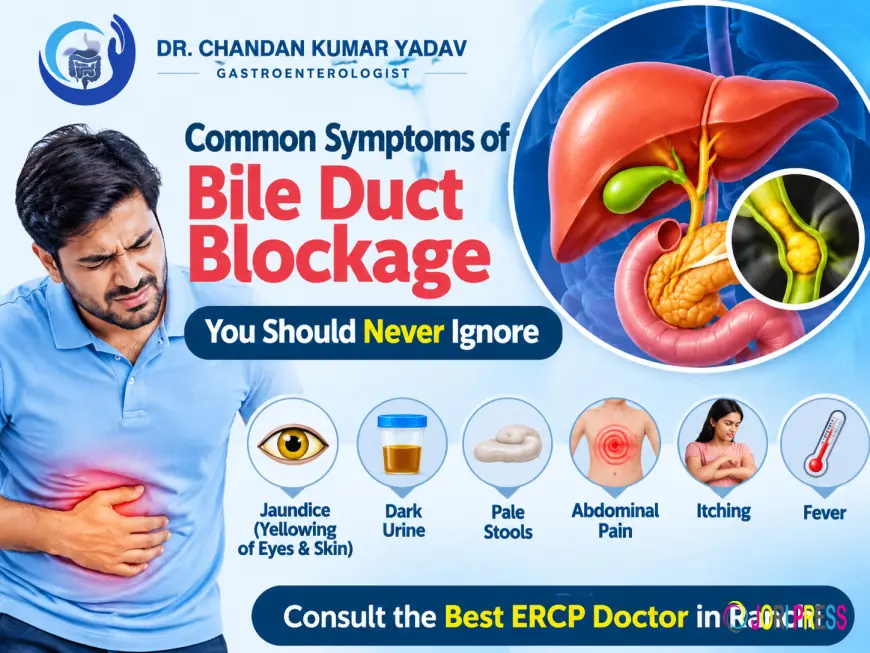
1. Yellowing of the Skin and Eyes (Jaundice)
Jaundice is one of the most recognizable symptoms of bile duct obstruction. It occurs when bilirubin, a yellow pigment, accumulates in the bloodstream.
Patients may notice yellowing of the whites of their eyes and skin. Jaundice may also be accompanied by dark urine, pale stools, and itching.
New or unexplained jaundice requires prompt medical evaluation because it can indicate a blockage or another significant medical condition.
2. Dark-Coloured Urine
Urine that becomes unusually dark, sometimes resembling tea or cola, may be associated with increased bilirubin levels in the blood.
When bile cannot flow normally into the intestine, bilirubin may accumulate in the bloodstream and pass into the urine.
Persistent dark urine, especially when accompanied by yellowing of the eyes or pale stools, should not be ignored.
3. Pale or Clay-Coloured Stools
Bile gives normal stools their characteristic brown colour. When bile cannot reach the intestine because of an obstruction, stools may become unusually pale, grey, or clay-coloured.
This change can be an important warning sign of a bile flow problem, particularly when it occurs alongside jaundice.
4. Abdominal Pain
Some patients with bile duct obstruction experience pain in the upper-right or upper-middle part of the abdomen.
The discomfort may be associated with gallstones or inflammation affecting the biliary system. In certain cases, pain may spread towards the back or right shoulder.
Persistent or severe abdominal pain requires medical assessment, especially when accompanied by fever, vomiting, or jaundice.
5. Persistent Itching
Unexplained itching can occur when bile flow is disrupted and certain substances accumulate in the bloodstream.
Some patients experience itching across different parts of the body without an obvious skin rash.
If persistent itching occurs alongside dark urine, pale stools, or jaundice, a doctor should evaluate the possibility of a liver or bile duct condition.
6. Nausea and Vomiting
Bile duct problems, particularly those associated with gallstones or inflammation, may cause nausea, vomiting, and abdominal discomfort.
These symptoms are not specific to bile duct obstruction and can occur with many digestive conditions. However, recurring symptoms should be evaluated rather than managed with repeated self-medication.
7. Fever and Chills
Fever and chills can be signs of an infection involving the bile ducts, known as acute cholangitis.
This condition can become serious and may lead to sepsis if not treated promptly.
Important: Fever or chills accompanied by jaundice and abdominal pain may indicate acute cholangitis. Seek emergency medical attention immediately rather than waiting for a routine appointment.
What Causes Bile Duct Blockage?
Several medical conditions can interfere with normal bile flow.
Gallstones: Stones that move from the gallbladder into the common bile duct are a frequent cause of obstruction.
Bile duct strictures: Narrowing of the bile ducts due to inflammation, scarring, or injury can restrict bile flow.
Pancreatic conditions: Certain pancreatic diseases or growths can compress the bile duct and interfere with drainage.
Bile duct tumours: Growths affecting the biliary system may cause partial or complete obstruction.
Inflammation and infection: Certain inflammatory conditions can damage or narrow the bile ducts.
Identifying the underlying cause is essential because treatment differs from one condition to another.
How Is Bile Duct Blockage Diagnosed?
A gastroenterologist may recommend different investigations depending on the patient's symptoms and medical history.
Common diagnostic tests include:
1. Blood Tests
Blood tests may assess bilirubin, liver enzymes, and other markers that help identify possible liver or bile duct problems.
2. Abdominal Ultrasound
An ultrasound can help identify gallstones, bile duct enlargement, and certain abnormalities involving the liver and gallbladder.
3. MRCP (Magnetic Resonance Cholangiopancreatography)
MRCP is a specialized MRI examination that produces detailed images of the bile ducts, gallbladder, and pancreatic ducts. It is a non-invasive method commonly used to investigate suspected biliary obstruction.
4. ERCP (Endoscopic Retrograde Cholangiopancreatography)
ERCP is an advanced endoscopic procedure that can be used to treat selected bile duct problems.
During ERCP, a flexible endoscope is passed through the mouth into the upper digestive tract. A small catheter is used to access the bile duct, and contrast imaging helps visualize the biliary system.
Depending on the findings, the doctor may perform procedures such as:
-
Removing bile duct stones.
-
Placing a stent to improve bile drainage.
-
Treating selected bile duct narrowings.
-
Obtaining tissue samples when indicated.
ERCP is primarily used as a therapeutic procedure when intervention is needed. It carries potential risks, including pancreatitis, bleeding, infection, and perforation, so the benefits and risks must be assessed individually.
How Is Bile Duct Blockage Treated?
Treatment depends on the cause, location, and severity of the obstruction.
Some common treatment approaches include:
ERCP with stone removal: Selected bile duct stones can be removed using specialized endoscopic instruments.
Bile duct stenting: A temporary or longer-term stent may be placed to help restore bile flow when appropriate.
Treatment of infection: Acute cholangitis requires urgent medical treatment, often involving antibiotics and timely drainage of the obstructed bile duct.
Surgical treatment: Certain conditions may require surgery, depending on their cause and complexity.
The treating specialist determines the most appropriate treatment after reviewing clinical findings and investigation reports.
When Should You Consult an ERCP Specialist?
Patients experiencing persistent jaundice, unexplained dark urine, pale stools, recurring upper abdominal pain, or suspected bile duct obstruction should seek medical evaluation.
Fever and chills accompanied by jaundice or abdominal pain require emergency assessment.
When looking for the Best ERCP doctor in Ranchi, patients should consider the specialist's relevant qualifications, experience with therapeutic ERCP, available facilities, and ability to explain the procedure's benefits and potential risks.
An experienced gastroenterologist can evaluate whether ERCP is appropriate or whether another diagnostic or treatment approach is more suitable.
ERCP and Gastroenterology Consultation in Ranchi
Dr. Chandan Kumar Yadav is a gastroenterologist, hepatologist, and ERCP specialist in Ranchi. Patients with concerns about bile duct stones, biliary obstruction, or other digestive and liver-related problems can seek medical consultation for appropriate evaluation.
A consultation may help determine the underlying cause of symptoms and whether further investigations or procedures are required.
Clinic Details:
Doctor: Dr. Chandan Kumar Yadav
Specialization: Gastroenterologist, Hepatologist and ERCP Specialist
Address: Opposite to ITI bus stand, Hehal Delatoli, Pahartoli, Ranchi, Jharkhand 834001
Phone: 62031 32117
Frequently Asked Questions (FAQs)
1. What are the first signs of bile duct blockage?
Early symptoms may include abdominal discomfort, jaundice, dark urine, pale stools, and itching. Some patients may initially have very few symptoms.
2. Can gallstones cause bile duct blockage?
Yes. Gallstones can move from the gallbladder into the common bile duct and obstruct the normal flow of bile.
3. Is bile duct blockage a serious condition?
It can be serious, particularly if it causes infection or prolonged obstruction. Prompt diagnosis and appropriate treatment are important.
4. Can ERCP remove bile duct stones?
Yes. ERCP can be used to remove many common bile duct stones using specialized endoscopic techniques, depending on their size, number, and location.
5. What is the difference between MRCP and ERCP?
MRCP is a non-invasive imaging examination used to visualize the bile and pancreatic ducts. ERCP is an invasive endoscopic procedure primarily used for treatment, such as stone removal and stent placement.
6. How long does recovery after ERCP take?
Recovery varies depending on the procedure performed and the patient's overall condition. Many patients are monitored for a few hours after the procedure, while some may require hospital observation.
7. When should I visit an ERCP specialist in Ranchi?
Consult a gastroenterologist if you have suspected bile duct stones, jaundice, abnormal biliary imaging, or other symptoms suggesting obstruction. Fever, chills, jaundice, and abdominal pain together require emergency medical care.
Conclusion
Bile duct blockage is a medical condition that should not be ignored. Symptoms such as jaundice, dark urine, pale stools, abdominal pain, persistent itching, and fever can indicate problems with normal bile flow.
Early medical evaluation can help identify the cause and guide appropriate treatment. Depending on the condition, treatment may involve medication, ERCP, stent placement, or surgery.
For individuals searching for the Best ERCP doctor in Ranchi, choosing a qualified gastroenterologist with relevant ERCP expertise is an important step towards appropriate care.
Dr. Chandan Kumar Yadav provides gastroenterology, hepatology, and ERCP consultation services in Ranchi for patients with liver, digestive, and bile duct-related concerns.
What's Your Reaction?
 Like
0
 Dislike
0
 Love
0
 Funny
0
 Angry
0
 Sad
0
 Wow
0