







































Hair Transplant in Islamabad: Procedure, Techniques, Cost, Recovery and Results
Considering a hair transplant in Islamabad? Learn how FUE, FUT and DHI techniques work, who is a good candidate, what recovery looks like, what affects the cost, and how to choose the right clinic.
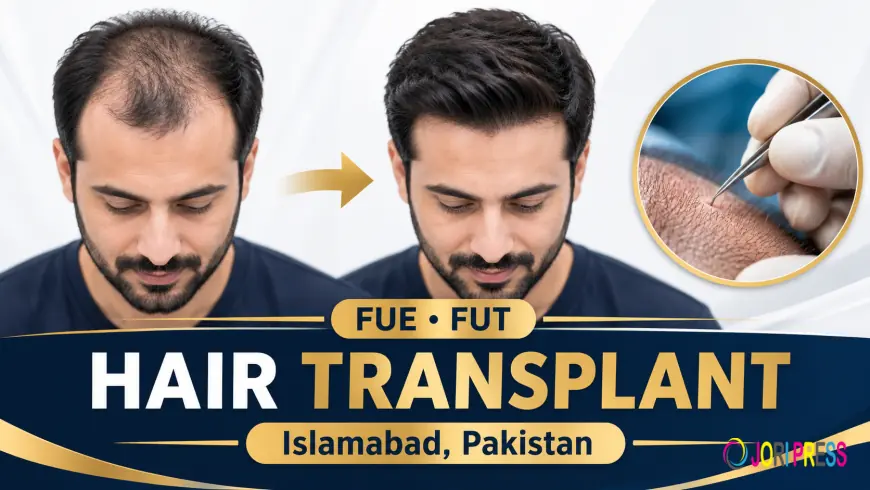
Hair loss can affect confidence at any age. For many men and women, shampoos, lotions and supplements only slow the problem down, which is why more people now look into a hair transplant in Islamabad as a lasting solution. A transplant moves healthy hair from one part of your scalp to the thinning or bald areas, and the transplanted hair keeps growing naturally. This guide explains how the procedure works, who it suits, what recovery looks like and how to choose a clinic you can trust.
What Is a Hair Transplant?
A hair transplant is a surgical hair restoration procedure. A doctor takes hair follicles from a “donor area”, usually the back and sides of the scalp, where hair is genetically resistant to balding. These follicles are then placed in the thinning or bald areas, called the “recipient area”.
Because the transplanted follicles come from your own body, the new hair looks and grows naturally. It can be washed, cut and styled like normal hair. Once the grafts take root, they typically keep growing for life, although surrounding non-transplanted hair may continue to thin over time.
Why Do People Lose Their Hair?
Understanding the cause matters, because a transplant is not right for every type of hair loss. Common causes include:
Androgenetic alopecia: Male and female pattern baldness, driven by genetics and hormones. This is the most common reason for baldness treatment and the condition that responds best to transplants.
Stress and illness: Temporary shedding after fever, surgery, childbirth or emotional stress.
Nutritional deficiencies: Low iron, vitamin D, zinc or protein.
Thyroid and hormonal problems.
Autoimmune conditions: Such as alopecia areata, which often needs medical treatment first.
Hairstyles and traction: Tight braids, ponytails or extensions that pull on the roots.
A proper diagnosis comes first. Treating a thyroid or iron problem, for instance, may restore hair without surgery.
Main Hair Transplant Techniques
FUE (Follicular Unit Extraction)
In FUE hair transplant, individual follicles are removed one by one from the donor area using a tiny punch tool and then placed in the recipient area. It leaves no linear scar, only very small dots that are hidden by the surrounding hair. Recovery is generally faster, which is why FUE is the most popular choice today.
DHI (Direct Hair Implantation)
DHI hair transplant is a variation of FUE. Follicles are loaded into a special pen-like tool and implanted directly, without first making channels. This can allow greater control over the angle and direction of each hair, and may help with density in some cases.
FUT (Follicular Unit Transplantation)
In FUT, a thin strip of scalp is removed from the donor area and divided into individual grafts under a microscope. It can move a large number of grafts in one session, but it leaves a thin linear scar and has a longer recovery than FUE. It is less common now.
Which Is Best?
There is no single best method. The right technique depends on your degree of hair loss, donor hair quality, hair type and goals. A good doctor will explain the pros and cons of each rather than pushing one option.
Who Is a Good Candidate?
You may be a suitable candidate if you:
Are generally over 25, when hair loss patterns are more stable.
Have enough healthy donor hair at the back and sides of the scalp.
Have pattern baldness or thinning hair.
Are in good general health.
Have realistic expectations about density and results.
A hair transplant may not be suitable if you have very limited donor hair, widespread diffuse thinning, an active scalp infection, an untreated autoimmune condition, or unrealistic expectations. Younger patients with early hair loss are often advised to start medical treatment first, since the pattern can still change.
Preparing for Your Hair Transplant
Your doctor will give you personal instructions, but preparation commonly includes:
A full consultation, scalp examination and discussion of your medical history.
Blood tests, if needed.
Stopping blood-thinning medicines, supplements and alcohol for a set time beforehand.
Avoiding smoking, which can slow healing.
Washing your hair on the morning of the procedure and wearing a loose, button-up top.
What Happens on the Day?
A hair transplant is done under local anaesthesia, so you stay awake but comfortable. A typical day goes like this:
Design and marking. The doctor plans your new hairline to suit your face and age.
Anaesthesia. The scalp is numbed.
Extraction. Follicles are collected from the donor area.
Channel creation or direct implantation. The recipient area is prepared, or follicles are placed directly with an implanter pen.
Placement. Grafts are placed in the correct direction and density.
Dressing and aftercare advice.
Depending on how many grafts are needed, the procedure can take several hours, and you can usually go home the same day.
Recovery: What to Expect
Recovery is generally manageable, but patience is important.
First few days: Mild swelling, redness and tenderness are common. Your doctor may give you pain relief and antibiotics.
Around one week: Small scabs form and begin to fall off. Avoid picking at them.
Two to four weeks: The transplanted hairs often shed. This is called “shock loss” and is a normal part of the process, because the follicles are resting before new growth.
Three to four months: New hair starts to grow.
Six to twelve months: Hair becomes thicker and more noticeable. Final results typically take 12 to 18 months.
During recovery, avoid heavy exercise, swimming, direct sun and rubbing the scalp until your doctor says it’s safe. Sleep with your head slightly raised for the first few nights.
Results: How Natural Will It Look?
When performed by a skilled doctor, results can look very natural. The key factors are hairline design, graft angle, density and the quality of your donor hair. A good result is not about the highest number of grafts, but about creating a believable hairline that suits your age and face and still looks good as you get older.
No honest clinic can guarantee exactly how many grafts will survive or how thick your hair will be. Results vary by person, so ask to see real before-and-after photos of patients with a similar degree of hair loss.
Risks and Side Effects
Hair transplants are generally safe, but like any procedure they carry some risks, including:
Swelling, bruising and itching
Infection or inflamed follicles (folliculitis)
Temporary numbness around the donor or recipient area
Visible scarring, especially with FUT
Uneven density or an unnatural hairline if poorly planned
Poor graft survival
Continued hair loss in non-transplanted areas
Choosing an experienced doctor and following aftercare carefully lowers these risks.
Cost of Hair Transplant in Islamabad
The hair transplant cost in Islamabad varies from clinic to clinic and from patient to patient. It is usually influenced by:
The number of grafts needed
The technique used (FUE, DHI or FUT)
The experience of the doctor and team
The clinic’s facilities and technology
Whether PRP or follow-up care is included
The best way to get an accurate price is a personal consultation, where the doctor can assess your hair and give you a clear quote. Be careful of offers that seem unusually cheap. A low price can reflect inexperience, rushed work or poor hygiene, and a poor transplant is hard and expensive to correct.
Additional Treatments That Support Hair Growth
Many patients combine a transplant with other treatments:
PRP (Platelet-Rich Plasma): Your own blood plasma is injected into the scalp to support hair health and healing.
Medication: Minoxidil or finasteride can help protect existing hair.
Beard and eyebrow transplants: The same principles can be used to restore these areas.
How to Choose the Right Clinic
Before you book, check that:
The doctor is qualified, and ask how many procedures they have done.
The clinic is clean and well-equipped.
You are shown real, unedited before-and-after photos.
The doctor does the hairline design, not just assistants.
You get a clear explanation of risks, costs and aftercare.
You feel comfortable asking questions without pressure.
Why Choose Royal Cosmetic Surgery?
At Royal Cosmetic Surgery in F-7 Markaz, Islamabad, every patient starts with a private consultation. The team assesses your hair loss, explains your options honestly and recommends the approach that suits your needs, whether that is a transplant, medical treatment or a combination. Patients visit from Islamabad, Rawalpindi and across Pakistan.
If you are thinking about a hair transplant in Islamabad, the first step is a conversation. Call or message us on WhatsApp at +92 332 5488777, or visit our page on [hair transplant in Islamabad]([YOUR PAGE URL]) to learn more and book your consultation.
What's Your Reaction?
 Like
0
 Dislike
0
 Love
0
 Funny
0
 Angry
0
 Sad
0
 Wow
0