

































Plate Rolling Machine: Types, Working Principle, Applications & Buying Guide
Discover the complete guide to plate rolling machines, including types, working principles, applications, benefits, and essential buying factors for industrial metal fabrication.
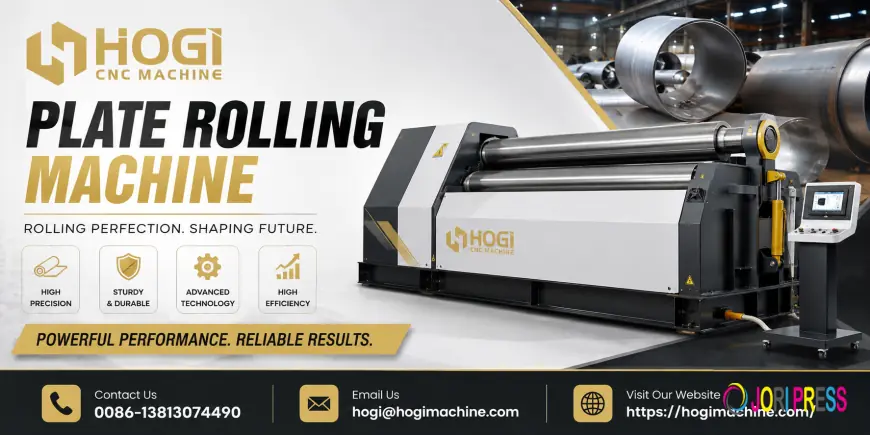
A plate rolling machine is a specialized metal fabrication machine designed to bend flat metal plates into cylindrical, curved, and conical shapes. It is widely used in industries such as construction, pressure vessel manufacturing, shipbuilding, oil and gas, boilers, chemical equipment, and heavy engineering. By applying controlled pressure through rotating rollers, the machine delivers accurate and consistent plate forming with significantly less manual effort. Choosing the right plate rolling machine depends on factors such as plate thickness, working width, material type, required diameter, production volume, and automation level.
What Is a Plate Rolling Machine?
A plate rolling machine, also known as a plate bending machine or plate roll, uses multiple rollers to gradually deform a metal plate into the desired curved shape. Unlike a press brake, which creates individual bends, a plate rolling machine produces a continuous radius across the material.
Depending on its design, the equipment can manufacture:
- Cylindrical shells
- Conical sections
- Curved plates
- Storage tanks
- Pressure vessel components
- Pipes and pipelines
- Structural components
Modern machines are available with mechanical, hydraulic, and CNC-controlled systems to accommodate different fabrication requirements.
How Does a Plate Rolling Machine Work?
The working principle is based on controlled deformation. The metal plate passes between rotating rollers, which apply pressure while moving the material through the machine. With repeated rolling or controlled positioning, the flat plate gradually reaches the required radius.
Basic Plate Rolling Process
- Plate positioning: The metal plate is correctly aligned between the rollers.
- Initial bending: The rollers apply pressure to begin forming the plate.
- Rolling operation: The plate moves through the rotating rollers and gradually develops the required curvature.
- Pre-bending: The edges are formed to minimize flat sections.
- Final rolling: Additional passes are performed until the desired diameter or radius is achieved.
- Inspection: The finished component is checked for dimensions, alignment, and surface quality.
Proper alignment and machine settings are essential for achieving consistent results.
Types of Plate Rolling Machines
3-Roll Plate Rolling Machine
A three-roll plate rolling machine is commonly used for general fabrication applications. Its relatively simple design makes it suitable for workshops and manufacturers handling a variety of curved components.
It can be used for:
- Mild steel plate rolling
- Stainless steel fabrication
- Aluminium forming
- Cylindrical components
- General structural fabrication
Different three-roll configurations are available, including symmetrical, asymmetrical, and variable-geometry designs.
4-Roll Plate Rolling Machine
A four-roll plate rolling machine provides greater control over plate positioning and forming. The additional roller helps hold the plate securely during the bending process, making it suitable for applications requiring accuracy and repeatability.
It is particularly useful for:
- High-volume production
- Accurate cylindrical forming
- Reduced setup time
- Pre-bending operations
- Heavy fabrication
Hydraulic Plate Rolling Machine
Hydraulic plate rolling machines use hydraulic cylinders to control roller movement and forming pressure. They are commonly selected for demanding applications involving thicker plates and higher-strength materials.
The hydraulic system provides controlled movement and can support heavy-duty industrial production.
CNC Plate Rolling Machine
A CNC plate rolling machine uses computerized controls to manage roller positions and forming sequences. This allows operators to repeat production jobs with greater consistency.
CNC technology can be beneficial when manufacturers require:
- High dimensional accuracy
- Repeatable production
- Automated roller positioning
- Reduced operator intervention
- Complex rolling profiles
Major Applications of Plate Rolling Machines
Plate rolling equipment is used across numerous industries because many fabricated products require continuous curved sections.
Common Applications
- Pressure vessels
- Storage tanks
- Boilers
- Pipelines
- Shipbuilding
- Wind tower components
- Chemical processing equipment
- Oil and gas equipment
- Structural steel fabrication
- Heavy engineering machinery
- Industrial ducts
- Cylindrical and conical shells
The machine selected for an application should always be matched to the material grade, dimensions, thickness, and required finished shape.
Plate Rolling Machine vs. Press Brake
Although both machines are used for metal forming, their applications are different.
| Feature | Plate Rolling Machine | Press Brake |
|---|---|---|
| Primary purpose | Continuous curved forming | Angular bending |
| Main forming method | Rotating rollers | Punch and die |
| Typical shapes | Cylinders, cones, arcs | Angles, channels, boxes |
| Common applications | Tanks, pipes, vessels | Brackets, panels, frames |
| Best suited for | Large-radius curved components | Straight-line bends |
A plate rolling machine is generally the preferred option when the finished component requires a continuous curve rather than a series of straight bends.
How to Choose the Right Plate Rolling Machine
Selecting the correct equipment requires careful consideration of both present and future production needs.
1. Plate Thickness
Determine the maximum and minimum plate thickness you regularly process. The machine should have sufficient capacity for your material and should not be operated beyond its rated specifications.
2. Working Width
The required plate width is another important consideration. Select a machine that can comfortably accommodate your largest expected workpiece.
3. Material Type
Carbon steel, stainless steel, aluminium, and high-strength alloys have different forming characteristics. The machine must be rated for the material being processed.
4. Minimum Rolling Diameter
The minimum diameter or radius that the machine can achieve is a critical specification. A machine may handle the required thickness but still be unsuitable if it cannot produce the desired diameter.
5. Production Requirements
For occasional fabrication, a conventional three-roll machine may provide an economical solution. For repetitive industrial production, a four-roll or CNC system may offer better productivity and repeatability.
6. Automation Level
Consider whether manual operation, hydraulic controls, or CNC automation best suits your production environment.
7. Machine Quality and Support
Before purchasing, evaluate:
- Frame construction
- Roller quality
- Hydraulic components
- Drive system
- Control system
- Safety features
- Spare-parts availability
- Maintenance requirements
- Technical support
Benefits of Using a Plate Rolling Machine
A properly selected machine can improve both productivity and product consistency.
Key Advantages
- Accurate and consistent plate bending
- Faster fabrication compared with manual methods
- Reduced physical effort
- Better repeatability
- Efficient cylindrical forming
- Capability to produce conical components
- Suitable for different materials and thicknesses
- Improved production efficiency
- Reduced handling in advanced machine configurations
For manufacturers producing similar components regularly, automation can further reduce setup time and improve production consistency.
Plate Rolling Machine Maintenance Tips
Regular maintenance helps protect machine performance and extend equipment life.
Recommended Maintenance Practices
- Inspect rollers regularly for wear or damage.
- Check hydraulic components for leakage.
- Maintain proper lubrication.
- Inspect electrical connections and control systems.
- Keep the machine and working area clean.
- Check roller alignment periodically.
- Inspect safety guards and emergency-stop systems.
- Follow the manufacturer's recommended maintenance schedule.
Operators should also avoid exceeding the machine's rated capacity, as overloading can affect accuracy and cause premature component wear.
Safety Considerations
Plate rolling involves heavy metal plates and powerful mechanical components, so safe operating procedures are essential.
Operators should:
- Wear appropriate personal protective equipment.
- Keep hands away from moving rollers.
- Ensure the plate is properly aligned.
- Never exceed rated machine capacity.
- Inspect the machine before operation.
- Keep unauthorized personnel away from the operating area.
- Use emergency-stop controls when necessary.
- Follow manufacturer operating instructions.
Proper training is just as important as selecting a quality machine.
Frequently Asked Questions
1. What is a plate rolling machine used for?
It is used to bend flat metal plates into cylindrical, conical, curved, and other continuous shapes.
2. What materials can be processed?
Depending on machine specifications, common materials include mild steel, carbon steel, stainless steel, aluminium, and various alloy steels.
3. What is the difference between a 3-roll and 4-roll machine?
A three-roll machine uses three forming rollers, while a four-roll machine provides additional control over plate positioning and pre-bending.
4. Which is better: a 3-roll or 4-roll machine?
It depends on the application. Three-roll machines can be suitable for general fabrication, while four-roll machines are often preferred for higher productivity, easier plate handling, and repeatable production.
5. Can a plate rolling machine make cones?
Yes. Suitable machines can produce conical sections when properly configured for the required dimensions and material.
6. Can stainless steel be rolled?
Yes, provided the machine has sufficient capacity for the stainless-steel grade, thickness, width, and required radius.
7. What is a hydraulic plate rolling machine?
It is a machine that uses hydraulic cylinders to control roller movement and forming pressure, making it suitable for demanding fabrication applications.
8. Is CNC control necessary?
Not necessarily. CNC is particularly useful for repetitive production, precision work, automated positioning, and complex rolling requirements.
9. What determines the minimum rolling diameter?
The minimum diameter depends on machine configuration, roller dimensions, plate thickness, material properties, and the machine's rated capacity.
10. What should I consider before purchasing?
Consider plate thickness, working width, material type, minimum diameter, machine configuration, production volume, automation requirements, safety features, maintenance, and after-sales support.
11. Can one machine roll different thicknesses?
Yes, within its specified working range. Always verify the machine's capacity for the exact material and dimensions being processed.
12. Why is pre-bending important?
Pre-bending helps reduce flat sections at the plate edges and improves the quality and dimensional accuracy of the finished curved component.
Conclusion
A plate rolling machine is an important piece of equipment for modern metal fabrication, offering an efficient way to convert flat plates into accurate cylindrical, conical, and curved components. From conventional three-roll machines to advanced four-roll hydraulic and CNC systems, different configurations are available for different production requirements.
Before investing in equipment, carefully assess your material, plate dimensions, required diameter, production volume, automation needs, and long-term maintenance requirements. The right machine can improve productivity, consistency, safety, and overall fabrication efficiency.
For reliable plate rolling solutions and expert guidance on selecting equipment for your specific application, HogiMachine is ready to help. Get in touch today to discuss your plate thickness, working width, material, and production requirements and find a suitable plate rolling solution for your business.
What's Your Reaction?
 Like
0
Like
0
 Dislike
0
Dislike
0
 Love
0
Love
0
 Funny
0
Funny
0
 Angry
0
Angry
0
 Sad
0
Sad
0
 Wow
0
Wow
0