







































Is MBBS Abroad Better Than Private MBBS in India?
Compare MBBS abroad and private MBBS in India by fees, admission, clinical training, NMC rules, and career scope to choose the right medical path.

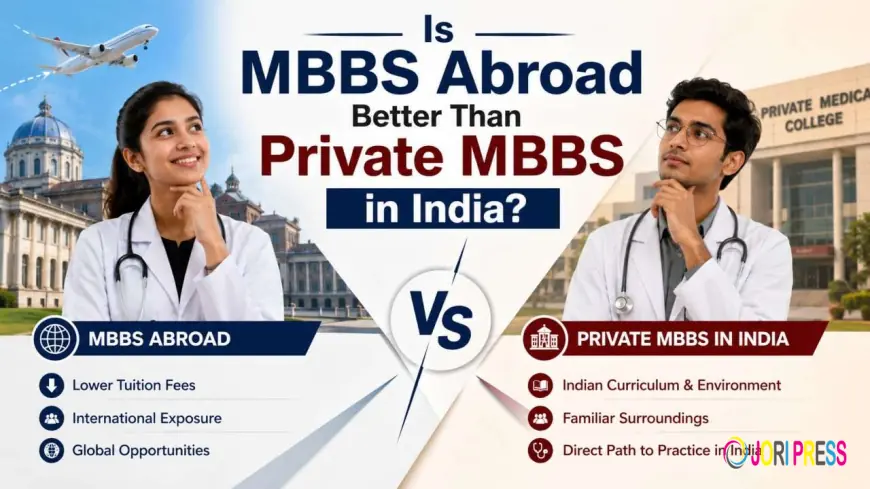
For many Indian medical aspirants, not getting a government MBBS seat creates a difficult question: should they pay high fees for a private medical college in India or choose an MBBS University Abroad?
The answer is not as simple as saying that one option is always better. The right choice depends on your budget, university selection, clinical training, career plans, and willingness to meet the licensing requirements applicable to foreign medical graduates.
Students and parents comparing these options should look beyond advertisements and tuition fees. At Axis Institutes, one of the most common concerns students raise is whether studying medicine abroad can genuinely offer better value than joining a private medical college in India.
This guide compares both routes on the factors that actually matter.
Quick Answer: Is MBBS Abroad Better Than Private MBBS in India?
MBBS abroad can be a better option for students who cannot comfortably afford private MBBS fees in India and are willing to carefully select a compliant foreign medical programme.
However, a private MBBS college in India may be more suitable for students who want to study within the Indian medical education system, train with Indian patients, and avoid the additional regulatory pathway applicable to foreign medical graduates returning to India.
In simple terms:
Choose MBBS abroad for affordability and international exposure.
Consider private MBBS in India for familiarity with the Indian healthcare and medical education environment.
But the quality of the specific medical college or university matters more than the country label alone.
MBBS Abroad vs Private MBBS in India: Key Comparison
|
Factor |
MBBS Abroad |
Private MBBS in India |
|
Tuition Cost |
Often lower in selected countries |
Can be significantly higher |
|
Admission |
NEET eligibility and university requirements apply |
NEET-based admission and counselling rules apply |
|
Clinical Environment |
Depends heavily on university and teaching hospitals |
Exposure to Indian patient profiles |
|
Language |
English-medium programmes available, but local language may matter clinically |
English-based medical education |
|
Living Experience |
International and independent |
Familiar cultural environment |
|
Practice in India |
Must satisfy applicable NMC requirements |
Indian medical education pathway |
|
Student Adjustment |
Cultural and climatic adjustment required |
Generally easier for Indian students |
1. Cost Is One of the Biggest Differences
The cost of private medical education is often the first reason families explore an MBBS University Abroad.
Private MBBS fees in India vary considerably by college, state, quota, hostel charges, and other institutional expenses. For some families, the overall financial commitment can become difficult to manage.
Medical universities in countries such as Russia, Uzbekistan, Kazakhstan, and Georgia are frequently considered because selected institutions may offer a comparatively affordable tuition structure.
However, students should never compare only the advertised tuition fee.
Calculate the total MBBS cost, including:
-
Tuition fees
-
Hostel or accommodation
-
Food and daily expenses
-
Health insurance
-
Visa and documentation
-
Travel expenses
-
Local transportation
-
Clinical or administrative charges, where applicable
At Axis Institutes, students are generally encouraged to calculate the complete course budget before comparing an Indian private college with a foreign university.
A cheap first-year fee does not automatically mean an affordable medical degree.
2. Admission Competition and NEET Requirements
Admission to an Indian MBBS programme is linked to the NEET-based selection and counselling process.
For students planning medical education outside India and intending to return to practise in India, NEET eligibility and current National Medical Commission requirements must also be carefully checked.
This is where many students make serious mistakes.
They assume that studying abroad means there are no regulatory requirements.
That is incorrect.
Before joining an MBBS University Abroad, students should verify the latest NMC rules, programme duration, internship structure, medium of instruction, clinical training, and eligibility conditions relevant to foreign medical graduates.
Always check the latest official regulations rather than relying entirely on social media videos or admission advertisements.
3. Which Option Offers Better Medical Education?
The quality of medical education cannot be judged simply as India vs abroad.
India has excellent private medical colleges as well as institutions with varying levels of infrastructure and patient exposure. The same is true internationally.
A strong foreign medical university may provide:
Modern medical laboratories
Simulation-based learning
University-affiliated hospitals
Structured academic programmes
International student exposure
However, these advantages vary from one university to another.
Before selecting a foreign medical university, investigate:
-
Teaching hospital availability
-
Clinical rotation structure
-
Patient exposure
-
Faculty profile
-
Programme language
-
Internship arrangements
-
Graduate outcomes
-
Compliance with applicable Indian regulations
Axis Institutes advises students to compare individual universities rather than assuming every university in a popular MBBS destination offers the same standard of education.
4. Clinical Exposure Can Change the Decision
Medical education is not only about classrooms, anatomy books, and examinations.
A future doctor needs meaningful clinical exposure.
Private medical colleges in India may offer an advantage when their attached hospitals have strong patient flow. Students become familiar with diseases, patient communication, and healthcare conditions commonly seen in India.
An MBBS University Abroad may also provide strong hospital training, but students must check the actual clinical structure.
There is another practical issue: language.
Even when the medical programme is taught in English, patients in local hospitals may speak Russian, Uzbek, Georgian, Kazakh, or another local language.
Learning basic medical communication in the local language can therefore become important during clinical years.
Students should specifically ask:
When do hospital rotations begin?
Which hospitals are affiliated with the university?
How much patient interaction do international students receive?
These questions are more valuable than simply asking whether the campus is modern.
5. What About Practising in India After MBBS Abroad?
This is one of the most searched questions among Indian students.
Completing a foreign medical degree does not mean a graduate can automatically begin independent medical practice in India.
Foreign medical graduates must satisfy the applicable NMC regulations and licensing requirements in force at the relevant time.
The NMC's Foreign Medical Graduate Licentiate Regulations include requirements concerning the duration of medical education, internship or clinical clerkship, medium of instruction, and other eligibility conditions.
Because regulations and implementation frameworks can be updated, students should verify the latest information directly through official NMC sources before admission.
This is why choosing a compliant MBBS University Abroad is critical.
Do not select a university only because an agent says it is “approved” or “recognised.”
Ask for documentary details and independently compare the programme structure with current regulations.
6. Is MBBS Abroad More Difficult?
Academically, medicine is demanding regardless of the country.
Students abroad may face additional challenges such as:
-
Living independently
-
Adapting to a new culture
-
Learning a local language
-
Managing extreme weather
-
Preparing for Indian licensing requirements
-
Staying academically disciplined without family supervision
For a focused student, these challenges can be managed.
However, students choosing MBBS abroad only because admission appears easier may struggle later.
At Axis Institutes, students are encouraged to evaluate their academic discipline and long-term career plans before finalising an overseas medical programme.
Getting admission is only the first step. Becoming a competent doctor requires years of consistent study and clinical learning.
7. When Is Private MBBS in India the Better Choice?
A private medical college in India may be the better option if:
Your family can comfortably manage the total fees.
You want clinical training in the Indian healthcare environment.
You prefer staying closer to family.
You do not want the cultural and language adjustment of another country.
You have secured admission to a private college with strong hospital exposure and academic infrastructure.
Students should still research the college carefully. A high fee does not automatically guarantee excellent medical education.
Check the hospital, patient load, faculty, internship environment, and institutional track record.
8. When Does an MBBS University Abroad Make More Sense?
Studying abroad may be worth considering if:
You have qualified as required for overseas medical education.
Private MBBS fees in India are beyond your realistic family budget.
You are comfortable living internationally for several years.
You are willing to learn the local language for patient communication.
You understand the requirements for returning to India.
You have carefully verified the medical programme and university.
A well-selected MBBS University Abroad can offer a practical route to medical education. A poorly researched university, however, can create academic, regulatory, and financial problems.
The difference is often in the research done before admission.
How Should Students Compare Their Options?
Create a shortlist of three private medical colleges in India and three foreign medical universities.
Then compare each institution on:
Total course cost
Course duration
Clinical exposure
Teaching hospitals
Programme language
Internship structure
Current regulatory compliance
Student support
Living conditions
Career pathway after graduation
This institution-by-institution comparison is far more useful than asking, “Is MBBS abroad good or bad?”
Counselling discussions at Axis Institutes often focus on this type of practical comparison because the right choice can differ significantly between two students with different budgets and career goals.
Final Verdict: MBBS Abroad or Private MBBS in India?
So, is MBBS abroad better than private MBBS in India?
For students facing extremely high private medical education costs, studying at a carefully selected MBBS University Abroad can be a sensible alternative.
But affordability should never be the only reason for choosing a foreign university.
Students must examine NMC requirements, clinical exposure, programme duration, internship structure, teaching language, university credentials, and total cost before making a decision.
Private MBBS in India offers familiarity and direct exposure to the Indian healthcare environment. MBBS abroad can offer cost advantages and international learning opportunities.
The better option is the one that matches your financial capacity, academic readiness, and long-term medical career plan.
Before paying an admission or booking amount, students can use the comparison approach followed by Axis Institutes: verify the university, check the complete programme structure, calculate the full cost, and understand the post-graduation pathway.
A medical career is a long-term commitment. The university decision deserves the same level of seriousness.
Frequently Asked Questions
1. Is MBBS abroad better than private MBBS in India?
MBBS abroad may be better for students seeking comparatively affordable medical education, while private MBBS in India may suit students who prefer the Indian clinical and education environment. The quality of the specific institution is the deciding factor.
2. Which is cheaper: MBBS abroad or private MBBS in India?
Selected foreign medical universities may have lower tuition costs than many Indian private medical colleges. Students should compare the total course cost, including accommodation, travel, food, and other expenses.
3. Is an MBBS abroad degree valid in India?
A foreign medical qualification must meet the applicable NMC regulations and licensing requirements for a graduate intending to practise medicine in India. Students should verify current official rules before admission.
4. Is NEET required for MBBS abroad for Indian students?
Indian students intending to pursue medical education abroad and follow the pathway to practise in India should check the current NEET eligibility and NMC requirements applicable to foreign medical education.
5. How do I choose the right MBBS University Abroad?
Check the programme duration, medium of instruction, clinical training, internship structure, teaching hospitals, total fees, and regulatory compliance. Axis Institutes recommends verifying these details before paying any university deposit.
6. Is MBBS abroad difficult for Indian students?
The medical curriculum itself requires consistent study. Indian students may additionally face language, cultural, climate, and independent living challenges.
7. Is private MBBS in India worth the high fees?
It may be worth considering when the college has strong academics, significant patient exposure, good teaching hospitals, and the cost is financially manageable for the family.
8. Which country is best for MBBS abroad?
There is no single best country for every student. Compare individual universities in destinations such as Russia, Uzbekistan, Georgia, and Kazakhstan based on current regulations, clinical training, cost, and career goals.
9. Can I practise in India after completing MBBS abroad?
Yes, provided you fulfil the applicable eligibility, regulatory, internship, and licensing requirements prescribed for foreign medical graduates at the relevant time.
10. Can Axis Institutes help compare MBBS abroad and private MBBS options?
Students can use guidance from Axis Institutes to understand university selection factors, course structures, costs, and admission considerations. Final decisions should also be based on independent verification of current official NMC and university information.
What's Your Reaction?
 Like
0
Like
0
 Dislike
0
Dislike
0
 Love
0
Love
0
 Funny
0
Funny
0
 Angry
0
Angry
0
 Sad
0
Sad
0
 Wow
0
Wow
0