



































Indian e-Visa - Pros and Cons of Electronic Visa (eVisa) in India
Choosing between an Indian e-Visa and a Paper Visa depends on your travel purpose, duration of stay, and entry requirements. An e-Visa is ideal for short-term tourism, business, or medical visits due to its quick online application process and faster approval. In contrast, a Paper Visa is better suited for long-term stays, employment, study, research, or residency purposes, offering greater flexibility and broader entry options. Understanding the differences between the two can help you select the most suitable visa for your travel needs.
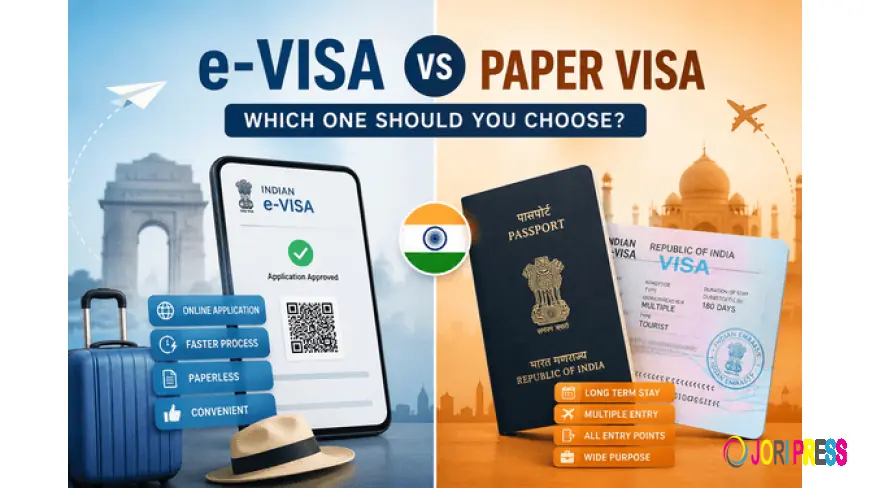
Are you confused whether to apply for a traditional paper visa or opt for an e-Visa? If so, then before you make up your mind, you must remember a few things. You must consider the duration of your stay, the purpose of your travel, and how soon you will fly. Both types of visas allow entry into India, but they serve different needs and have their own benefits.
This blog will help you know more about the e-visa and its traditional paper version, pros and cons, and what you should choose.
What is an Indian e-Visa?
It is a digital version of the traditional visa issued electronically. It is applied and received entirely online. There is no need for any consulate visits or mailing of documents. After it is approved, your e-Visa will be sent to your registered email address as a PDF.
You can also print this and carry it with you when you travel.
Who Can Apply for an e-Visa?
The list includes:
- Tourists visiting for leisure or sightseeing
- Business individuals attending meetings, expos or short-term projects
- Travellers seeking short-term medical treatments
What is an Indian Paper Visa?
It is the traditional form of travel authorisation. After processing, it is a sticker or a stamp that is placed inside your physical passport by the Indian embassy or the consulate in your country.
Who all can apply for the Indian Paper Visa?
The list includes:
- Travellers planning a long-term stay for more than 180 days.
- Individuals applying for work, study, research or residency visas.
- Individuals who require multi-entry access or visas not covered under the e-Visa category.
What is the difference between the Indian Paper Visa and an e-Visa?
The table below outlines the major differences between an e-Visa and the Indian Paper Visa.
| Features | e-Visa | Indian Paper Visa |
| Application Mode | Fully online | Semi or fully online |
| Processing Time | 24-72 hours | 5-15 business days |
| Visa Duration |
Up to 60-180 days Depends on the type |
Up to 10 years Depends on the type |
| Purpose of Visit | Tourism, business or Medical | Study, work or residency |
| Entry Points | Designated airports and seaports only | All air, sea and land ports |
| Cost |
A 30-day e-tourist visa costs $25 A 1-year e-tourist visa costs $40 A 5-year e-tourist visa costs $80 |
Entry- single or multiple Fee- $160.00 |
What are the pros and cons of an electronic visa (e-Visa) in India?
The Government of India introduced the e-Visa system to facilitate the e-Visa application process and encourage tourism in India. However, like all services, e-Visas have their own pros and cons.
Pros of e-Visa in India
- Convenience
It is one of the biggest advantages of an e-Visa. Travellers can apply for a visa from the comfort of their home or office, which saves them time and effort.
- Faster Processing
Compared to traditional paper visas, e-Visas are processed faster. In most cases, applicants receive their e-Visa within a few days. This allows them to plan their trips more efficiently.
- Cost-Effective
Applying for an e-Visa is usually more cost-effective than applying for a traditional paper visa. There are no additional fees for posting or visits to embassies or consulates.
- Online Tracking
Individuals can easily track the status of their e-Visa application online. This feature provides transparency, and travellers can have a sense of peace of mind.
Cons of e-Visa in India
- Restricted Entry Points
Individuals can use an e-Visa to enter India through selected airports and seaports only. Travellers who travel by land are not eligible to cross the border with an e-Visa and must use the traditional paper visa.
- Limited Duration
E-Visas are usually issued for a shorter duration than traditional paper visas. Individuals who plan to stay in India for long durations must use a traditional paper visa instead of the e-Visa.
- Single Entry
Most e-Visas allow for a single entry into India. Individuals cannot use the e-Visa to exit and re-enter the country during their trip. They must either use multiple e-Visas or the traditional paper visa.
- Technical Issues
Since the e-Visa relies on technology, some technical glitches or server outages may occur. This may cause delays or difficulties in obtaining an e-Visa.
Which one should you choose?
You can choose an e-Visa:
- If you are planning trips for tourism, business meetings or short-term medical needs
- If you must travel on short notice
- If you want a quick and easy application process
- If you plan to enter through a major Indian airport or seaport
You can choose the traditional Paper Visa:
- If you are staying for more than 180 days
- If you are travelling for work, study, or research
- If you require a multi-entry visa for frequent travels and visits
- If you plan to enter India through a land border
Conclusion
Choosing an e-Visa or a traditional Paper Visa is totally up to you and your travel plans and duration. Both types of visa work in the same way: they allow you to enter India for travel or business purposes. There are only minor differences between the two, the most notable being their duration of stay. Understanding the pros and cons of the e-Visa can also help you in choosing the correct one for your travel requirements.
What's Your Reaction?
 Like
0
Like
0
 Dislike
0
Dislike
0
 Love
0
Love
0
 Funny
0
Funny
0
 Angry
0
Angry
0
 Sad
0
Sad
0
 Wow
0
Wow
0