









































Bringing India’s Heritage Home: The Beauty of Museum-Inspired Art and Sculptures
Explore how Indian heritage sculptures, museum replicas, and traditional artwork bring cultural stories, timeless craftsmanship, and elegance into modern homes and meaningful gifting.
India's history is not limited to the pages of textbooks or the walls of museums. It lives in ancient sculptures, traditional artwork, architectural details, and objects that tell fascinating stories about the people and civilizations that came before us. These artistic creations reflect centuries of creativity, cultural beliefs, and craftsmanship that continue to inspire modern generations.
Today, as people look for more meaningful ways to decorate their homes and choose thoughtful gifts, traditional Indian art is finding a new place in contemporary lifestyles.
Why Indian Heritage Art Still Matters Today
Indian art has developed through centuries of cultural exchange, religious traditions, regional influences, and skilled craftsmanship. From beautifully carved temple sculptures to intricate representations of mythological figures, every artwork carries a story worth discovering.
Ancient Indian sculptures, in particular, offer a glimpse into the artistic excellence of earlier civilizations. Their detailed expressions, balanced proportions, and symbolic elements reveal how artists communicated stories, beliefs, and cultural values through their work.
Bringing these artistic traditions into modern spaces is more than a decorative choice. It is a way of staying connected with India's cultural identity and appreciating the creativity of earlier generations.
Museum Replicas: Making History Accessible Beyond Museums
Museums play an important role in protecting historical objects and making cultural knowledge available to the public. However, original artifacts are often delicate and must be carefully preserved.
This is where museum replicas become meaningful. They allow people to appreciate the appearance and artistic details of historical objects without handling or disturbing the originals.
Unlike ordinary decorative statues, authentic museum replicas are based on documented historical artifacts. Their value comes from the research, accuracy, and cultural stories behind them.
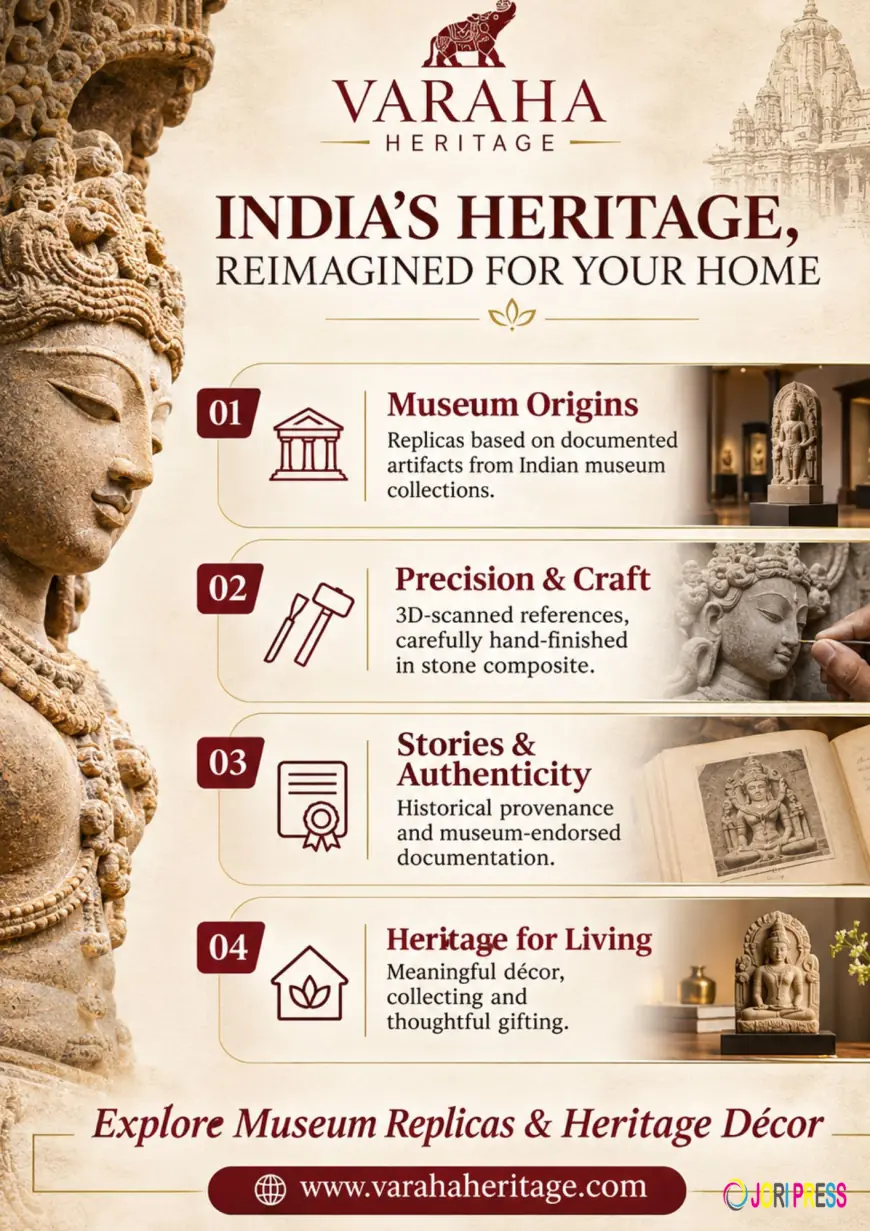
Varaha Heritage follows this approach by creating museum-authenticated replicas using 3D scanning, detailed documentation, and careful hand-finishing. The pieces are made using durable stone composite and come with museum-endorsed certificates identifying the original artifacts.
For anyone interested in exploring historical art beyond museum visits, Varaha Heritage offers a collection inspired by India's rich artistic and architectural traditions.
Bringing Traditional Indian Sculptures into Modern Home Décor
Modern interiors are increasingly moving towards meaningful decorative elements. Rather than filling every corner with ordinary accessories, many homeowners prefer objects that reflect their interests, personality, and cultural connections.
This is one reason why heritage home décor has become an interesting choice.
A traditional Indian sculpture can add character to a bookshelf, living room, study, entrance area, or personal collection. A carefully selected piece can become a conversation starter, especially when it represents an interesting historical period or mythological story.
Some popular choices include:
-
Ganesha sculptures: Often associated with wisdom, prosperity, and new beginnings.
-
Vishnu sculptures: Representing preservation and balance in Hindu tradition.
-
Kamdhenu sculptures: Symbolizing abundance, nourishment, and generosity.
-
Salabhanjika sculptures: Celebrating the elegance of ancient Indian temple art.
-
Buddha sculptures: Reflecting peace, mindfulness, and spiritual understanding.
These artworks bring together traditional aesthetics and contemporary interiors, creating a distinctive atmosphere without making a space feel outdated.
The Importance of Stories Behind Historical Artifacts
One of the most interesting aspects of Indian heritage art is the meaning behind each creation.
A sculpture is not simply a figure carved from stone. It may represent a religious belief, a historical event, an artistic tradition, or an important cultural symbol.
For example, the Varaha avatar of Lord Vishnu represents the restoration of the Earth, while the Kamdhenu motif is associated with nourishment and abundance. Similarly, figures such as Salabhanjika reveal the artistic imagination and decorative traditions of ancient Indian temple architecture.
Understanding these stories makes owning and displaying historical artwork a more personal experience.
This is why researching an artifact's origin, historical period, and cultural significance is important when selecting a heritage-inspired decorative piece.
Meaningful Gifts Inspired by Indian Culture
Finding a gift that feels personal and memorable can sometimes be challenging. Traditional gift items are useful, but a piece of art can offer something more lasting: a story, a cultural connection, and a memory.
Indian heritage sculptures can make thoughtful gifts for weddings, anniversaries, housewarmings, festivals, and corporate occasions.
For someone who appreciates history, architecture, spirituality, or traditional craftsmanship, a museum replica can be particularly meaningful.
Instead of choosing a gift only for its appearance, consider its symbolism and the story it represents. A Ganesha sculpture may be suitable for celebrating a new beginning, while a Kamdhenu sculpture can express wishes of abundance and prosperity.
Exploring heritage-inspired gifting collections can help people discover distinctive alternatives to conventional presents.
Preserving Cultural Heritage for Future Generations
Cultural preservation is not only the responsibility of museums, historians, and conservation experts. Individuals also play a role by learning about traditional art, understanding its significance, and encouraging appreciation for historical craftsmanship.
Museum partnerships, digital documentation, and carefully produced replicas create new opportunities for people to engage with cultural heritage.
They also help make historical art more accessible to audiences who may not have the opportunity to visit every museum or heritage site.
Brands such as Varaha Heritage are contributing to this connection between the past and the present by bringing documented museum artifacts into everyday spaces through carefully researched replicas.
Such initiatives remind us that preserving heritage does not mean keeping history distant. It also means finding thoughtful ways to make its stories accessible to future generations.
Conclusion
India's artistic heritage offers endless inspiration for modern living. From ancient temple sculptures to meaningful cultural symbols, these creations allow us to appreciate the imagination, knowledge, and craftsmanship of earlier civilizations.
Whether displayed as part of home décor, added to a personal collection, or presented as a thoughtful gift, heritage-inspired art offers something beyond visual appeal.
With growing interest in museum replicas and traditional Indian sculptures, the connection between historical art and contemporary lifestyles continues to evolve. Through collections and initiatives by Varaha Heritage, the stories of India's past can find a meaningful place in the homes and lives of people today.
After all, the beauty of heritage lies not only in remembering where we come from, but also in finding ways to keep those stories alive.
What's Your Reaction?
 Like
0
 Dislike
0
 Love
0
 Funny
0
 Angry
0
 Sad
0
 Wow
0