








































How to Evaluate Market Volatility Before Choosing an Options Selling Strategy

Options trading involves more than predicting whether the market will rise or fall. Traders must also understand how much the market is likely to move, how volatility affects option premiums, and whether the potential reward justifies the risk. This becomes particularly important when considering options selling strategies.
In the Indian derivatives market, traders often look for opportunities when the underlying index or stock is expected to remain within a relatively narrow range. However, a quiet market does not always mean a safe trading opportunity. Sudden announcements, changing sentiment, and unexpected price movements can quickly affect an options position.
Understanding market conditions before selling options can help traders make more informed decisions and avoid entering positions simply because the premiums appear attractive.
Understanding the Relationship Between Volatility and Option Premiums
Volatility represents the degree of price fluctuation in an underlying asset. In options trading, implied volatility (IV) reflects the market's expectations of future price movement and is an important factor in option pricing.
When implied volatility increases, option premiums generally become more expensive, assuming other factors remain unchanged. When implied volatility decreases, premiums generally lose value.
This relationship is particularly relevant for option sellers because they receive premiums when opening positions. However, collecting a higher premium does not automatically make a trade attractive. Higher premiums may indicate that the market is pricing in a greater possibility of significant movement.
Traders should therefore examine why volatility is elevated rather than treating it as an automatic selling opportunity.
Why Market Conditions Matter Before Selling Options
Different market environments require different trading approaches. A strategy designed for a sideways market may perform poorly during a strong directional move.
Before selecting an options selling strategy, traders should examine a few important market conditions.
1. Identify the Broader Market Trend
Start by examining the underlying index or stock on multiple timeframes. Daily charts can help identify the broader direction, while shorter timeframes provide additional information about recent price behavior.
Look for:
-
Consistent higher highs and higher lows indicating an upward trend.
-
Lower highs and lower lows indicating a downward trend.
-
Repeated movement between support and resistance indicating a possible range-bound market.
A market trading within a range may provide an environment worth studying for neutral options strategies. However, support and resistance levels are not guaranteed boundaries, and prices can break through them unexpectedly.
2. Examine Implied and Historical Volatility
Historical volatility measures how much an asset has moved in the past, whereas implied volatility reflects expectations derived from current option prices.
Comparing these measures can help traders understand whether the market is pricing in relatively large or small future movements.
For example, if implied volatility is considerably higher than recent historical volatility, traders may investigate whether an upcoming event or change in market sentiment explains the difference.
It is important to remember that historical movement cannot reliably predict future volatility. Both measures should be considered alongside market conditions and upcoming events.
Evaluating a Neutral Options Strategy Before Entry
A neutral strategy is generally considered when the trader does not expect a substantial movement in either direction. However, different neutral strategies have different payoff structures and risk exposures.
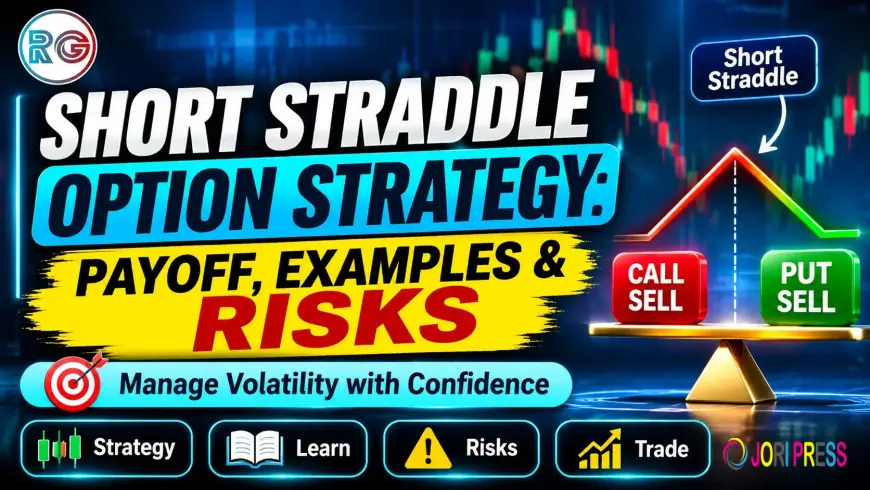
One example is the short straddle, which involves selling a call and a put option with the same strike price and expiry date.
Traders considering this approach should understand its premium structure, potential losses, and sensitivity to market changes before entering a position. For a more detailed explanation, explore the short straddle options strategy and its payoff structure.
The important point is to evaluate the market environment first rather than selecting a strategy simply because it offers attractive premiums.
Consider the Expected Market Movement
Options premiums reflect several pricing factors, including the underlying price, time to expiry, volatility and interest rates.
Traders can examine the combined premium received and compare it with the expected movement in the underlying asset. This helps establish the price levels at which the position may begin experiencing losses at expiry.
A strategy should not be evaluated only by its maximum possible profit. Its potential loss, probability of adverse movement and capital requirements are equally important.
Check Upcoming Market Events
Events can create sudden changes in volatility and underlying prices. Before selling options, traders should review the economic and corporate calendar.
Relevant events may include:
-
RBI monetary policy announcements.
-
Union Budget announcements.
-
Inflation and GDP data releases.
-
Company earnings announcements.
-
Major global economic developments.
An event that produces an unexpected outcome can cause a rapid market movement. This may affect both option premiums and the value of an existing position.
The Importance of Time Decay and Option Greeks
Option Greeks help traders understand how different market variables influence option prices. They are especially useful when evaluating strategies involving multiple option positions.
Theta: Theta measures the sensitivity of an option's price to the passage of time. Option sellers generally benefit from time decay when other factors remain unchanged.
Delta: Delta estimates how much an option price may change in response to a movement in the underlying asset. It also provides an approximate indication of directional exposure.
Gamma: Gamma measures the rate of change in delta. It is particularly important near expiry because an option's directional sensitivity can change rapidly.
Vega: Vega measures an option's sensitivity to changes in implied volatility. A rise in implied volatility can increase the value of sold options, potentially creating losses for the seller.
These Greeks should be evaluated together. A position may benefit from time decay but still lose money because of an unfavourable price movement or volatility expansion.
Managing Risk in Options Selling
Risk management should be considered before entering any options selling position. Receiving premiums creates an immediate cash inflow, but it does not remove the possibility of substantial losses.
A few practical considerations can help traders evaluate their exposure.
Understand Margin Requirements
Options sellers must maintain the applicable margin required by their broker and exchange. Margin requirements can change according to market conditions, position structure and applicable exchange rules.
Traders should avoid committing their entire available capital to a single position. Maintaining sufficient funds also helps reduce the possibility of forced position closure during adverse market movements.
Establish an Exit Plan
An options position should have clearly defined exit conditions before the trade begins.
These may include:
-
A predetermined maximum acceptable loss.
-
A profit-booking condition.
-
A price level that invalidates the original market view.
-
An exit plan for unexpected volatility changes.
Holding a losing position simply because expiry is approaching can increase financial exposure.
Consider Defined-Risk Alternatives
Traders who want to study neutral market strategies can also examine structures such as iron condors. Unlike an unhedged short straddle, an iron condor includes additional option positions that limit maximum loss under the defined payoff structure.
However, defined-risk strategies still involve the possibility of losing the entire net premium paid. Traders should understand the complete position before using it.
Building a Practical Pre-Trade Checklist
Before entering an options selling position, traders can use a simple evaluation process:
-
Identify the current market trend and important price levels.
-
Examine implied volatility and recent historical volatility.
-
Check upcoming economic and corporate announcements.
-
Calculate potential profit and loss at different underlying prices.
-
Review margin requirements and available capital.
-
Understand exposure to Delta, Gamma, Theta and Vega.
-
Establish exit conditions before placing the trade.
Following a consistent process can help reduce impulsive decisions and make strategy evaluation more systematic.
Conclusion
Successful options strategy evaluation requires more than identifying high premiums or expecting the market to remain sideways. Traders must understand volatility, market structure, option Greeks, event risks and potential losses before choosing an appropriate position.
Developing these skills through consistent analysis and simulated practice can help traders build a more disciplined approach to derivatives trading.
Disclaimer: This article is for educational purposes only and does not constitute investment advice or a recommendation to trade. Options trading involves substantial financial risk, including the possibility of significant losses.
What's Your Reaction?
 Like
0
 Dislike
0
 Love
0
 Funny
0
 Angry
0
 Sad
0
 Wow
0