



































Industrial Air Pollution Control Standards in India: What Manufacturers Need to Know
Learn about industrial air pollution control standards in India, CPCB guidelines, emission limits, and compliance requirements for manufacturers.
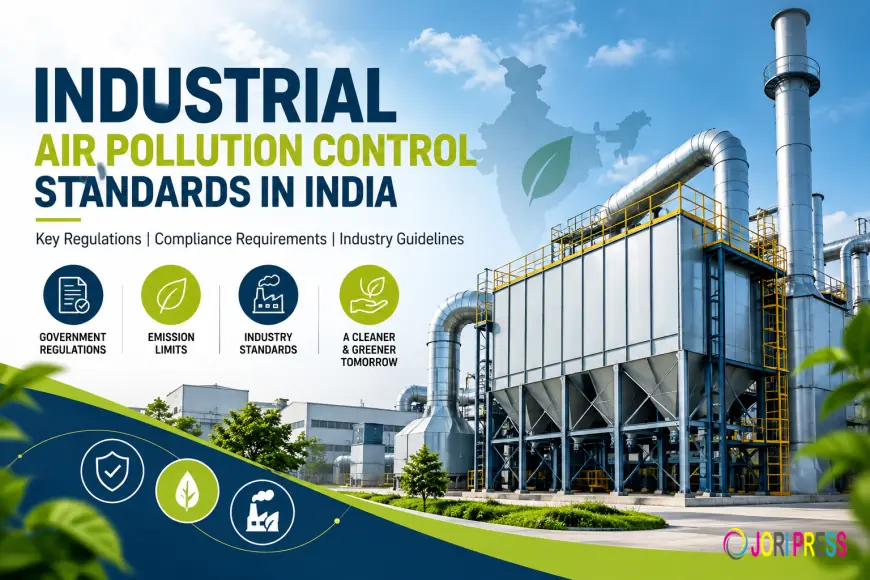
Industrial air pollution is a major concern for factories involved in metal processing, cement production, chemical manufacturing, and other industrial activities. Following environmental regulations helps manufacturers reduce harmful emissions, protect workers, and operate responsibly. Industrial pollution control systems play an important role in capturing dust, controlling gases, and reducing the release of pollutants into the atmosphere.
For Indian manufacturers, understanding applicable emission limits and environmental requirements is essential for smooth operations. Choosing the right equipment and maintaining it properly can help businesses meet compliance obligations while improving workplace air quality and operational efficiency.
Understanding Industrial Air Pollution Control Standards in India
India regulates industrial emissions through environmental laws, rules, and standards issued by the Central Pollution Control Board (CPCB), State Pollution Control Boards (SPCBs), and other relevant authorities. The Air (Prevention and Control of Pollution) Act, 1981, and the Environment (Protection) Act, 1986, form important parts of the country's pollution control framework.
Specific emission limits depend on the industry, manufacturing process, type of pollutant, and applicable regulatory notifications. Manufacturers should check the requirements for their particular facility rather than assuming that one emission limit applies to every industrial operation.
Key Regulatory Requirements for Manufacturers
Industrial facilities may need to obtain Consent to Establish and Consent to Operate from their respective State Pollution Control Board or Pollution Control Committee, where applicable. They must also follow relevant emission standards, monitoring requirements, and environmental conditions attached to their approvals.
Important compliance areas include:
-
Particulate matter and dust emissions
-
Gaseous pollutants and process-specific emissions
-
Stack height and emission monitoring requirements
-
Environmental permissions and operating conditions
-
Inspection, recordkeeping, and reporting obligations
Why Industrial Pollution Control Systems Are Essential
Manufacturing activities can release fine dust, smoke, fumes, and harmful gases into the workplace and surrounding environment. Without effective treatment, these pollutants can affect employee health, reduce visibility, damage equipment, and contribute to environmental pollution.
Well-designed industrial pollution control systems help capture and treat pollutants before contaminated air is released. The appropriate solution depends on the dust characteristics, gas composition, operating temperature, airflow requirements, and the level of emission control required.
Industrial Dust Collection Systems for Factories
Dust is common in foundries, steel plants, woodworking facilities, cement factories, and mineral processing units. Industrial dust collection systems capture airborne particles at their source and separate them from the air stream before the cleaned air is discharged or recirculated where permitted.
Common technologies include baghouse filters, cartridge collectors, cyclones, and other filtration equipment. Selecting the right technology requires an assessment of particle size, dust concentration, moisture, temperature, and system pressure.
Industrial Dust Extraction Systems for Source Capture
Industrial dust extraction systems remove dust and fumes close to the point where they are generated. Extraction hoods, ductwork, fans, and filtration equipment work together to transport contaminated air to a suitable collection or treatment unit.
Effective source capture can reduce airborne dust exposure and prevent particles from spreading across the factory. Proper duct design, balanced airflow, and regular maintenance are essential for reliable performance.
How Manufacturers Can Maintain Environmental Compliance
Meeting emission requirements involves more than installing pollution control equipment. Manufacturers must ensure that their systems are correctly designed, operated, inspected, and maintained throughout their working life.
A practical compliance plan should include the following actions:
-
Review applicable standards: Confirm industry-specific emission limits and consent conditions with the relevant pollution control authority.
-
Select suitable equipment: Match filtration and gas treatment technologies to the pollutants generated.
-
Monitor performance: Check pressure drop, airflow, emissions, and other operating parameters as required.
-
Maintain equipment: Inspect filters, fans, ducts, dampers, and other critical components.
-
Keep records: Maintain required monitoring reports, maintenance logs, and environmental documentation.
Manufacturers should also consult qualified environmental professionals when regulatory requirements or process changes create uncertainty.
Choosing the Right Industrial Pollution Control Manufacturer
Working with experienced industrial pollution control system manufacturers can help factories identify suitable technologies and design systems around their actual operating conditions. A reliable supplier should assess the process, estimate airflow requirements, evaluate dust and gas characteristics, and explain the expected maintenance needs.
Manufacturers should also consider energy consumption, filter life, equipment accessibility, system expansion, and after-sales support. These factors influence long-term operating costs and help ensure that pollution control equipment continues to perform effectively.
Conclusion
Understanding India's industrial emission standards helps manufacturers protect the environment, improve workplace safety, and meet applicable regulatory obligations. Effective pollution management requires suitable equipment, proper installation, routine maintenance, and regular performance checks. Every factory should assess its processes and confirm the specific standards that apply to its operations. For businesses seeking custom industrial air pollution control, working with an experienced engineering partner can help identify a practical solution for dust, fumes, and gaseous emissions. Contact a qualified pollution control specialist to discuss your factory's requirements and develop a system designed for reliable performance and environmental compliance.
What's Your Reaction?
 Like
0
Like
0
 Dislike
0
Dislike
0
 Love
0
Love
0
 Funny
0
Funny
0
 Angry
0
Angry
0
 Sad
0
Sad
0
 Wow
0
Wow
0