




































How to Develop a Low Budget Mobile App without Compromising Quality
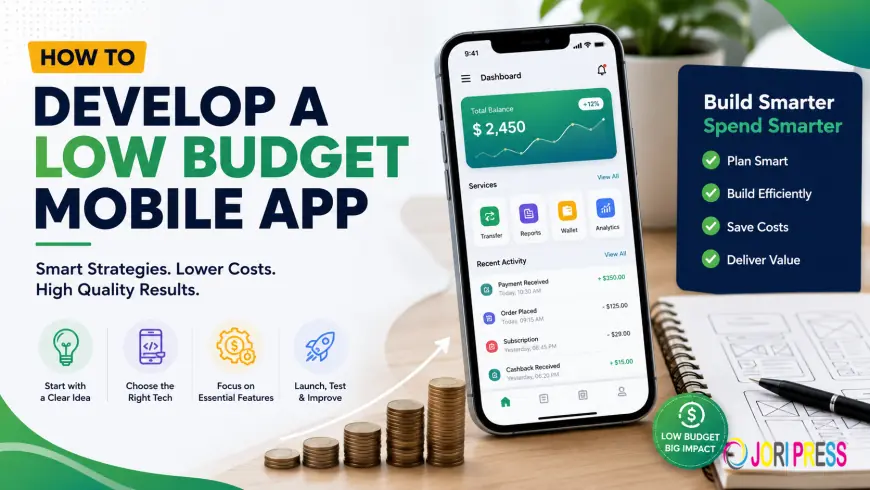
Developing a low budget mobile app is not about cutting quality but making smart decisions. Instead of building a complex product from the start, businesses should focus on a simple version that solves one problem and test it with real users. Choosing cost-efficient technologies, limiting features, and keeping design simple can significantly reduce expenses. Research shows many apps fail due to overbuilding rather than lack of budget. A step-by-step approach, along with proper planning for maintenance and scalability, helps in building a sustainable app. With the right strategy and guidance from experienced teams like Originate Soft, even a low budget app can deliver strong results and long-term value.
If you ask any new founder about building a mobile app, the first concern is almost always the budget. It feels like you need a large investment just to get started. And honestly, that fear is not completely wrong.
Recent industry reports suggest that a basic mobile app can cost anywhere between $15,000 to $50,000 globally, while more advanced apps can easily cross $100,000. Even in India, where development costs are lower, a simple app can still range between ₹3 lakh to ₹10 lakh, depending on features and complexity.
But here is something interesting. According to multiple startup studies, nearly 70%–75% of apps fail not because of lack of funding, but because they build too much too early without validating the idea. That means the real problem is not always budget — it is how that budget is used.
This is where a low budget approach becomes practical, not risky.
Start Small: What Most Successful Apps Actually Do
When people think about building an app, they imagine the final version — fully designed, feature-rich, and polished. But if you look at real examples, most successful apps did not start that way.
They started small.
This is where the concept of MVP (Minimum Viable Product) comes in. Instead of building everything, you build just enough to solve one problem. This approach is not just theory — it is widely used because it works.
A report by CB Insights showed that 42% of startups fail because there is no real market need. This clearly shows why launching early and testing matters more than building everything at once.
From a practical point of view, this means:
You don’t need a perfect app.
You need a usable app.
Technology Choices Can Reduce Cost by 30–40%
One of the biggest cost factors in mobile app development is the technology stack. Traditionally, businesses used to build separate apps for Android and iOS. This naturally increased both time and cost.
Today, cross-platform frameworks like Flutter and React Native have changed that approach. Industry estimates suggest that using these technologies can reduce development costs by 30% to 40%, especially for early-stage products.
From a human perspective, this decision is simple. If your goal is to launch and test your idea, you do not need two separate apps in the beginning. One well-built cross-platform app is more than enough.
Feature Overload Is One of the Biggest Budget Killers
There is a common pattern among first-time founders. They keep adding features because every idea feels important. But each feature adds cost, increases development time, and makes the product more complex.
Research shows that a large percentage of app features are rarely used by users. Some product studies suggest that over 60% of features in many apps go unused after launch.
That means money is often spent on things that do not create real value.
A better approach is to focus on essential features first and then expand based on user feedback. This not only saves cost but also keeps the product more focused.
Simple Design Often Performs Better
Another area where budget increases quickly is design. Many founders assume that a good app must look visually complex with animations and advanced UI elements.
But user behavior tells a different story.
Studies in UX design show that users prefer apps that are easy to understand and navigate. In fact, 88% of users are less likely to return to an app after a poor user experience.
This means clarity matters more than complexity.
A clean and simple design not only reduces development cost but also improves user retention. It is one of those rare areas where doing less actually gives better results.
Backend and Infrastructure Can Be Simplified
Backend development is often overlooked in early planning, but it plays a major role in cost. Building a custom backend from scratch requires time, expertise, and ongoing maintenance.
This is why many startups now use Backend-as-a-Service (BaaS) platforms like Firebase. These tools provide ready-made infrastructure, which can reduce both development effort and cost.
From a practical standpoint, this approach makes sense for low budget apps. You focus on building your product, while the backend tools handle the technical complexity in the background.
Hidden Costs That Most People Ignore
Even when the app is built, the expenses do not stop. There are ongoing costs like hosting, updates, bug fixing, and performance improvements.
Industry estimates suggest that app maintenance can cost around 15% to 20% of the initial development cost every year. Many founders do not plan for this, which creates problems later.
Understanding this early helps in making better financial decisions.
Launch Early: What Real Builders Learn Over Time
One common mistake is waiting too long to launch. Many people delay because they want everything to be perfect.
But in reality, perfection is expensive.
Most successful products improve after launch, not before it. Early launch helps you understand real user behavior, which is far more valuable than assumptions.
From experience, this is where the biggest learning happens. You realize what users actually care about — and what they completely ignore.
Why the Right Development Partner Matters
If you are not from a technical background, your development partner plays a big role in controlling cost. A good team will not just build features — they will guide you on what not to build.
Working with a company like Originate Soft can help simplify this process. Teams that focus on practical development usually aim to build scalable apps without pushing unnecessary features, which is exactly what low budget projects need.
Final Thoughts: It’s About Smart Decisions, Not Just Budget
Building a low budget mobile app is not about reducing quality. It is about making better decisions at every step.
When you focus on solving a real problem, avoid unnecessary features, choose the right technology, and launch early, you naturally reduce costs without harming the product.
In the end, users do not care how much you spent. They care about whether your app works and makes their life easier.
And in most cases, a simple, well-thought-out app does that better than a complex one.
What's Your Reaction?
 Like
0
Like
0
 Dislike
0
Dislike
0
 Love
0
Love
0
 Funny
0
Funny
0
 Angry
0
Angry
0
 Sad
0
Sad
0
 Wow
0
Wow
0