


































How Schools and Sports Academies Can Plan an Indoor Badminton Court
Learn how schools and academies can plan a safe Indoor Badminton Court with correct dimensions, flooring, lighting and maintenance.
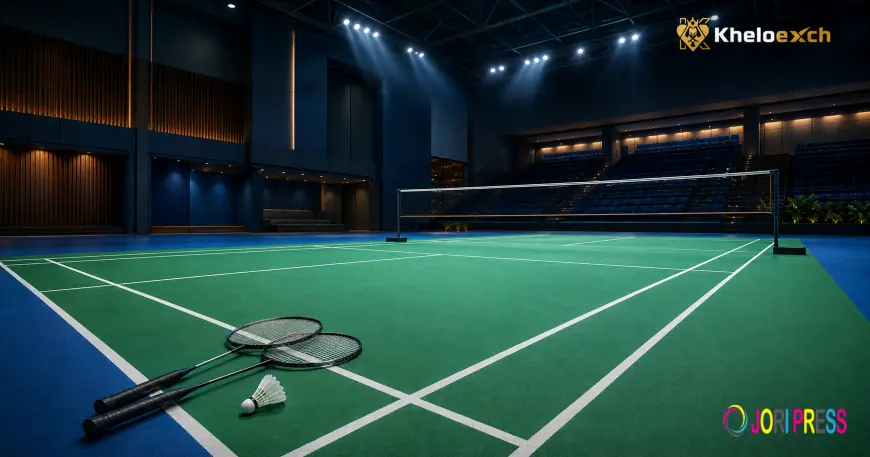
Badminton is a practical sport for schools, clubs and training academies because players of different ages and skill levels can participate. However, providing a quality playing environment requires more than installing a net inside an empty hall.
A properly planned Indoor Badminton Court must offer sufficient playing space, clear markings, safe flooring, good visibility and regular maintenance. Institutions should consider these requirements before converting an existing hall or constructing a dedicated facility.
Begin With the Available Space
A standard badminton court measures 13.4 metres in length. Its width is 6.1 metres for doubles and 5.18 metres for singles.
These measurements cover the marked playing area, but additional space is required around the boundaries. Players often move outside the court while attempting difficult returns. Walls, pillars, benches and equipment positioned too close can create collision risks.
Before beginning construction, measure the complete room and examine:
- Total floor area
- Ceiling height
- Position of doors and windows
- Structural pillars
- Emergency exits
- Space between neighbouring courts
- Available seating and storage areas
Mark the Court Correctly
One court can support singles and doubles matches when all required boundaries are marked accurately.
The outer sidelines are used for doubles, while the inner sidelines define the singles court. Service areas include short service lines, centre lines and separate back service boundaries.
For accurate measurements and line positions, read this badminton court size and dimensions guide from Kheloexch.
Select Safe Flooring
Students and beginners may not have the movement control of experienced athletes. A slippery or excessively hard surface can increase the possibility of injury.
Wooden sports floors and synthetic PVC mats are commonly used for indoor badminton. The selected flooring should be:
- Level and stable
- Resistant to slipping
- Easy to clean
- Suitable for regular training
- Clearly marked
- Compatible with non-marking sports shoes
The floor should be inspected regularly for moisture, dust, cracks and lifting sections.
Provide Adequate Ceiling Clearance
High shots are an important part of badminton. Low ceilings and overhead objects can interrupt the shuttlecock.
Inspect the area above the court for:
- Structural beams
- Ceiling fans
- Hanging lights
- Electrical cables
- Projectors
- Equipment belonging to other sports
A dedicated training facility should provide enough uninterrupted space for high clears and defensive shots.
Design Suitable Lighting
Players need to follow a small and fast-moving shuttlecock. Uneven lighting, strong shadows and glare can make this difficult.
Lights should illuminate the entire court without shining directly into players’ eyes during overhead shots. Visibility should be tested from the service areas, baselines and centre of the court.
Curtains or blinds may be needed to control glare from windows.
Control Ventilation Carefully
Indoor halls require proper air circulation, especially when several players are training. However, strong airflow can affect the lightweight shuttlecock.
Fans and air-conditioning vents should not blow directly across the playing area. The system should maintain a comfortable temperature without creating a noticeable crosswind.
Use Safe and Stable Equipment
The net and posts must remain stable throughout each session. Portable systems are useful in multipurpose halls, but their bases should not create tripping hazards.
Before every session:
- Check that the posts are secure.
- Inspect the net for damage.
- Remove exposed cords.
- Clear loose shuttlecocks from the floor.
- Keep bags and bottles away from the court.
- Remove damaged rackets from use.
Establish a Maintenance Routine
A reliable Indoor Badminton Court requires regular maintenance:
- Clean the floor daily.
- Inspect the net posts and equipment.
- Remove moisture immediately.
- Replace failed lights.
- Repair damaged flooring.
- Restore faded court lines.
- Test the ventilation.
- Remove obstacles from surrounding areas.
Final Thoughts
A successful Indoor Badminton Court combines accurate measurements with safe flooring, balanced lighting, sufficient clearance and organised maintenance.
Schools, clubs and academies should plan for the complete player experience instead of concentrating only on the marked playing area. Careful preparation creates a safer environment where beginners can learn confidently and experienced players can develop their skills.
What's Your Reaction?
 Like
0
Like
0
 Dislike
0
Dislike
0
 Love
0
Love
0
 Funny
0
Funny
0
 Angry
0
Angry
0
 Sad
0
Sad
0
 Wow
0
Wow
0