








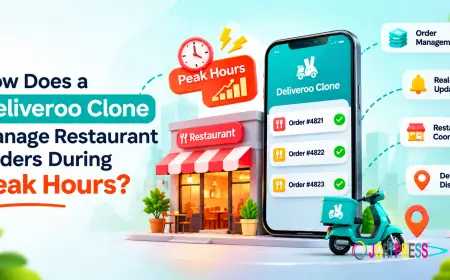


























How Does a Deliveroo Clone Manage Restaurant Orders During Peak Hours?
Wondering how a Deliveroo clone handles the dinner rush? See how queues, auto-accept rules, smart dispatch and scaling keep orders moving.

Friday, 7:30 pm. A restaurant that normally gets one order every few minutes suddenly gets ten at once. If the software behind it falls over, the kitchen gets buried, riders wait around, and customers cancel.
I’ve seen this stress test sink plenty of food delivery apps. Here’s how a well-built Deliveroo clone gets through it, and what to check if you’re planning to build one.
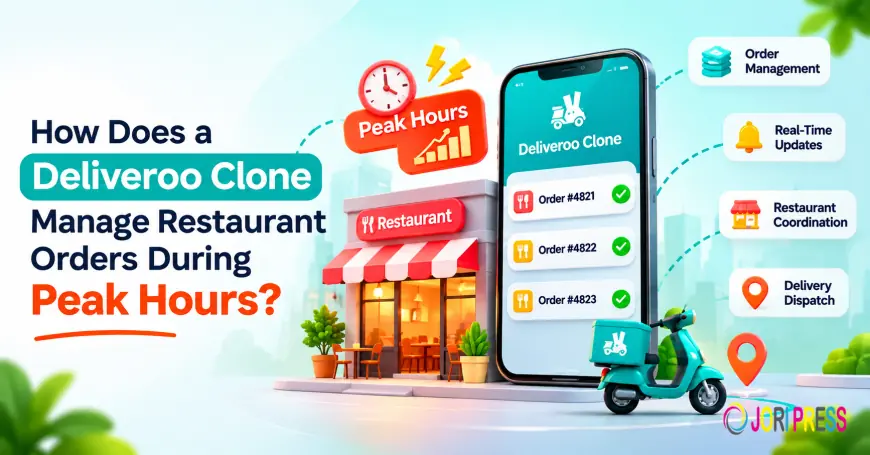
A Deliveroo clone handles peak-hour orders through four mechanisms working together:
-
Order queuing: every order is timestamped and processed in sequence, so none are lost.
-
Kitchen load control: the app slows or pauses new orders when a restaurant is overwhelmed.
-
Smart dispatch: riders are matched to orders by proximity and readiness, not just who ordered first.
-
Auto-scaling infrastructure: servers expand automatically as traffic spikes.
Here’s what each one does in practice.
1. Order Queuing and Real-Time Sync
Every order lands in a queue, and the restaurant’s dashboard updates in real time through WebSockets or push notifications rather than refreshing manually. This matters because a delayed or duplicated order during a rush means a lost customer and an angry kitchen.
2. Kitchen Load Management
This is the feature owners underrate most. A good restaurant order management system lets each venue:
-
Set a maximum number of active orders at a time
-
Add prep time automatically when the queue grows
-
Pause new orders for 10–15 minutes
-
Mark items as sold out instantly
Without these controls, the app keeps promising 20-minute delivery while the kitchen is 50 minutes behind.
3. Smart Rider Dispatch
Naive dispatch assigns the nearest rider the moment an order comes in, so riders arrive early and stand around. Better food delivery app development uses prep-time estimates to send the rider just before the food is ready. Batching, where one rider picks up two nearby orders, also helps when demand outstrips supply.
4. Infrastructure That Scales
Peak traffic is predictable but short. Cloud platforms support auto-scaling, which adds server capacity under load and removes it afterwards (see AWS EC2 Auto Scaling for how this works). Pair it with caching for menus and a separate service for payments and order tracking, so a surge in browsing doesn’t slow checkout.
5. Honest Customer Communication
Live ETAs, order status updates and proactive delay notices cut “where’s my food?” support tickets sharply. Customers tolerate a delay far better when the app tells them about it first.
What to Prioritize if You’re Building One
-
Real-time order sync before fancy features
-
Restaurant-side throttling controls
-
Dispatch logic that accounts for prep time
-
Load testing with simulated dinner-rush traffic before launch
Key Takeaways
A Deliveroo clone survives peak hours by protecting the kitchen, timing riders sensibly and scaling its servers on demand. The code matters less than how well these systems work together.
If you’re planning a platform like this, talk to our team about building a Deliveroo clone built for peak-hour demand.
What's Your Reaction?
 Like
0
 Dislike
0
 Love
0
 Funny
0
 Angry
0
 Sad
0
 Wow
0