





































How Do Bifacial Solar Panels Increase Energy Generation?
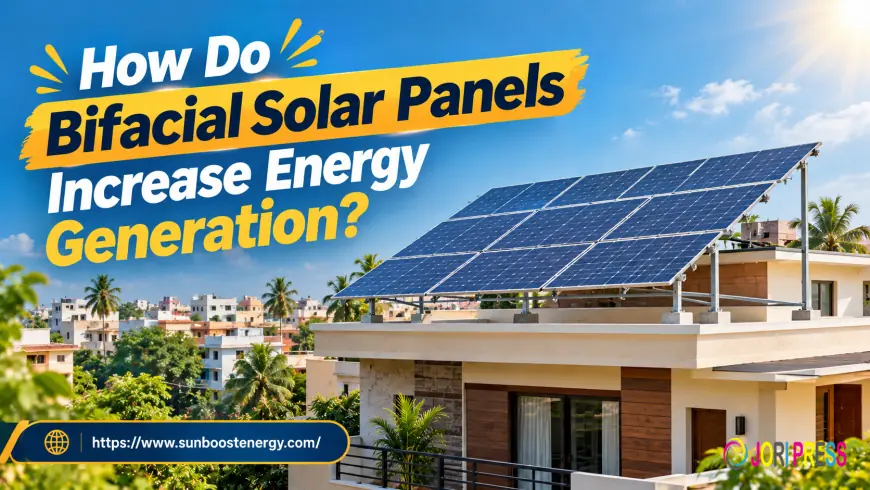
Most conventional solar panels generate electricity only from the sunlight falling on their front surface. Bifacial solar panels work differently. They can capture sunlight from both the front and rear sides, allowing them to use direct sunlight as well as light reflected from the surface below.
This extra source of light can increase total energy generation, but the results depend heavily on where and how the panels are installed. Simply choosing bifacial panels does not guarantee better output. Ground colour, panel height, spacing, shading and mounting design all influence their performance.
What Are Bifacial Solar Panels?
Bifacial solar panels contain solar cells that can absorb light from both sides. Their front surface collects direct sunlight, similar to a standard monofacial panel. The rear surface captures sunlight reflected from the roof, ground or nearby surfaces.
Instead of an opaque backsheet, many bifacial panels use a transparent rear layer or glass-glass construction. This allows reflected light to reach the back of the solar cells.
The amount of additional electricity produced through the rear surface is commonly called the bifacial gain.
How Do Bifacial Panels Generate Extra Electricity?
When sunlight reaches the ground or roof beneath a solar panel, some of it is absorbed while the rest is reflected. Bifacial panels capture part of this reflected light through their rear side and convert it into electricity.
Bright and reflective surfaces send more light towards the back of the panel than dark surfaces. A white-painted roof, light-coloured concrete or reflective membrane can therefore support better rear-side generation than dark tiles, soil or black roofing material.
The panels also need enough space underneath them. If they are installed very close to the roof, less reflected light can reach the rear cells.
Key Factors That Affect Bifacial Energy Generation
1. Surface Reflectivity
Surface reflectivity, also known as albedo, is one of the biggest factors affecting bifacial performance. It describes how much sunlight a surface reflects.
White and light-coloured surfaces generally reflect more light. Dark roofs and surfaces absorb a larger amount of sunlight, leaving less available for the rear side of the panel.
Homeowners should not assume that every roof will provide the same bifacial gain. The actual surface below the panels must be assessed.
2. Panel Height
Bifacial panels need clearance from the mounting surface. Raising the panels allows reflected light to spread more evenly across their rear side.
If the panels sit almost flat against a residential roof, their rear cells may receive limited light. Elevated mounting structures can improve exposure, but they must be designed according to the roof structure, wind conditions and installation requirements.
Panel height should never be increased without checking structural strength and safety.
3. Tilt and Orientation
The direction and tilt of a solar panel determine how much direct sunlight reaches its front surface. With bifacial panels, these factors also influence the amount of light reaching the rear.
A well-planned angle can support both front and rear generation while reducing self-shading. However, the right design varies based on the property location, roof direction, available area and surrounding structures.
4. Row Spacing
In larger rooftop, commercial and ground-mounted projects, the gap between panel rows matters. Closely packed rows can create shadows that reduce rear-side exposure.
Wider spacing may improve reflected-light access, but it also requires more installation area. The system designer must balance energy generation with the available space rather than focusing on bifacial gain alone.
5. Rear-Side Shading
Mounting rails, cables, junction boxes and other equipment can cast shadows on the back of a bifacial panel. Poorly planned structures may block the reflected light that the rear cells are supposed to capture.
Cable routing and mounting design should therefore be considered from the beginning. Small design decisions can make a noticeable difference across the lifetime of the system.
Where Do Bifacial Solar Panels Work Best?
Bifacial panels usually perform well in open locations where their rear surface can receive plenty of reflected light. Suitable applications may include:
- Elevated commercial rooftop systems
- Ground-mounted solar projects
- Solar carports and canopies
- Industrial roofs with reflective coatings
- Open terraces with light-coloured flooring
- Installations with sufficient space between panel rows
They can also be used in a residential Rooftop Solar System, but the roof must provide suitable height, spacing and reflected-light conditions. A compact sloped roof with panels mounted close to dark tiles may not receive the same advantage as an elevated installation over a bright surface.
Are Bifacial Panels Always Better Than Monofacial Panels?
Not necessarily. Bifacial panels offer an opportunity to generate additional electricity, but only when the installation allows light to reach their rear surface.
Monofacial panels may be more practical for roofs with limited space, low mounting clearance or heavy shading. They can also make sense when the price difference cannot be justified by the expected additional generation.
The decision should be based on the total project value, including:
- Panel efficiency and output
- Available roof or ground area
- Mounting requirements
- Installation cost
- Surface reflectivity
- Expected annual generation
- Product warranty
- Maintenance access
A higher panel specification is useful only when the complete system is designed to take advantage of it.
Do Bifacial Panels Produce Power in Cloudy Weather?
Like other photovoltaic panels, bifacial modules can generate electricity from available daylight during cloudy conditions. Their production will still reduce when sunlight becomes weaker.
Cloudy weather does not make the panels stop working but reflected-light conditions also change. Bifacial panels should therefore be assessed according to expected yearly production rather than their output during a single day or season.
Are Bifacial Solar Panels Suitable for Indian Conditions?
Bifacial technology can suit many Indian residential, commercial and industrial projects. India has varied roof types, climates and site conditions, so each property needs an individual assessment.
Dust accumulation can reduce the light reaching both surfaces, making suitable cleaning and maintenance important. High temperatures, monsoon weather, local wind conditions and mounting safety must also be considered during system design.
For homes, the biggest question is whether the roof provides enough clearance and reflected light to make the rear surface useful. For commercial and ground-mounted projects, larger areas may offer greater flexibility with panel height, spacing and orientation.
Should You Choose Bifacial Solar Panels?
Choose bifacial panels when your site can make practical use of both sides. They can improve total energy generation when installed at the right height, over a reflective surface and with carefully planned spacing.
Before buying, ask for a site-specific generation estimate and compare it with a suitable monofacial system. Avoid making the decision based only on the word “bifacial” or a general performance claim.
Sunboost Energy can assess your roof, electricity usage, shading and installation conditions before recommending the right panel technology and system capacity.
What's Your Reaction?
 Like
0
Like
0
 Dislike
0
Dislike
0
 Love
0
Love
0
 Funny
0
Funny
0
 Angry
0
Angry
0
 Sad
0
Sad
0
 Wow
0
Wow
0