




































How AI Is Changing Legacy App Modernization Forever
How AI Is Revolutionizing Legacy App Modernization

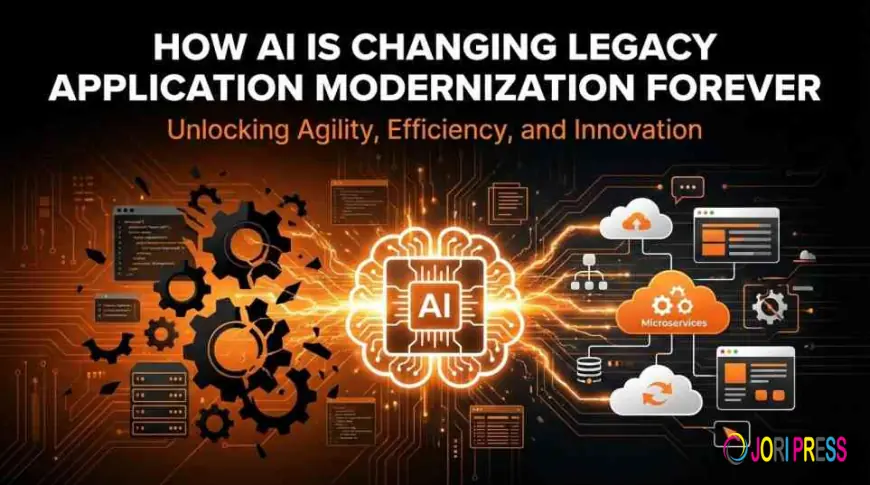
My insurance agent said something to me six months ago that has stayed with me ever since: AI Is Revolutionizing Legacy App Modernization Forever (Source). She asked about our technology infrastructure when renewing our business liability policy; standard underwriting stuff. When I described our systems -- such as custom platforms from 2013, database servers running obsolete software, and client portals without security patches since over two years -- she paused, typed something, and looked up before continuing our conversation.
Your premium will increase significantly. An unpatched system is now considered a substantial risk factor and two of your competitors in this zip code who modernized last year saw their rates decrease."
My insurance company had taken note of my failure to update software properly and included that risk into my bill. They could see my liabilities were growing steadily and they priced this into my bill accordingly.
That conversation changed my understanding of legacy systems completely, shattering any assumptions I had previously held regarding them. Now this decision wasn't just IT related; it had far reaching ramifications on my insurance premiums, risk profile, competitiveness and ultimately ability to bid on contracts requiring current security certifications.
When I finally engaged a team that provided AI-powered legacy system modernization services, my decision wasn't motivated by wanting better technology; rather it was because the cost of keeping old technologies had become an increasing burden that wasn't apparent when initially projected.
Legacy system risk has spread far and wide across business operations, reaching into every corner.
Insurance underwriters now assess technology stacks during renewal. Procurement teams at enterprise clients often conduct vendor system audits before authorizing contracts. GDPR, HIPAA, and EU AI Act regulatory frameworks all impose penalties against organizations unable to demonstrate current security governance; even job candidates often do research before accepting offers of employment.
Baseline industry statistics bear this out: sixty to 80 percent of IT budgets are consumed by maintenance. Eighty-seven percent of organizations run exploitable software. Legacy developers retire at 10 percent annually. Modernization market exceeds $29 billion this year because businesses from every industry realize the serious consequences associated with outdated systems extend far beyond server rooms.
My insurance premium increase was nearly equivalent to our anticipated modernization costs - this alone covered nearly one quarter. Risk had already been quantified and monetised - I simply hadn't realized who was collecting.
What AI changed about getting out
In 2022 and 2024, when I priced modernization twice before using AI technologies for quotes. Both times produced estimates with twelve month timelines and six-figure budgets along with caveats about "scope adjustments." By late 2025 when I returned to look again for projects using AI, everything had changed significantly.
Discovery enabled us to identify what was driving our risk. Artificial Intelligence tools mapped our systems within 10 days, discovering fourteen integrations - five connected with services we had deprecated or decommissioned, such as nightly customer data exports sent directly to a staging server still technically managed by former hosting provider but no longer monitored, where client records had been landing unsupervised every night for 22 months! When I shared that finding with my insurance agent she said this is precisely the type of thing they underwrite against.
Migration that met the speed and urgency required. Our client portal -- unpatched and driving premium increases -- was modernized within eight weeks thanks to modern security framework, encrypted data handling and automated patch management systems. Generative AI translated legacy code while engineers designed security architecture and authentication flows - in comparison, my 2022 vendor quote for similar system was eleven months.
AI testing provided my insurer with evidence of my security posture. AI generated 1,800 validation scenarios including penetration-style security checks; one caught our portal's password reset function failing to properly expire old tokens - meaning a link sent three months earlier would still work; this vulnerability had existed ever since we launched. Our agent reviewed AI's report as part of renewal documentation, and said, "This is exactly what we need".
Six Steps from Rising Premiums to Reduced Risk.
Step 1 -- Unveil Your Risk Profile
Artificial intelligence quickly maps technology. Human staff fill operational gaps. Our accounts receivable coordinator revealed that she sent invoice PDFs directly to herself for backup each Friday due to system outages which caused attachment loss twice last year and did not want it happen again - an action which resulted in client financial documents sitting unprotected in her personal email inbox without encryption and access controls; creating compliance risks within an otherwise sensible precaution.
Step 2 - Assess the Total Cost
Account for costs that were discovered such as insurance premium increases, failed security audits, contract requirements you cannot meet and client procurement questionnaires you cannot pass. For instance, one regional physical therapy practice I recently worked with did this math and discovered their legacy patient portal had caused two increases in insurance premiums totaling $19,000 annually -- in addition to monthly maintenance of $6200 monthly costs. Their practice manager concluded: "It costs us to own."
Step 3 - Repair Systems Generating External Exposure
My insurance company had identified our client portal as one causing excessive external exposure. Within eight weeks, security remediation satisfied two compliance requirements that had eluded me in meeting. At renewal time there was no increase and my agent gave direct credit to modernization documentation as the cause for that.
Step 4 -- Execute Systems One-by-One
Our plan was to implement each system one at a time over an eight week period: first on portal, then database server and finally internal operations platform - sequentially and validated before starting the next migration; AI handled code translation and testing volume while engineers handled architecture design, security design and business logic decisions.
Step 5 - Validate to Documentiere Each system ran in parallel for two to three weeks, with AI testing comparing every output and providing comprehensive security validation reports. During database migration parallel, tools identified that our legacy system was storing three years of archived client records in violation of our data retention policy -- records which should have been anonymized were still fully identifiable, which had to be resolved before transition and thus avoided an equivalent GDPR regulatory exposure risk.
Step 6 -- Establish an Attitude That Keeps Premiums Down and Contracts Open
Continuous security monitoring. Automated vulnerability scanning. Quarterly system reviews. Documents kept up-to-date proactively rather than assembled last minute when renewal or procurement questionnaires arrive - infrastructure costs fell 36% while insurance premiums stabilised; additionally, when an enterprise client submitted us a vendor security questionnaire we submitted it back within two days with documentation that passed review on its first submission for them (something which had never happened before!).
What changes when risk stops finding you
Lower insurance premiums. Passed security audits. Enterprise contracts that you actually qualify for. Client trust reinforced through verifiable security posture rather than verbal assurances, teams dedicating time on productive work instead of compliance firefighting and technology foundation that protects rather than threatens business reputations.
Phased modernization. One system at a time. An ROI within twelve to 18 months; legacy systems serving as your safety net through every stage. Rollback when needed.
How Sparkout Tech helped me transform the conversation with my insurer They understood modernization was more than a tech project for us; it was an investment strategy with financial ramifications beyond IT alone. Their plan met all my insurer's requirements by addressing specific exposures identified as needed while satisfying compliance reviewers, all without disrupting operations one bit.
Sparkout Tech offers a free assessment to evaluate your systems, security posture, and any risks that exist with the current platform; including any risks you have yet to uncover.
My insurance agent recognized the risk before I did; your insurer, clients, regulators or potential enterprise prospects will no doubt see yours too - depending on whether they find an up-to-date platform or one you have been promising yourself to upgrade for three years now.
One outcome costs you money while the other could save it - make an informed decision now before someone else does it for you!
What's Your Reaction?
 Like
0
Like
0
 Dislike
0
Dislike
0
 Love
0
Love
0
 Funny
0
Funny
0
 Angry
0
Angry
0
 Sad
0
Sad
0
 Wow
0
Wow
0