










































Crowns vs. Bridges: Which Dental Restoration Is Right for You?
Learn the key differences between dental crowns and bridges, their benefits, costs, and care. Discover which dental restoration is right for your smile and oral health.
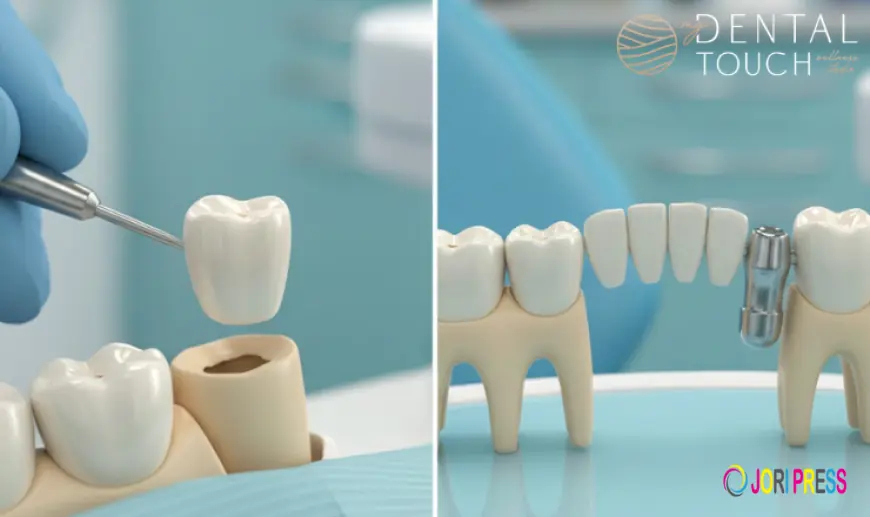
When teeth become damaged, weakened, or missing, dental restorations play a crucial role in restoring both function and appearance. Two of the most common restorative options recommended by dentists are dental crowns and bridges. While both treatments are designed to improve oral health and enhance your smile, they serve different purposes and are used in different situations.
Dental issues such as decay, fractures, or tooth loss can affect how you eat, speak, and feel about your smile. Choosing the right restoration is important not only for aesthetics but also for maintaining proper bite alignment and long-term oral health. Understanding the differences between crowns and bridges helps patients make informed decisions about their dental care.
At My Dental Touch, we believe that informed patients make the best decisions for their smiles. Our team takes the time to explain each treatment option clearly, ensuring you understand how dental crowns and bridges work and which solution may be right for your needs. In this blog, we will explore the key differences between crowns and bridges, helping you feel confident as you take the next step toward a healthier, more complete smile.
What Are Dental Crowns?
A dental crown is a custom-made cap that is placed over a damaged, weakened, or worn tooth to restore its shape, strength, and appearance. The crown completely covers the visible portion of the tooth above the gum line, protecting it from further damage while allowing normal function. Crowns are commonly recommended for teeth with extensive decay, cracks, large fillings, or after root canal treatment.
Dental crowns are made from various materials, including porcelain, ceramic, metal, or a combination of materials. Porcelain and ceramic crowns are popular for their natural appearance, while metal-based crowns offer exceptional strength and durability, especially for molars. The choice of material depends on the tooth’s location, function, and aesthetic needs.
Crowns help restore chewing ability, protect weakened teeth, and improve the overall appearance of the smile. With proper care and regular dental visits, dental crowns can last many years, making them a dependable solution for tooth restoration.
What Are Dental Bridges?
A dental bridge is a restorative dental treatment used to replace one or more missing teeth. It works by “bridging” the gap left by missing teeth using artificial teeth, known as pontics, which are supported by the natural teeth or dental crowns on either side of the gap. Dental bridges restore both function and appearance, helping patients chew and speak properly.
There are different types of dental bridges, including traditional bridges, cantilever bridges, and implant-supported bridges. Traditional bridges are the most common and rely on crowns placed over adjacent teeth for support. Implant-supported bridges use dental implants for added stability and do not depend on surrounding teeth.
Dental bridges help prevent nearby teeth from shifting out of position, maintain proper bite alignment, and improve facial structure. They are an effective option for restoring a complete smile and preserving oral health when one or more teeth are missing.
When Is a Dental Crown the Best Option?
A dental crown is often the best option when a tooth is damaged but still has a healthy root and enough structure to be preserved. Crowns are designed to strengthen and protect existing teeth while restoring their natural appearance and function. They are commonly recommended when a tooth is weakened due to extensive decay, a large filling, cracks, or fractures that cannot be repaired with a simple filling.
Dental crowns are also frequently used after root canal treatment. Since a tooth can become brittle after this procedure, a crown helps protect it from breaking and extends its lifespan. In addition, crowns may be used to improve the appearance of teeth that are severely discolored, misshapen, or worn down over time.
In cases where preserving the natural tooth is possible, a crown provides a durable and reliable solution. It restores proper chewing ability, maintains bite alignment, and helps prevent further damage, making it an ideal choice for long-term tooth protection and restoration.
When Is a Dental Bridge Recommended?
A dental bridge is typically recommended when one or more teeth are missing and need to be replaced to restore proper function and appearance. Missing teeth can cause nearby teeth to shift out of position, leading to bite problems, difficulty chewing, and changes in facial structure. A dental bridge fills the gap created by missing teeth and helps maintain proper alignment within the mouth.
Dental bridges are often suggested when the teeth on either side of the missing space are healthy enough to support crowns. They are a good option for patients who want a fixed restoration and are not candidates for dental implants or prefer an alternative treatment. Bridges can improve speech, enhance the smile, and restore confidence by replacing missing teeth with natural-looking restorations.
By addressing gaps in the smile, dental bridges help protect oral health and prevent long-term complications associated with tooth loss, making them a reliable restorative option in many cases.
Key Differences Between Crowns and Bridges
While both crowns and bridges are restorative dental treatments, they serve different purposes. A dental crown is used to restore and protect a damaged or weakened tooth, whereas a dental bridge is used to replace one or more missing teeth. Crowns cover an existing tooth, while bridges rely on surrounding teeth or implants to support an artificial tooth.
Crowns focus on preserving and strengthening natural teeth, while bridges address gaps caused by tooth loss. The preparation process also differs, as crowns require shaping a single tooth, whereas bridges involve preparing the teeth adjacent to the missing space. Understanding these key differences helps patients make informed decisions about which restoration best meets their dental needs and long-term oral health goals.
Benefits of Dental Crowns
Dental crowns offer several important benefits for patients who need to restore damaged or weakened teeth. One of the primary advantages is protection. A crown completely covers the affected tooth, shielding it from further decay, fractures, or wear while allowing it to function normally during eating and speaking.
Crowns also improve the appearance of a tooth. They are designed to match the natural color, shape, and size of surrounding teeth, creating a seamless and natural-looking smile. This makes crowns an excellent option for teeth that are discolored, misshapen, or visibly damaged.
In addition to aesthetics, dental crowns help restore strength and stability. They allow patients to chew comfortably without pain or sensitivity and help maintain proper bite alignment. With good oral hygiene and regular dental checkups, crowns are a long-lasting restorative solution that supports both oral health and confidence.
Benefits of Dental Bridges
Dental bridges provide an effective solution for replacing missing teeth and restoring a complete smile. One of the main benefits of dental bridges is improved chewing and speaking ability. By filling gaps in the mouth, bridges allow patients to eat a wider variety of foods comfortably and speak more clearly.
Bridges also help maintain proper alignment of surrounding teeth. When a tooth is missing, neighboring teeth may shift into the empty space, which can lead to bite problems and additional dental issues. A dental bridge prevents this movement, helping preserve the natural structure of the smile. In addition, bridges restore facial balance and prevent the sunken appearance that can occur after tooth loss, improving both function and appearance.
Longevity and Durability: Crowns vs. Bridges
Both dental crowns and bridges are designed to be durable and long-lasting when properly cared for. The lifespan of these restorations depends on factors such as the materials used, oral hygiene habits, and regular dental visits. Crowns typically last many years because they protect and reinforce a single tooth, reducing the risk of further damage.
Dental bridges are also built for durability but may experience more stress since they rely on supporting teeth or implants. Proper cleaning around the bridge is essential to prevent decay or gum disease that could compromise its stability. With consistent care, both crowns and bridges can provide reliable performance and long-term oral health benefits.
Oral Health and Aesthetic Considerations
When choosing between crowns and bridges, both oral health and appearance play important roles. Crowns are ideal for preserving natural teeth and enhancing their appearance, while bridges focus on restoring gaps caused by missing teeth. Each option can be customized to match the natural color and shape of surrounding teeth, ensuring a natural-looking result.
From a health perspective, crowns protect weakened teeth from further damage, while bridges help prevent shifting teeth and bite misalignment. Aesthetic goals, oral condition, and long-term dental health all factor into the decision-making process, making professional guidance essential when selecting the most suitable restoration.
Cost and Maintenance Factors
The cost of dental crowns and bridges can vary depending on several factors, including the materials used, the complexity of the procedure, and the number of teeth involved. Crowns are generally less complex since they restore a single tooth, while bridges may involve multiple teeth and additional preparation, which can affect overall cost. Dental insurance coverage may also differ between the two treatments, making it important to discuss financial considerations with your dental provider.
Maintenance is an important part of protecting your investment in either restoration. Dental crowns require regular brushing, flossing, and routine dental checkups, just like natural teeth. Dental bridges require extra attention when cleaning around and underneath the artificial tooth to prevent plaque buildup and gum disease. Proper care and consistent dental visits help extend the lifespan of both crowns and bridges.
How Your Dentist Helps You Choose the Right Option
Choosing between a dental crown and a dental bridge is a decision best made with professional guidance. Your dentist evaluates your oral health, examines the condition of your teeth and gums, and considers factors such as tooth damage, tooth loss, bite alignment, and long-term oral health goals. X-rays and clinical exams help determine which restoration will provide the most stable and effective outcome.
Your dentist also takes into account your lifestyle, aesthetic preferences, and budget when recommending a treatment plan. Clear communication and personalized care ensure that the chosen solution restores function, improves appearance, and supports lasting oral health. Working closely with your dentist allows you to make a confident and informed decision.
Caring for Dental Crowns and Bridges
Proper care is essential to ensure the longevity of dental crowns and bridges. Daily brushing and flossing help keep surrounding teeth and gums healthy, reducing the risk of decay or gum disease. Using proper flossing techniques around bridges is especially important to remove trapped food particles and plaque.
Avoiding habits such as chewing ice, biting hard objects, or grinding teeth can help prevent damage to restorations. Regular dental checkups allow your dentist to monitor the condition of your crowns or bridges and address any issues early. With consistent care, these restorations can remain functional and attractive for many years.
Conclusion
Both dental crowns and bridges are effective restorative solutions designed to improve oral health and restore confidence in your smile. Crowns are ideal for protecting and strengthening damaged teeth, while bridges are an excellent option for replacing missing teeth and maintaining proper alignment. Understanding the differences, benefits, and care requirements of each option empowers you to make the best decision for your dental needs.
By working closely with your dentist and maintaining good oral hygiene, you can enjoy long-lasting results and a healthy, functional smile. Choosing the right dental restoration is an important step toward preserving your oral health and enhancing your quality of life.
What's Your Reaction?
 Like
0
Like
0
 Dislike
0
Dislike
0
 Love
0
Love
0
 Funny
0
Funny
0
 Angry
0
Angry
0
 Sad
0
Sad
0
 Wow
0
Wow
0