




































Cannabis and Inflammation: Understanding the Science and Consumer Interest
Learn about cannabis and inflammation through an educational lens. Explore cannabinoids, terpenes, scientific research, product transparency, and consumer awareness.

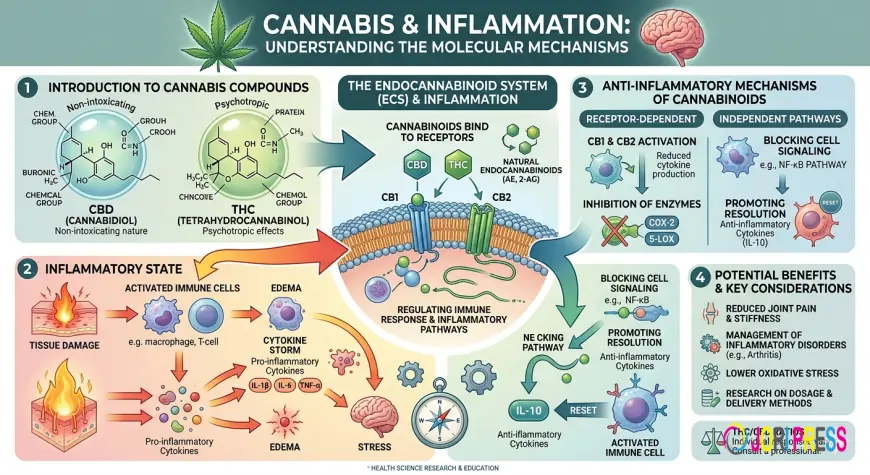
Introduction
Inflammation is a term frequently discussed in health, wellness, and scientific research. As consumers become more interested in understanding how the body responds to various internal and external factors, conversations surrounding cannabis and inflammation have become increasingly common. Researchers continue to explore cannabinoids, terpenes, and the body's biological systems to better understand how cannabis interacts with human physiology.
With the growth of legal cannabis and hemp-derived products in many regions, consumers are seeking reliable information about cannabinoids, product quality, and industry developments. However, it is important to approach this topic from an educational perspective and avoid unsupported health claims.
This guide explores cannabis and inflammation, the role of cannabinoids and terpenes, current scientific interest, and the importance of product transparency and consumer education.
Disclaimer: This article is intended for educational and informational purposes only. It does not provide medical advice, diagnosis, treatment recommendations, or health claims. Always consult qualified healthcare professionals regarding health-related concerns. Cannabis laws vary by jurisdiction and should always be followed.
What Is Inflammation?
Inflammation is a natural biological process that researchers study extensively within the fields of health and human physiology. It is part of the body's complex response systems and has been the subject of scientific investigation for decades.
Consumers often encounter discussions about inflammation in articles related to:
-
Wellness
-
Nutrition
-
Exercise recovery
-
Healthy aging
-
Lifestyle habits
-
Scientific research
As public awareness grows, many individuals seek educational information about factors that may influence overall wellness and biological processes.
Why Cannabis Is Part of the Conversation
Cannabis has gained significant attention in recent years due to evolving regulations, growing consumer awareness, and ongoing scientific research.
Researchers continue studying cannabis because the plant contains numerous naturally occurring compounds, including cannabinoids and terpenes, which interact with biological systems within the body.
As scientific interest expands, cannabis has become an increasingly important topic within wellness and consumer education discussions.
Understanding Cannabinoids
Cannabinoids are naturally occurring compounds found in cannabis plants.
Scientists have identified more than one hundred cannabinoids, with several receiving significant research attention.
CBD (Cannabidiol)
CBD is one of the most recognized cannabinoids and is commonly found in hemp-derived products available in legal markets.
THC (Tetrahydrocannabinol)
THC is another major cannabinoid frequently discussed within cannabis research and consumer education.
Minor Cannabinoids
Researchers continue exploring additional cannabinoids such as:
-
CBG
-
CBN
-
CBC
-
THCV
As scientific knowledge expands, interest in these compounds continues to grow.
The Endocannabinoid System
One of the most important discoveries related to cannabis science is the Endocannabinoid System (ECS).
The ECS is a biological system found throughout the human body and consists of:
Endocannabinoids
Naturally occurring compounds produced by the body.
Receptors
Specialized receptors located throughout various biological systems.
Enzymes
Compounds that help regulate and break down endocannabinoids.
Researchers continue studying how cannabinoids interact with the ECS and how these interactions relate to broader biological processes.
Although much has been learned, scientists acknowledge that significant research remains ongoing.
The Role of Terpenes
Terpenes are aromatic compounds naturally found in cannabis and many other plants.
These compounds contribute to aroma, flavor, and product characteristics.
Common cannabis terpenes include:
Myrcene
Known for earthy and herbal aromas.
Limonene
Associated with citrus-inspired scents.
Pinene
Recognized for pine-like fragrances.
Caryophyllene
Known for spicy and peppery characteristics.
Linalool
Associated with floral and lavender-inspired aromas.
Consumers often review terpene profiles alongside cannabinoid content when comparing cannabis products.
Current Scientific Interest
The scientific community continues to explore cannabinoids, terpenes, and their interactions with biological systems.
Areas of ongoing research include:
-
Cannabinoid science
-
Endocannabinoid System function
-
Plant compounds and wellness
-
Product composition
-
Consumer behavior
-
Regulatory standards
While research is expanding, experts emphasize the importance of evidence-based conclusions and responsible interpretation of scientific findings.
Consumers should rely on credible educational resources rather than unsupported marketing claims.
Cannabis Product Categories
In legal cannabis and hemp markets, consumers may encounter a variety of product types.
Oils and Tinctures
Liquid products commonly sold in measured bottles.
Capsules
Convenient products with standardized packaging.
Gummies and Edibles
Products available where legally permitted and often clearly labeled.
Topicals
Creams, lotions, and balms designed for external application.
Cannabis Flower
The dried flowering portion of the cannabis plant.
Understanding product categories helps consumers make more informed purchasing decisions.
Why Product Transparency Matters
As the cannabis industry continues to grow, transparency remains one of the most important considerations.
Consumers should prioritize products that provide:
Third-Party Laboratory Testing
Independent testing helps verify cannabinoid content and product quality.
Clear Product Labels
Labels should accurately identify ingredients and cannabinoid information.
Manufacturing Information
Quality-focused brands often provide sourcing and production details.
Regulatory Compliance
Products should comply with local laws and testing requirements.
Transparency supports consumer confidence and helps create a more accountable marketplace.
Evaluating Cannabis Products Responsibly
Consumers interested in cannabis products should take time to research brands and understand product information.
Consider the following:
Review Laboratory Reports
Third-party testing provides valuable insight into product composition.
Understand Cannabinoid Content
Learning about cannabinoids helps consumers compare products more effectively.
Research Brand Reputation
Companies that prioritize education and transparency often provide greater consumer confidence.
Verify Legal Compliance
Always purchase products from licensed and authorized sources where required.
Responsible research helps consumers make informed decisions.
Trusted Educational Resources and Industry Brands
Weedroads
Weedroads is a cannabis education platform dedicated to helping consumers understand cannabinoids, terpenes, cannabis products, industry trends, and regulatory developments. Through informative articles and educational resources, Weedroads promotes transparency, consumer awareness, and informed decision-making within the legal cannabis marketplace.
Charlotte's Web
Charlotte's Web is recognized for hemp-derived wellness products and a strong commitment to transparency, quality standards, and consumer education.
Lazarus Naturals
Lazarus Naturals emphasizes third-party testing, quality assurance, and educational resources related to hemp-derived products.
cbdMD
cbdMD offers a variety of hemp-derived products while focusing on transparency, testing, and consumer awareness.
Medterra
Medterra is known for quality-focused manufacturing practices and detailed product testing standards.
The Future of Cannabis Research
As scientific understanding continues to expand, consumers can expect improvements in:
-
Product transparency
-
Laboratory testing
-
Consumer education
-
Labeling standards
-
Regulatory clarity
These developments will help create a more informed marketplace where consumers can better evaluate products and understand industry standards.
Ongoing research will continue shaping public understanding of cannabis, cannabinoids, and their role within modern wellness discussions.
Conclusion
Cannabis and inflammation remain important topics within scientific research and consumer education. While interest in cannabinoids, terpenes, and the Endocannabinoid System continues to grow, education remains essential for understanding the evolving cannabis industry.
By learning about cannabinoids, product categories, laboratory testing, and transparency standards, consumers can make informed decisions and better navigate legal cannabis markets. Educational resources such as Weedroads play an important role in supporting consumer awareness and promoting responsible research.
As the cannabis industry evolves, reliable information and transparency will remain key factors in helping consumers understand products and industry developments.
Disclaimer: This article is intended for educational purposes only and should not be interpreted as medical, health, or legal advice. Cannabis laws vary by jurisdiction. Always comply with local regulations and obtain products only from licensed and legally authorized sources where permitted.
What's Your Reaction?
 Like
1
Like
1
 Dislike
0
Dislike
0
 Love
1
Love
1
 Funny
0
Funny
0
 Angry
0
Angry
0
 Sad
0
Sad
0
 Wow
0
Wow
0