





































Beyond Digital Records: How Blockchain in Healthcare Industry Is Revolutionizing Patient Data

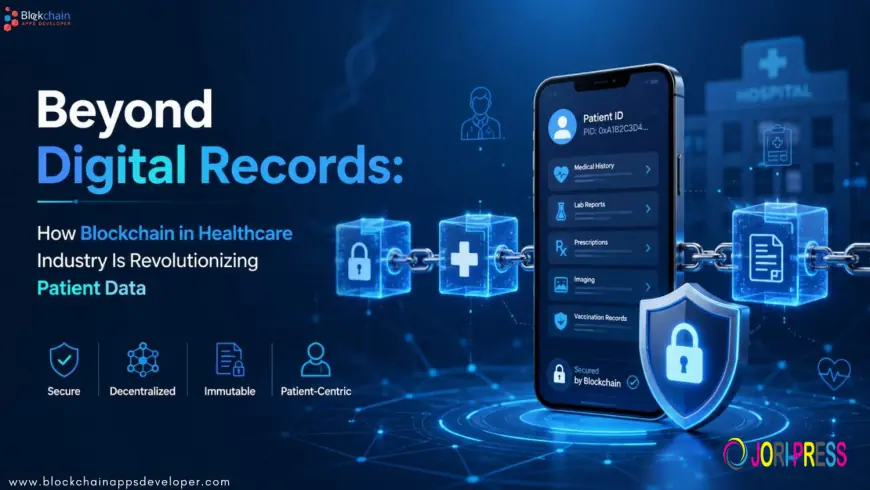
Healthcare organizations generate and manage vast amounts of patient information every day. From medical histories and diagnostic reports to prescriptions and treatment plans, maintaining accurate and secure records is critical. However, traditional healthcare data systems often struggle with issues such as data breaches, fragmented records, limited interoperability, and unauthorized access. This is where blockchain in the healthcare industry is creating a significant transformation by introducing a more secure, transparent, and patient-centric approach to data management.
Understanding the Role of Blockchain in the Healthcare Industry
Blockchain is a decentralized digital ledger that records information across multiple nodes, making data tamper-resistant and highly secure. Unlike conventional databases that rely on centralized storage, blockchain distributes records across a network, reducing the risk of data manipulation and single points of failure.
In healthcare, blockchain enables trusted data sharing between hospitals, clinics, laboratories, insurance providers, and patients. Every transaction is recorded and verified, creating a reliable ecosystem where medical information remains accurate, accessible, and protected. This evolving model, often referred to as Blockchain in Health Care, is reshaping how sensitive medical data is stored and exchanged across institutions.
Challenges in Traditional Patient Data Management Systems
Many healthcare providers still depend on centralized systems that often operate in isolation. As a result, patient records are scattered across multiple platforms, making data retrieval difficult and time-consuming.
Common challenges include:
-
Data silos across healthcare facilities
-
Security vulnerabilities and cyber threats
-
Delays in accessing patient information
-
Lack of transparency in record modifications
-
Administrative inefficiencies and higher operational costs
These limitations can directly impact patient care, making it essential for healthcare organizations to adopt more advanced data management solutions.
How Does Blockchain Enhance Patient Data Security and Privacy?
Patient privacy remains one of the most important concerns in healthcare. Blockchain addresses this challenge by providing a secure framework where records cannot be altered without authorization.
Each medical transaction is encrypted and linked to previous records, creating an immutable audit trail. This ensures that healthcare professionals can verify the authenticity of information while patients maintain greater control over who can access their data.
Additionally, blockchain supports permission-based access mechanisms, allowing only authorized stakeholders to view or update specific information. This significantly reduces the risk of unauthorized access, fraud, and data breaches while improving regulatory compliance.
Blockchain-Powered Electronic Health Record (EHR) Management
Electronic Health Records (EHRs) are essential for delivering efficient healthcare services. However, traditional EHR systems often face interoperability challenges when exchanging data between different healthcare institutions.
Blockchain improves EHR management by creating a unified and transparent record-sharing environment. Healthcare providers can securely access patient information in real time without compromising privacy or data integrity.
Benefits of blockchain-enabled EHR systems include:
-
Improved accuracy of patient records
-
Faster access to medical information
-
Reduced duplication of data
-
Enhanced coordination among healthcare providers
-
Better patient experiences and treatment outcomes
By enabling seamless information exchange, blockchain helps healthcare organizations streamline operations while delivering more effective care.
Key Applications of Blockchain in Modern Healthcare Ecosystems
The adoption of blockchain extends far beyond patient record management. Healthcare organizations are exploring numerous applications to improve efficiency, transparency, and trust. As the demand for secure and interoperable healthcare solutions grows, a reliable Blockchain Development Company can help organizations implement customized blockchain frameworks that address industry-specific challenges while ensuring scalability and compliance.
Some notable use cases include:
-
Secure health information exchange
-
Clinical trial data management
-
Medical research collaboration
-
Pharmaceutical supply chain tracking
-
Healthcare claims processing
-
Remote patient monitoring systems
-
Identity verification and access control
These applications demonstrate how blockchain technology is reshaping healthcare processes while addressing long-standing operational challenges.
How BlockchainAppsDeveloper Delivers Secure Healthcare Blockchain Solutions
Healthcare organizations require tailored blockchain solutions that align with industry regulations, security standards, and operational objectives. BlockchainAppsDeveloper specializes in developing customized healthcare blockchain platforms designed to improve patient data security, streamline record management, and enable seamless information sharing.
From decentralized Electronic Health Record systems and smart contract integration to healthcare data exchange networks and compliance-focused architectures, the company delivers scalable solutions built to support healthcare providers, hospitals, insurance firms, and medical research organizations. The focus remains on creating secure, transparent, and efficient digital healthcare ecosystems that enhance operational performance, improve data accessibility, and strengthen patient trust.
Healthcare institutions looking to modernize patient data management can benefit from blockchain solutions that prioritize security, interoperability, and compliance. With a structured development approach and industry-focused expertise, organizations can implement blockchain technologies that support long-term digital transformation goals.
What Benefits Does Blockchain Bring to Patients and Healthcare Providers?
Blockchain offers significant advantages for every participant in the healthcare ecosystem. Patients gain greater control over their medical information, while providers benefit from improved efficiency and data accuracy.
Key benefits include:
-
Enhanced patient privacy and security
-
Increased transparency and trust
-
Faster access to medical records
-
Reduced administrative workload
-
Improved interoperability between healthcare systems
-
Better compliance with data protection regulations
-
Lower risk of fraud and unauthorized modifications
These advantages contribute to a more connected and reliable healthcare environment where data can be shared confidently and securely.
Conclusion: Moving Beyond Digital Records with Blockchain-Powered Healthcare
The healthcare sector is undergoing a major digital transformation, and blockchain is emerging as a powerful technology driving that change. By addressing critical challenges related to data security, interoperability, transparency, and patient control, blockchain creates a stronger foundation for modern healthcare systems.
As organizations seek smarter ways to manage sensitive medical information, blockchain provides the tools needed to build secure and efficient healthcare ecosystems. Moving beyond traditional digital records, healthcare providers can deliver better patient experiences, improve operational efficiency, and establish greater trust in the way healthcare data is managed and shared.
The growing adoption of Blockchain in the Health Care industry highlights the increasing need for secure, transparent, and patient-centric data management solutions. Organizations that embrace this technology today are better positioned to create reliable healthcare networks that support improved care delivery and operational excellence.
What's Your Reaction?
 Like
0
Like
0
 Dislike
0
Dislike
0
 Love
0
Love
0
 Funny
0
Funny
0
 Angry
0
Angry
0
 Sad
0
Sad
0
 Wow
0
Wow
0